Concrete Balcony Safety Checks for Chicago Buildings
Concrete Balcony Safety Checks: What Chicago's Building Codes Require
Concrete balconies are a valuable amenity for many multi-family, condominium, and commercial buildings throughout Chicago. They also represent a significant life safety responsibility. When deterioration goes unnoticed, concrete balconies can develop structural deficiencies that create risks for occupants and expose property owners to liability.
Understanding what Chicago's building codes require and knowing when a professional evaluation is warranted can help property managers, condominium associations, engineers, and building owners proactively address issues before they become costly repairs.
Why Concrete Balcony Safety Checks Matter in Chicago
Many residential, condominium, and mixed-use buildings throughout the city contain concrete balconies that are now several decades old. While concrete is highly durable, it is not maintenance-free. Small cracks and failed waterproofing components can allow moisture to penetrate the concrete, eventually leading to corrosion of reinforcing steel and more extensive deterioration.
The importance of proactive inspections is reflected in Chicago's broader approach to exterior building safety. The Community Associations Institute Illinois Chapter has highlighted the importance of complying with the city's exterior inspection requirements and addressing building deterioration before it becomes a safety concern. The same proactive approach applies to aging concrete balcony systems.
Routine concrete balcony safety checks can help identify:
- Cracking and concrete deterioration
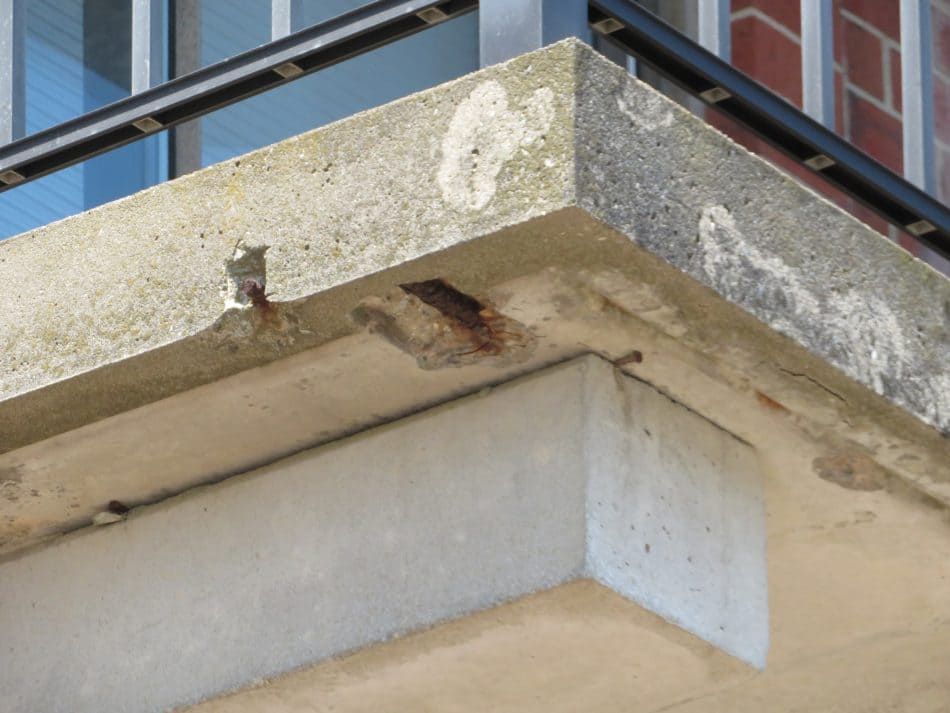
- Spalling concrete
- Delaminated concrete
- Exposed reinforcing steel
- Rust staining
- Water infiltration
- Failed sealants and waterproofing systems
- Drainage deficiencies
- Unsafe walking surfaces
- Structural concerns requiring engineering evaluation
Early detection often allows repairs to be completed before deterioration spreads deeper into the balcony system, helping property owners avoid larger restoration costs, unexpected disruptions, and potential safety risks.
What Does Chicago Require for Balcony Safety?
Chicago property owners are responsible for maintaining exterior building components in a safe condition, including concrete balconies when deterioration or unsafe conditions are present.
Many commercial, condominium, and multi-family buildings are also subject to Chicago's Exterior Wall Program, commonly referred to as the Façade Ordinance. According to structural engineering firm Thornton Tomasetti, the program requires periodic examinations of exterior walls and building enclosures to identify potentially unsafe conditions before they become hazards to occupants or the public.
While the ordinance does not specifically mandate routine balcony inspections, deteriorated balcony conditions are often identified during broader façade assessments and exterior building evaluations. Because Chicago's freeze-thaw cycles, moisture intrusion, and aging building stock can accelerate concrete deterioration, balcony safety checks are often recommended when signs of distress begin to appear.
Property owners should consider a professional balcony evaluation when:
- Cracking, spalling, or delaminated concrete is visible
- Reinforcing steel becomes exposed
- Rust staining appears on balcony surfaces or undersides
- Water infiltration or drainage issues are present
- Building inspections uncover exterior deficiencies
- Structural engineers recommend further investigation
- Major restoration or capital improvement projects are being planned
Identifying deterioration early can help property owners address repairs before conditions become more extensive, costly, or potentially unsafe.
Understanding the Difference Between Maintenance and Structural Concerns
This is paragraph text. Click it or hit the Manage Text button to change the font, color, size, format, and more. To set up site-wide paragraph and title styles, go Not every crack indicates a structural problem.
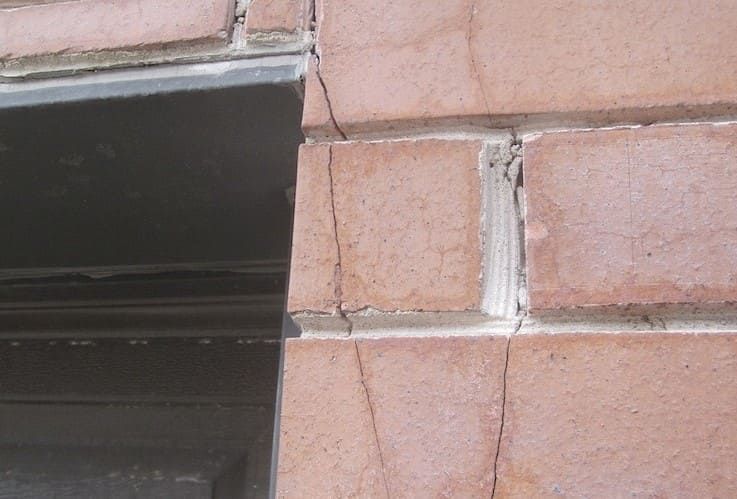
Hairline surface cracks may be cosmetic, while larger cracks, displacement, significant spalling, or exposed reinforcing steel can indicate more serious issues.
A proper evaluation helps determine whether conditions require:
- Routine maintenance
- Concrete balcony repairs
- Waterproofing improvements
- Localized concrete restoration
- Structural rehabilitation
The goal is to identify the root cause before selecting a repair approach.
Common Signs a Concrete Balcony May Need Inspection
Many balcony issues begin with small warning signs that become more severe over time.
Cracked Concrete
Concrete naturally develops minor cracking as it ages. However, widening cracks can allow water to penetrate deeper into the structure.
Property managers should pay particular attention to:
- Long continuous cracks
- Cracks wider than hairline openings
- Cracks that appear to be growing
- Cracks accompanied by movement or displacement
Spalling Concrete
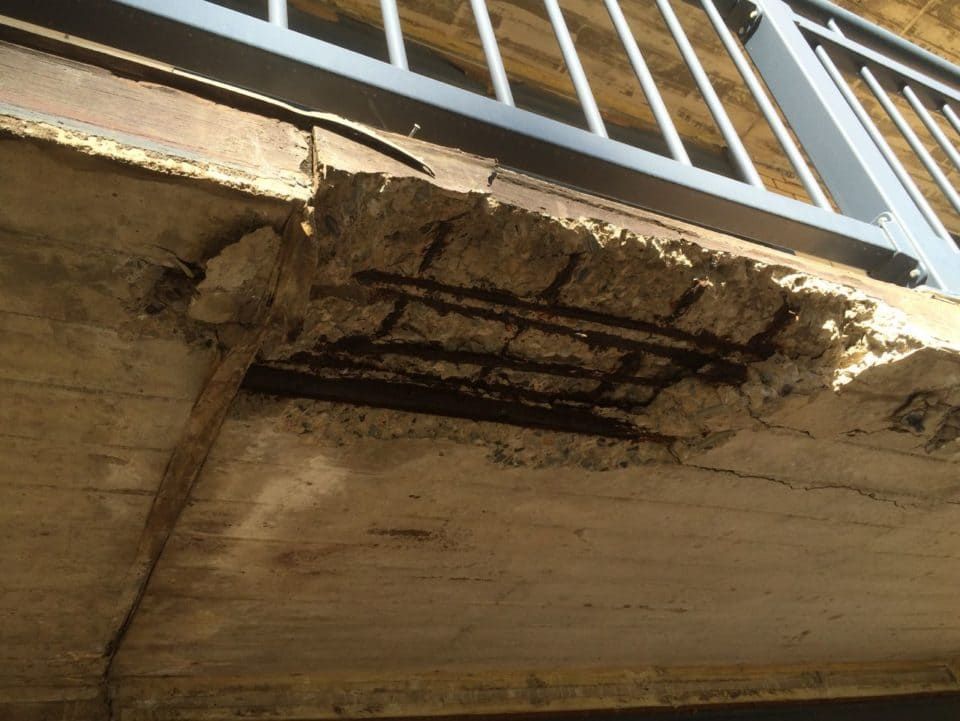
Spalling occurs when portions of concrete break away from the surface.
Common causes include:
- Corrosion of reinforcing steel
- Freeze-thaw damage
- Water infiltration
- Long-term exposure to moisture
Spalling is often one of the most visible indicators that concrete balcony repairs may be needed.
Exposed Reinforcing Steel
When reinforcing steel becomes exposed, moisture and oxygen can accelerate corrosion.
As steel rusts, it expands and creates internal pressure within the concrete. This expansion can lead to additional cracking and concrete loss.
Rust Staining
Rust stains appearing on balcony surfaces or undersides often indicate moisture reaching embedded steel reinforcement.
While staining alone does not confirm structural damage, it frequently signals conditions that warrant further evaluation.
Ponding Water
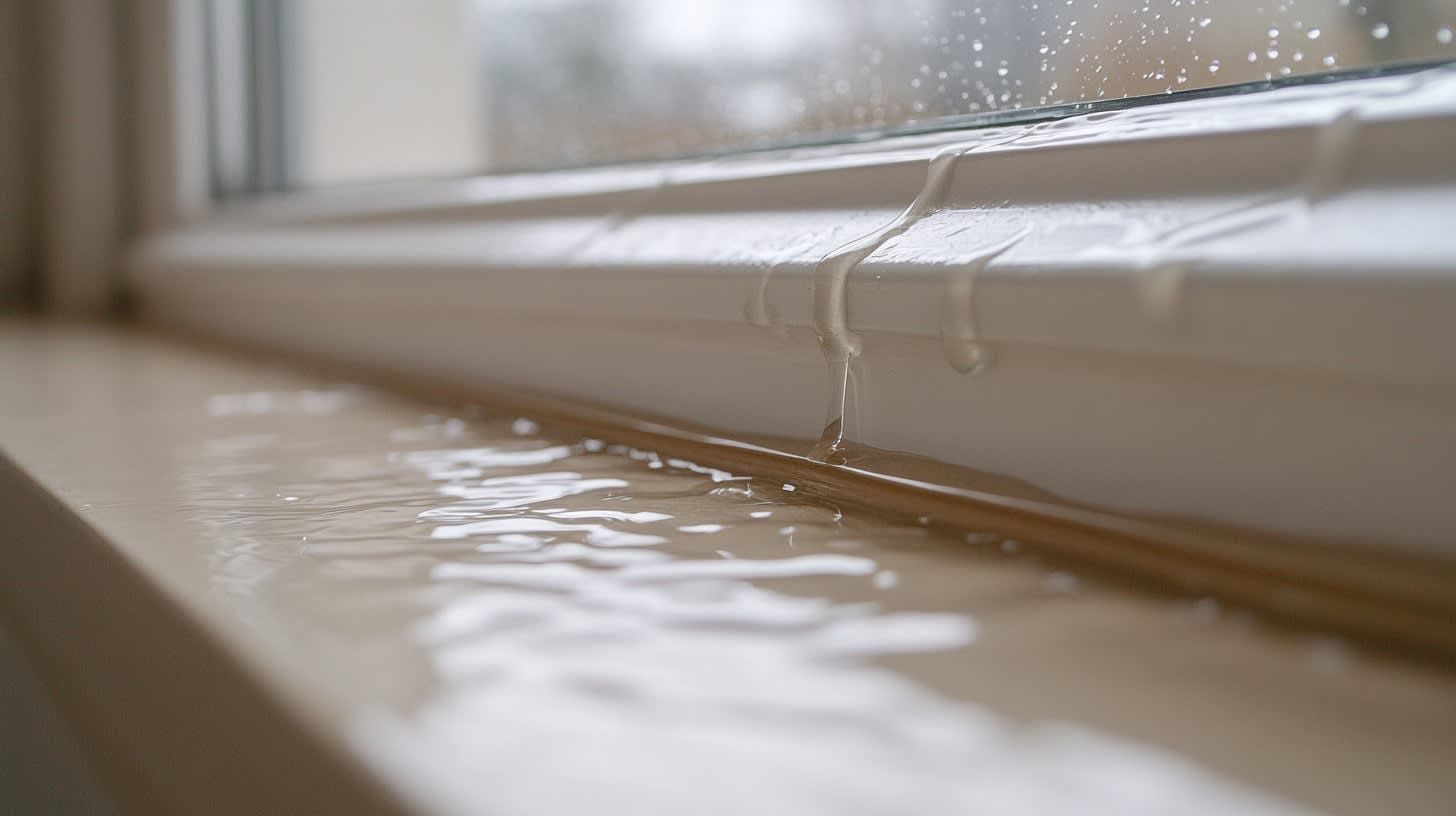
Standing water on balcony surfaces can increase deterioration rates.
Poor drainage may contribute to:
- Surface deterioration
- Sealant failures
- Waterproofing issues
- Freeze-thaw damage
Addressing drainage concerns can help extend the service life of a balcony system.
What Happens During a Concrete Balcony Safety Check?
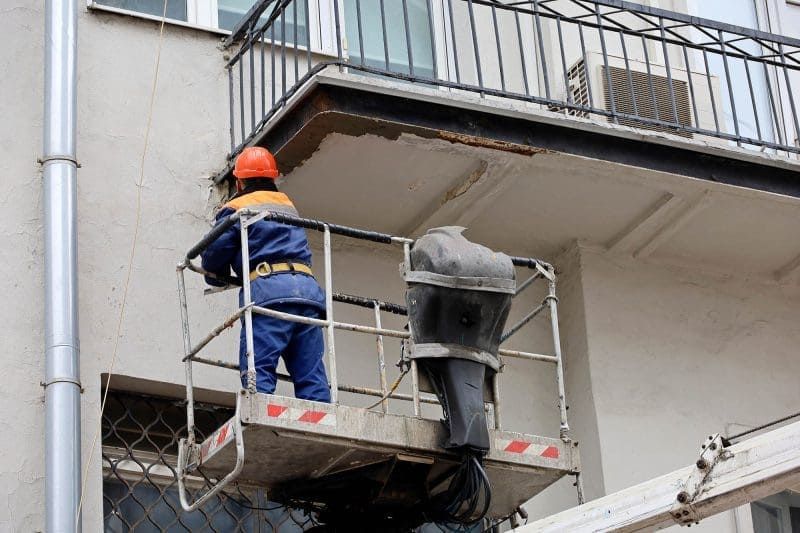
A comprehensive balcony assessment typically follows a systematic process.
Visual Evaluation
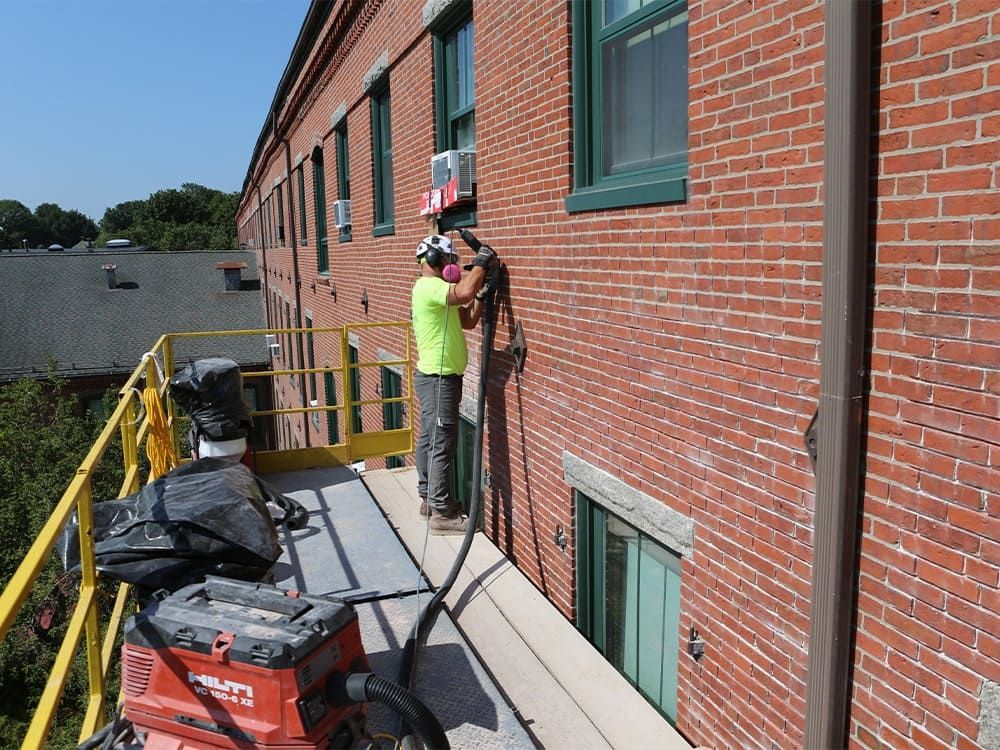
The inspection begins with a visual review of accessible balcony surfaces and related components.
Inspectors may document:
- Cracking patterns
- Spalling locations
- Drainage conditions
- Rust staining
- Sealant performance
- Previous repair areas
Sounding and Delamination Detection
In some cases, deterioration exists beneath the surface before visible damage appears.
Sounding techniques may be used to identify hollow or delaminated concrete areas that could require repair.
Structural Review
If significant deterioration is identified, a structural engineer may evaluate:
- Load-bearing capacity
- Reinforcement conditions
- Structural integrity
- Repair recommendations
Repair Planning
Once conditions are documented, repair scopes can be developed based on observed deficiencies.
Potential repairs may include:
- Concrete balcony restoration
- Concrete façade repair
- Caulking and sealant repairs
- Waterproofing improvements
- Localized structural repairs
How Preventive Repairs Can Reduce Long-Term Costs
Many concrete balcony failures begin as relatively minor maintenance issues.
For example, a failed sealant joint can allow water to penetrate concrete. Over time, moisture reaches reinforcing steel, corrosion develops, concrete begins to crack, and spalling follows. What may have started as a relatively simple maintenance item can eventually require much more extensive concrete balcony repairs.
This progression highlights the value of preventive maintenance. Industry organizations such as the Canadian Condominium Institute note that deferred maintenance often leads to compounding repair costs as building envelope components continue to deteriorate. The same principle applies to concrete balconies, where addressing small issues early is typically far less expensive than restoring widespread deterioration years later.
Preventive repairs can help:
- Extend the service life of concrete balcony systems
- Reduce the risk of water infiltration and corrosion
- Improve long-term capital planning
- Minimize unexpected repair expenses
- Help preserve property value
For this reason, many property owners, condominium associations, and facility managers incorporate routine balcony evaluations into their broader building maintenance and capital improvement strategies.
Balcony Repairs vs. Balcony Replacement
Not every deteriorated balcony requires replacement.
A qualified evaluation helps determine whether repairs can safely extend the service life of the existing balcony.
Repair solutions may include:
- Concrete patch repairs
- Reinforcing steel treatment
- Crack repairs
- Joint sealant replacement
- Waterproofing improvements
- Surface protection systems
Replacement is generally considered when deterioration is extensive or structural capacity cannot be adequately restored through repair.
Planning Balcony Inspections Before Problems Escalate
Waiting until concrete falls, reinforcement becomes exposed, or resident complaints increase often results in more extensive repair programs.
Instead, property managers and owners should consider periodic evaluations when:
- Balconies are several decades old.
- Visible cracking begins to appear.
- Rust staining develops.
- Water drainage issues are observed.
- Previous repairs show signs of deterioration.
- Major capital planning discussions are underway.
Proactive inspections provide better budgeting visibility and help reduce the likelihood of emergency repairs.
Concrete Balcony Safety Checks and Building Asset Preservation
Concrete balconies represent both a structural component and a visible architectural feature.
Regular safety checks help protect:
- Resident safety
- Building value
- Long-term maintenance budgets
- Property appearance
- Capital reserve planning efforts
For Chicago-area buildings exposed to decades of freeze-thaw cycling and weather exposure, routine balcony assessments remain one of the most effective ways to identify problems early and extend service life.
Frequently Asked Questions
How often should concrete balconies be inspected?
The appropriate inspection frequency depends on the building's age, exposure conditions, and maintenance history. Older balconies or those showing signs of deterioration may require more frequent evaluations. Property owners should consult qualified engineers or restoration professionals when concerns arise.
What are the most common signs of balcony deterioration?
Common warning signs include cracking, spalling concrete, rust staining, exposed reinforcing steel, failed sealants, and ponding water. These conditions often indicate moisture-related deterioration that should be evaluated before damage progresses.
Can cracked concrete balconies be repaired?
Many cracked concrete balconies can be repaired if deterioration is identified early. Repair methods depend on the cause, severity, and extent of the damage. A professional assessment helps determine whether repair or replacement is the most appropriate solution.
Is spalling concrete dangerous?
Spalling concrete can create safety concerns because loose concrete may detach from the structure. It may also indicate underlying reinforcement corrosion. Significant spalling should be evaluated promptly by qualified professionals.
What causes concrete balconies to deteriorate in Chicago?
Freeze-thaw cycles, moisture infiltration, deicing salts, poor drainage, aging waterproofing systems, and reinforcement corrosion are among the most common causes of balcony deterioration throughout the Chicago region.
If you have more questions about concrete balcony repairs, contact RestoreWorks today.