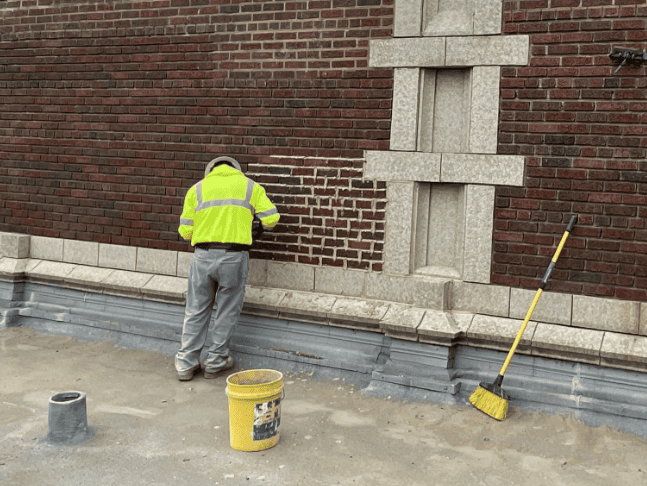
Addressing Masonry Cracks Before Winter
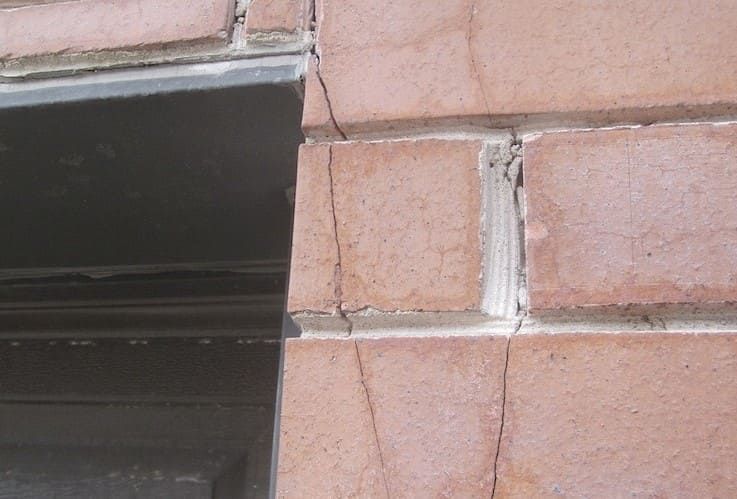
Masonry cracks are common on older commercial and multi-family buildings, but the cause is not always obvious from the surface.
Some cracks are limited to deteriorated mortar. Others are related to movement, water infiltration, corroding steel, failed flashing, or damage around windows and other openings. Repairing the visible crack without understanding what caused it can leave the original problem in place.
For Chicago property managers and building owners, late summer and fall are good times to review these conditions. Repeated freeze-thaw cycles can make existing moisture problems worse, and masonry repairs become more difficult to schedule and perform as temperatures drop.
Why Masonry Cracks Can Get Worse During Cold Weather
Cracks give water another way into masonry and the wall assembly behind it.
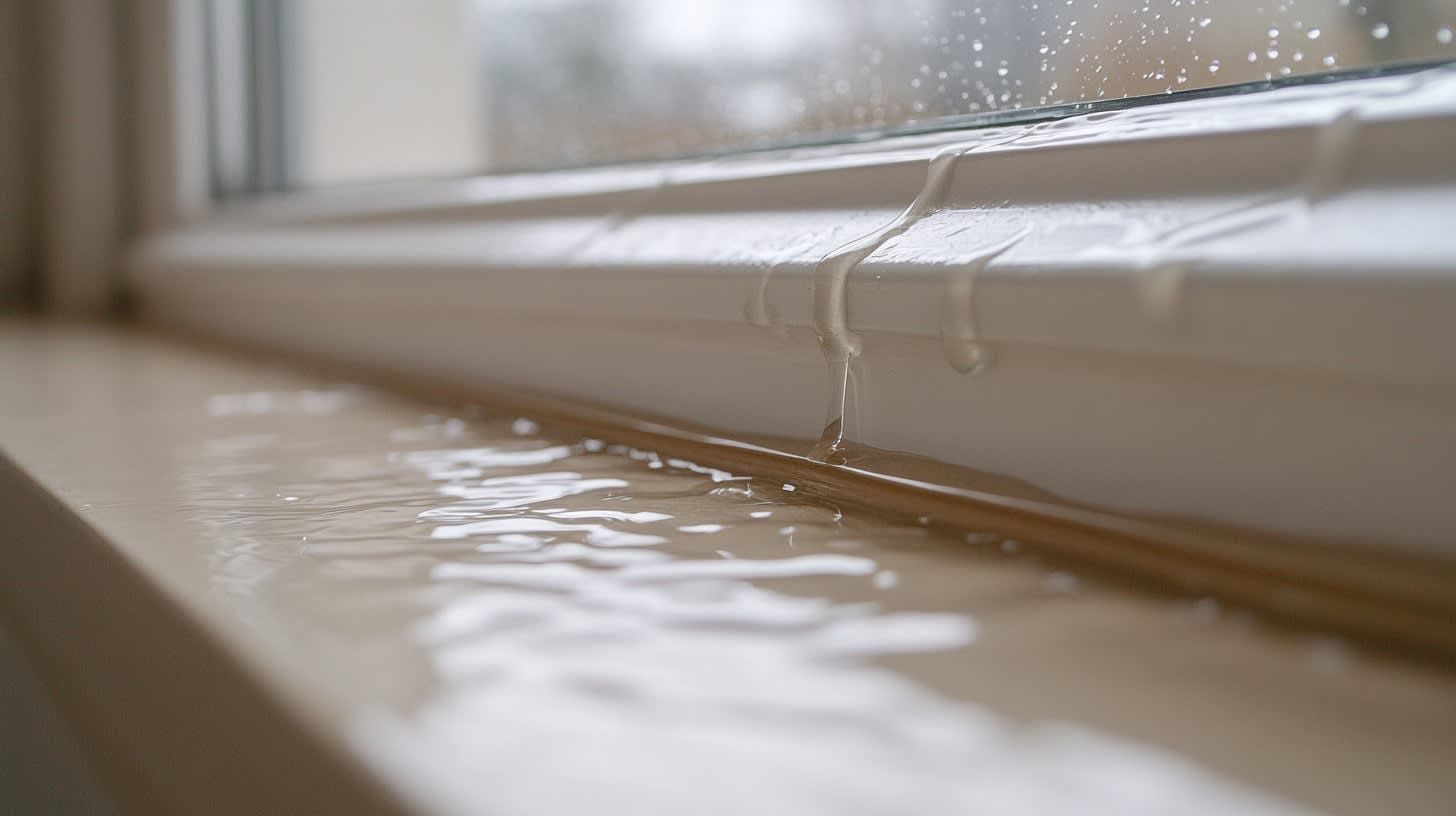
Water may also enter through deteriorated mortar joints, failed sealants, coping joints, or flashing. Once brick and mortar become wet, colder temperatures can slow drying and increase the potential for freeze-thaw deterioration.
Research from Building Science Corporation helps explain why moisture inside a masonry wall matters. In its study, Measuring the Impact of Interior Insulation on Solid Masonry Walls in a Cold Climate, researchers evaluated a three-story masonry school in Toronto. They noted that colder masonry and reduced drying potential can increase freeze-thaw risk when enough moisture is present.
The study also looked at concealed steel. Higher relative humidity and reduced drying within the wall can create conditions that increase the risk of corrosion in embedded metal components such as ties and supporting angles. In the walls monitored for the study, freeze-thaw risk remained low during the testing period, but the researchers found an increased risk of embedded steel corrosion.
For property managers, that means a visible crack may be only part of the condition. Cracking that allows repeated water entry can eventually be accompanied by spalled masonry, deteriorated mortar, rust staining, or damage to concealed steel.
Evaluating masonry repairs before prolonged cold weather gives the project team a chance to find the source of the moisture and determine whether the repair involves only the visible crack or other parts of the wall assembly.
What Does the Location of a Masonry Crack Tell You?
Where a crack appears can provide useful information about what is happening behind the façade.
It does not provide the entire answer. The surrounding masonry, sealants, flashing, steel supports, and signs of moisture should be reviewed along with the crack itself.
Stair-Step Cracks
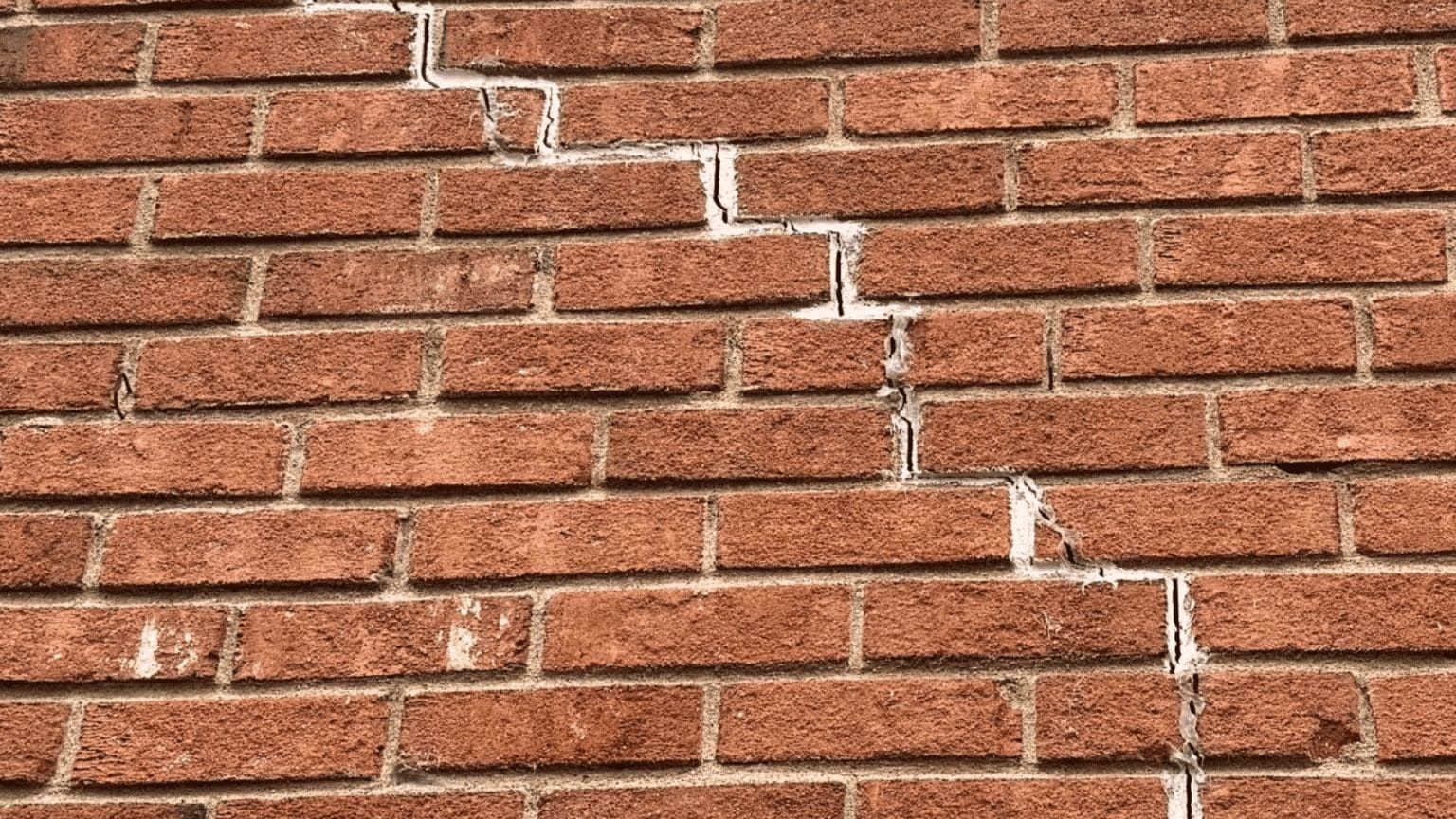
Stair-step cracks follow horizontal and vertical mortar joints in a brick wall.
They can develop from building settlement, thermal movement, moisture-related movement, or other changes in the wall. A crack that continues to widen or returns after previous tuckpointing deserves a closer look.
Watch for displaced brick or changes in the width of the crack. Those conditions can help determine whether the masonry is still moving.
Cracks Above Windows and Doors
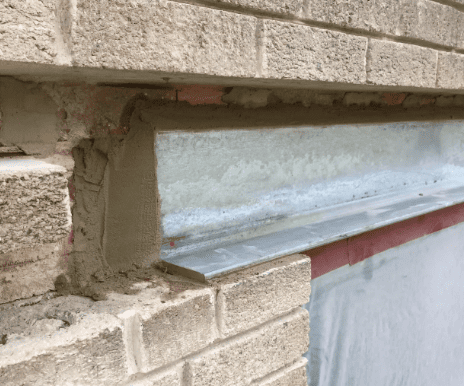
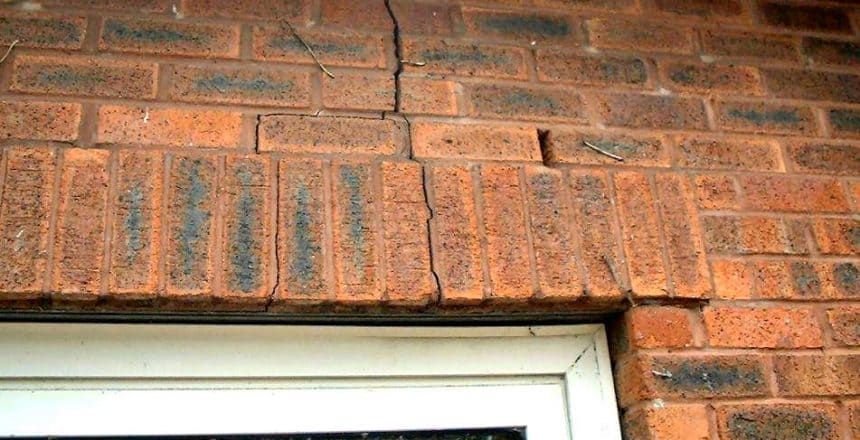
Cracking above windows and doors can be related to the lintel that supports the masonry above the opening.
Steel lintels can corrode when water gets into the wall. As corrosion develops, pressure can build against the surrounding masonry. Rust staining, cracked mortar, displaced brick, or spalling around the opening may appear along with the crack.
In those cases, replacing mortar alone may not solve the problem. Masonry may need to be removed so the lintel, flashing, and surrounding conditions can be inspected.
Cracks Through Brick or Stone
A crack that runs through the masonry unit itself deserves attention.
Movement is no longer occurring only along the mortar joints. The brick or stone has fractured as well.
The damaged units may need to be replaced, but the cause of the movement should be identified first. Otherwise, new masonry can develop the same problem.
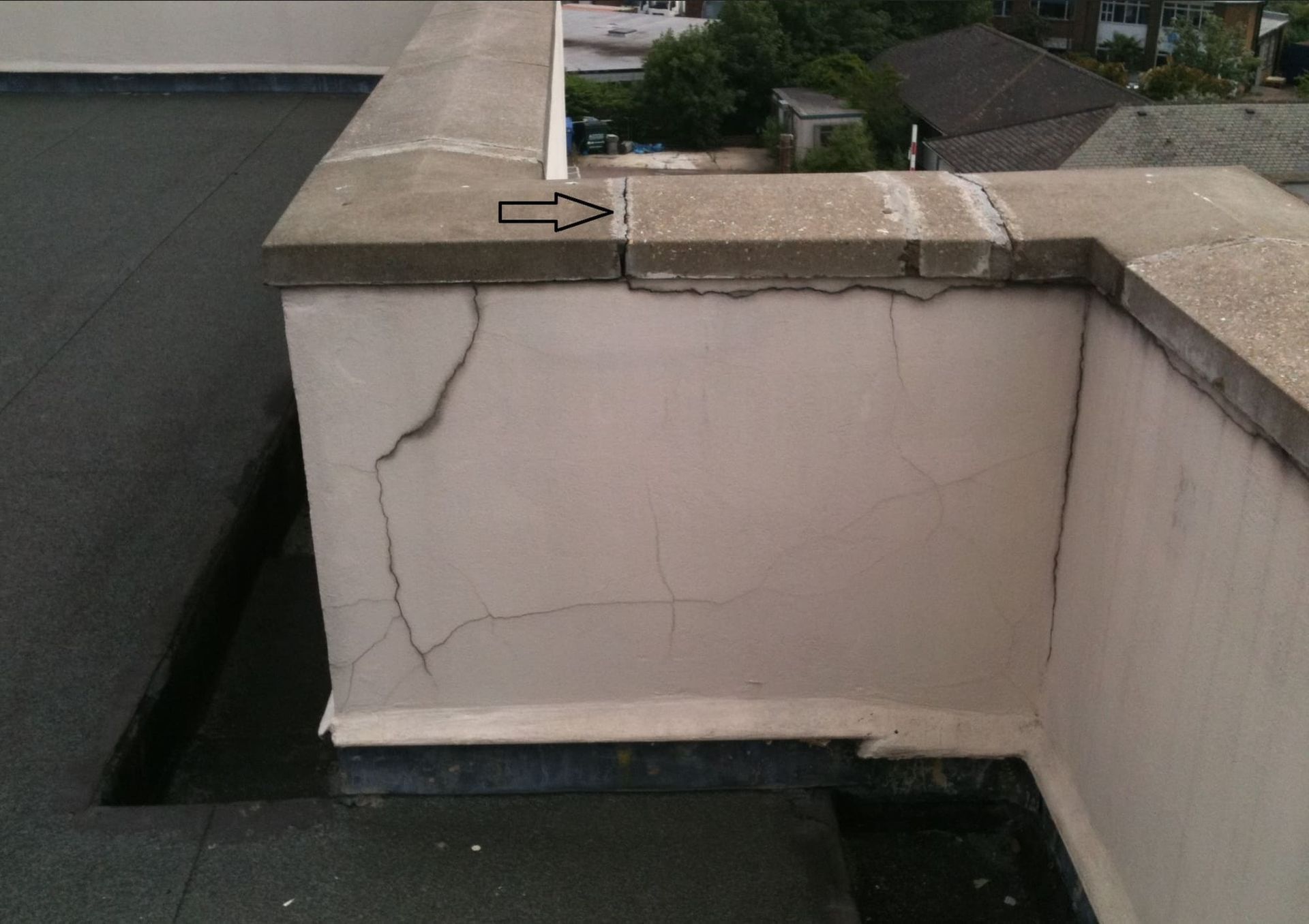
Cracks Around Parapets and Coping
Parapets are exposed to rain, snow, temperature changes, and wind from several directions. Cracking in these areas often appears alongside deteriorated mortar, open coping joints, or failed sealant.
Water that enters near the top of a wall can travel behind the masonry before becoming visible elsewhere.
When cracks appear below coping or parapets, the inspection should include the conditions above the crack instead of focusing only on the damaged mortar.
When Can Tuckpointing Repair a Masonry Crack?
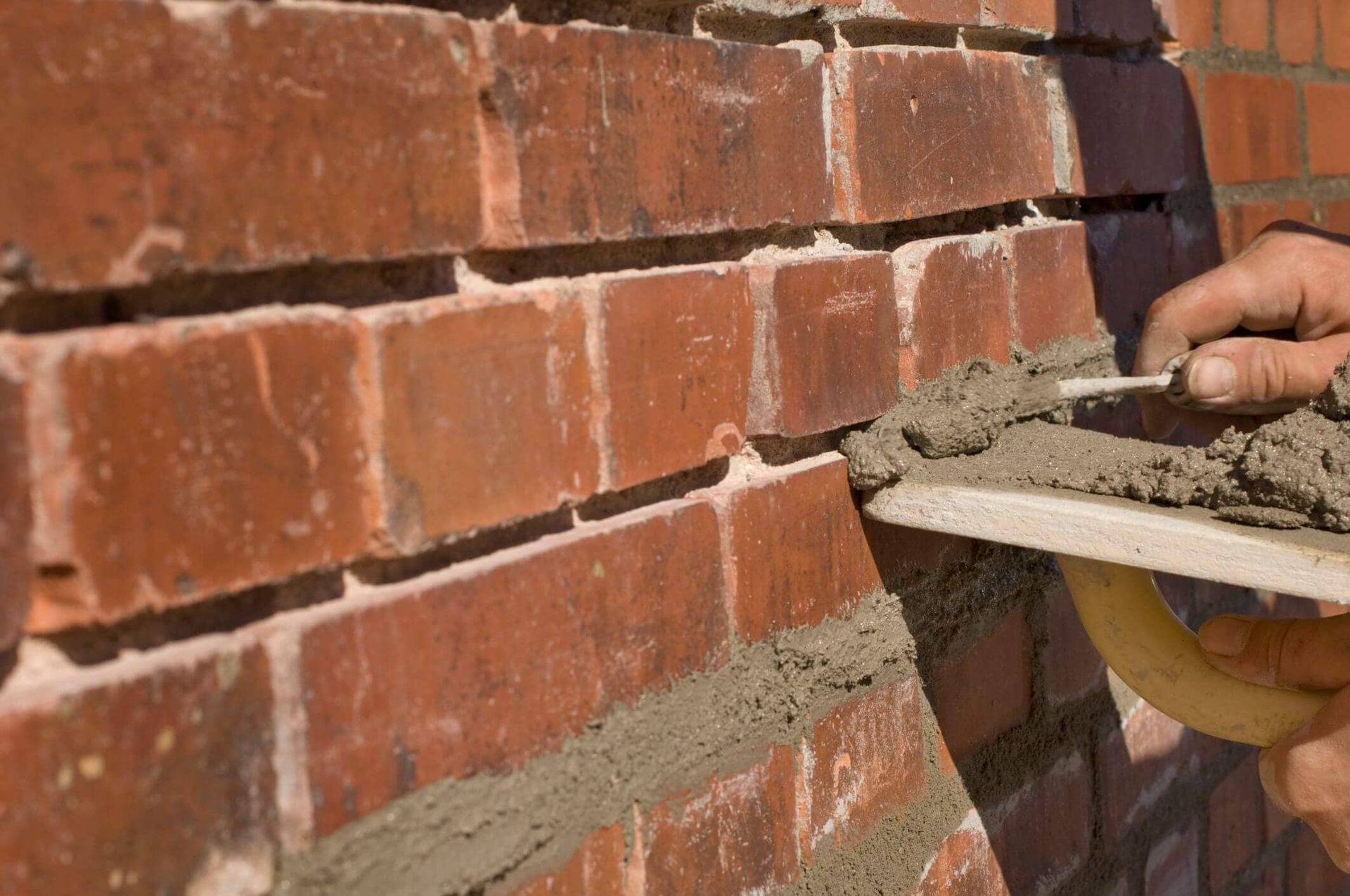
Tuckpointing is often the correct repair when deterioration is limited to mortar joints and the surrounding masonry is still sound.
The deteriorated mortar is removed and replaced with new mortar that is appropriate for the existing masonry.
Tuckpointing may make sense when:
- Mortar is cracked, loose, recessed, or deteriorated.
- Brick or stone remains intact and properly aligned.
- There is no obvious displacement or continuing movement.
- Water is not entering from a failed component elsewhere in the wall.
- Supporting steel and flashing are performing as intended.
Problems arise when tuckpointing is used as a surface fix for a condition that starts somewhere else.
If a crack is being caused by corroding steel or wall movement, new mortar can crack again. If water is entering through failed flashing above the repair, replacing the mortar below it does not stop the water.
What Should Be Checked Before Masonry Repairs Begin?
A good repair starts with documenting what is happening around the crack.
Photos should include close-up views as well as wider shots of the elevation. The wider view can show whether the crack is isolated or part of a larger pattern involving openings, parapets, shelf angles, or other parts of the façade.
A STRUCTURE Magazine article on masonry façade condition assessments points to the same approach. It describes a condition assessment as more than identifying individual defects. The process includes documenting visible conditions, reviewing the surrounding masonry and building components, and using those observations to help determine what is causing the deterioration.
Check nearby areas for:
- Rust staining
- Spalled or fractured masonry
- Deteriorated mortar
- Open sealant joints
- Efflorescence
- Interior leaks
- Loose or displaced masonry
- Open coping joints
- Cracking around windows and doors
- Bowing or bulging sections of wall
The pattern matters. Several cracks above windows, for example, may warrant a closer look at the lintels, flashing, or other conditions around those openings. Cracking concentrated below a parapet may point the investigation toward coping, sealant joints, or water entry higher on the wall.
For more complex conditions, the assessment may also involve testing or selective openings to examine concealed components before the repair scope is finalized.
Look at What Is Above the Damage
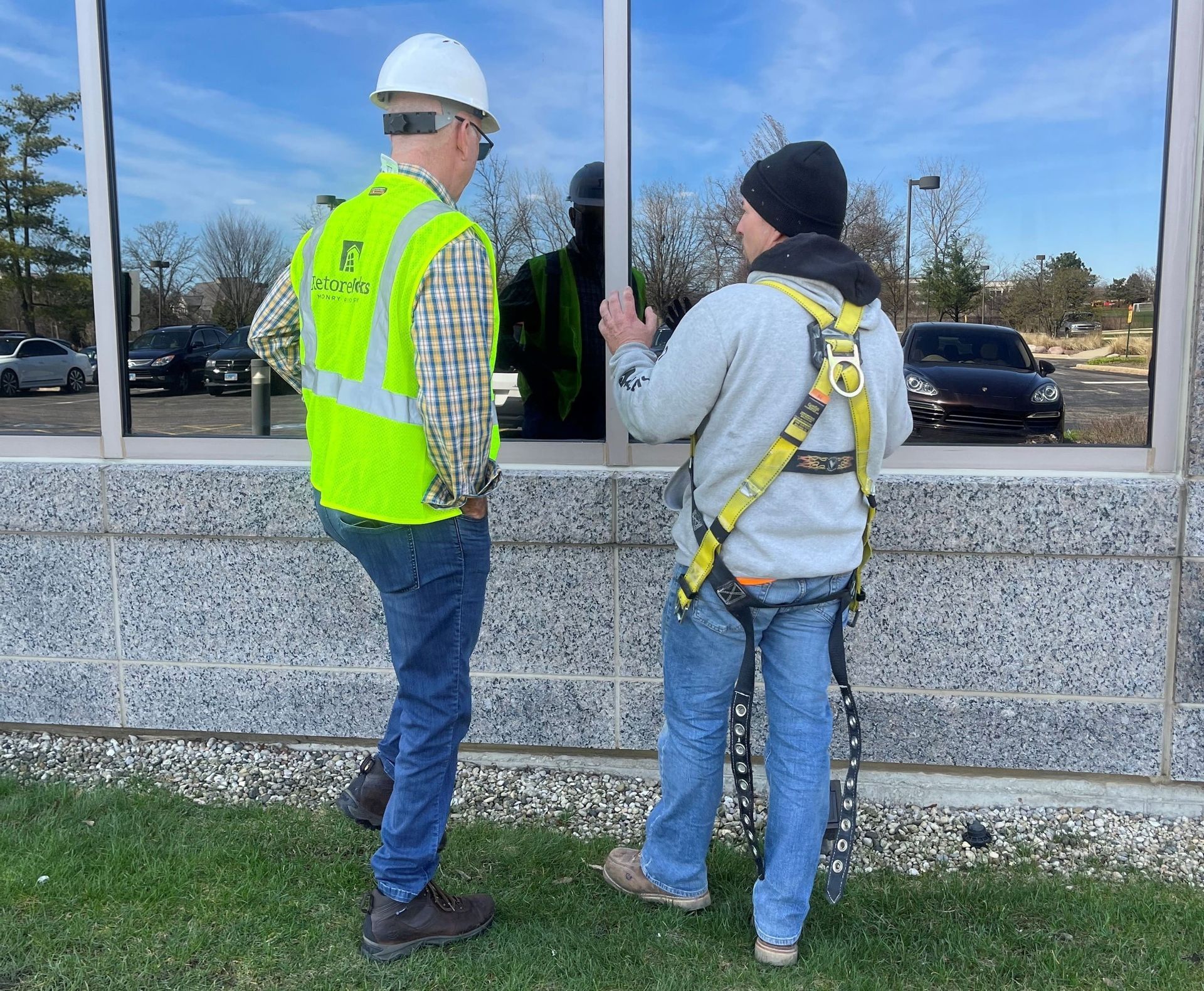
Water does not always enter the wall at the location where damage becomes visible.
If cracking or staining appears several feet below a coping joint, shelf angle, window, or other transition, that area should be included in the inspection.
This is especially relevant on multi-story buildings where water can move behind the masonry before finding a path to the surface or interior.
Review Concealed Conditions When Needed
Some repairs cannot be accurately scoped from the ground.
Selective masonry removal may be needed to inspect a lintel, shelf angle, flashing, or another concealed component. That information can change the repair substantially.
For example, what initially appears to be a tuckpointing repair above a window may require masonry removal, steel repair, new flashing, brick replacement, and repointing once the wall is opened.
That sequence is common in masonry restoration because the exterior masonry is only one part of the wall assembly.
Which Masonry Repairs May Be Needed?
The repair should match the condition that caused the crack.
Depending on what is found during the inspection, the work may include tuckpointing, masonry replacement, sealant repairs, lintel or shelf flashing repairs, or a larger masonry restoration project.
Tuckpointing
Deteriorated mortar is removed and replaced with new mortar.
On older Chicago buildings, mortar selection deserves extra attention. Mortar that is too hard for the existing brick can contribute to damage in the masonry units. Color, texture, joint profile, and compatibility should be reviewed before production work begins.
Brick or Stone Replacement
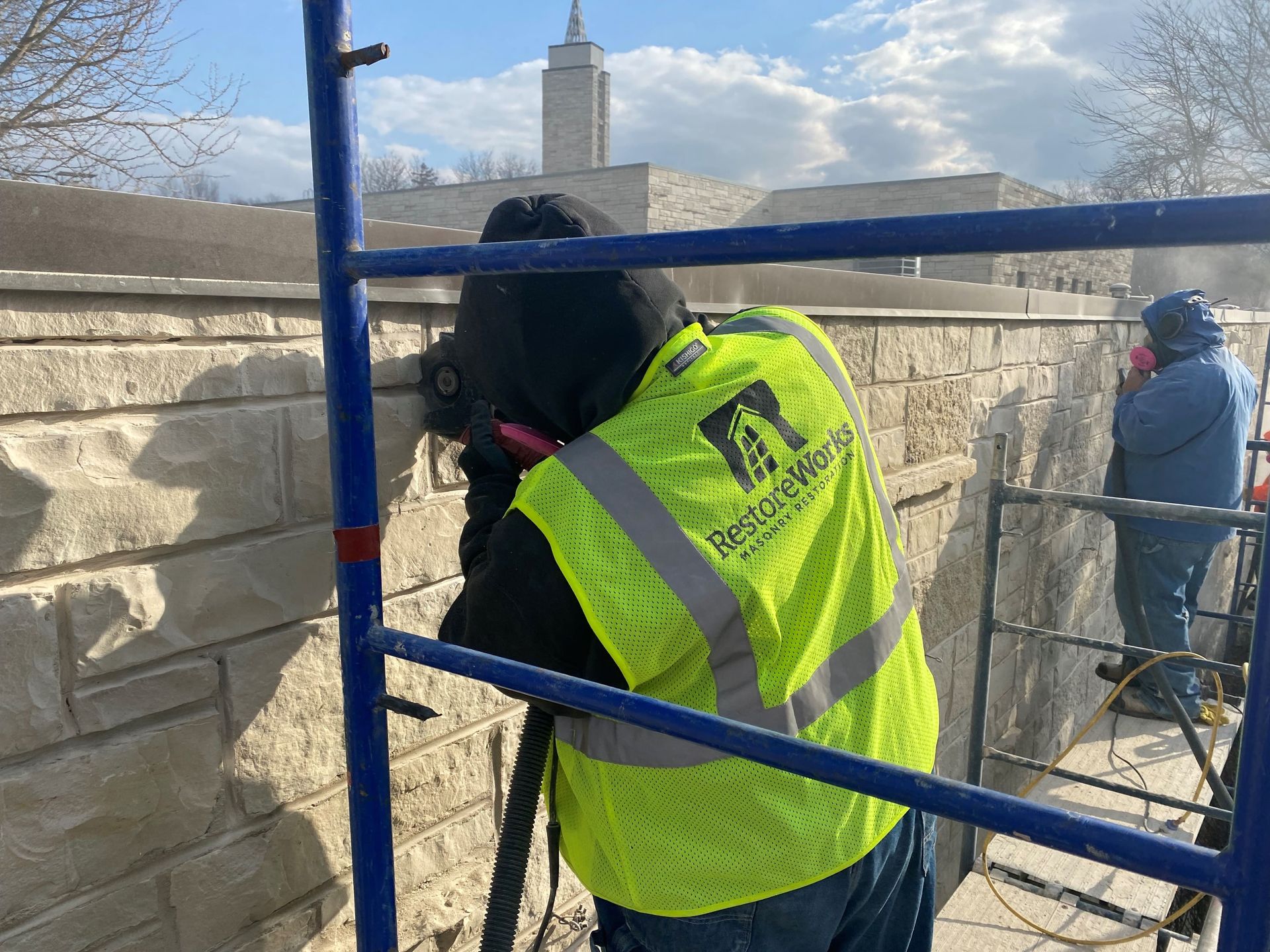
Cracked or severely spalled masonry may need to be removed and replaced.
Replacement units should match the existing building as closely as practical while also being appropriate for the wall assembly.
Lintel and Shelf Flashing Repairs
Cracking associated with corroded steel can require removal of the surrounding masonry so the steel can be repaired or replaced.
The repair may also involve flashing, drainage, masonry replacement, and tuckpointing. Leaving the water-management issue unresolved can allow corrosion to return.
Caulking and Sealant Repairs
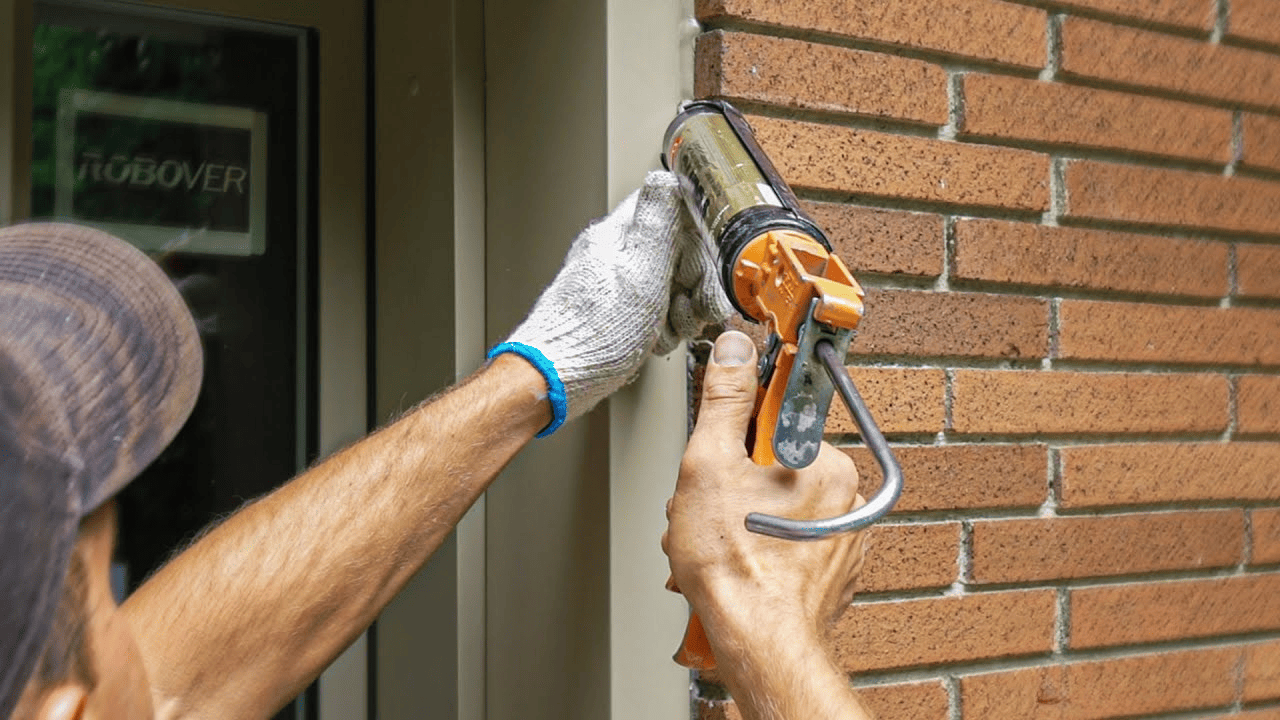
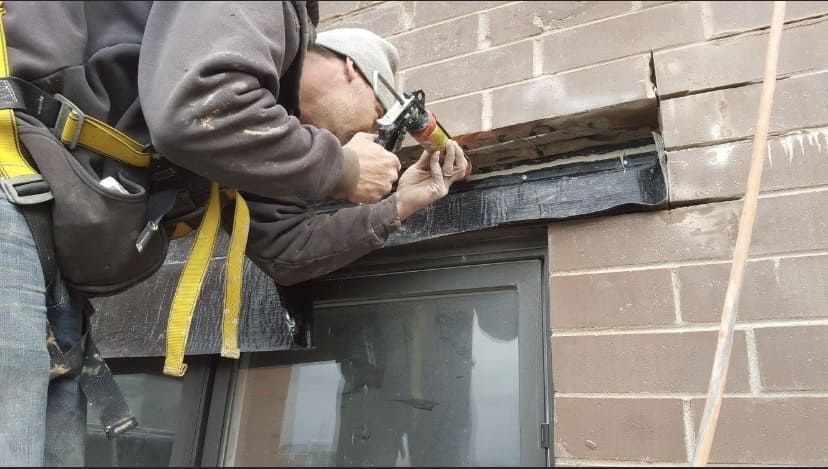
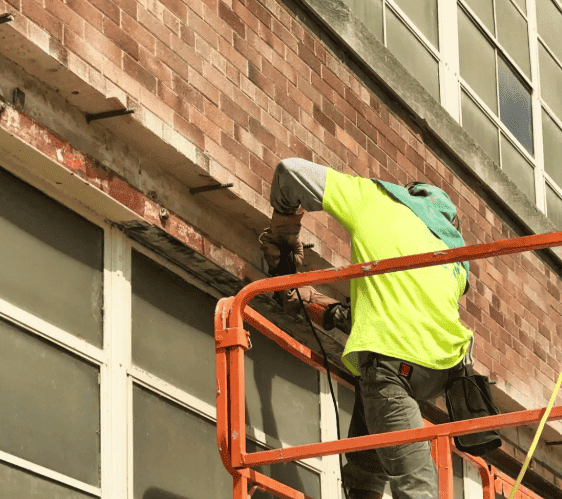
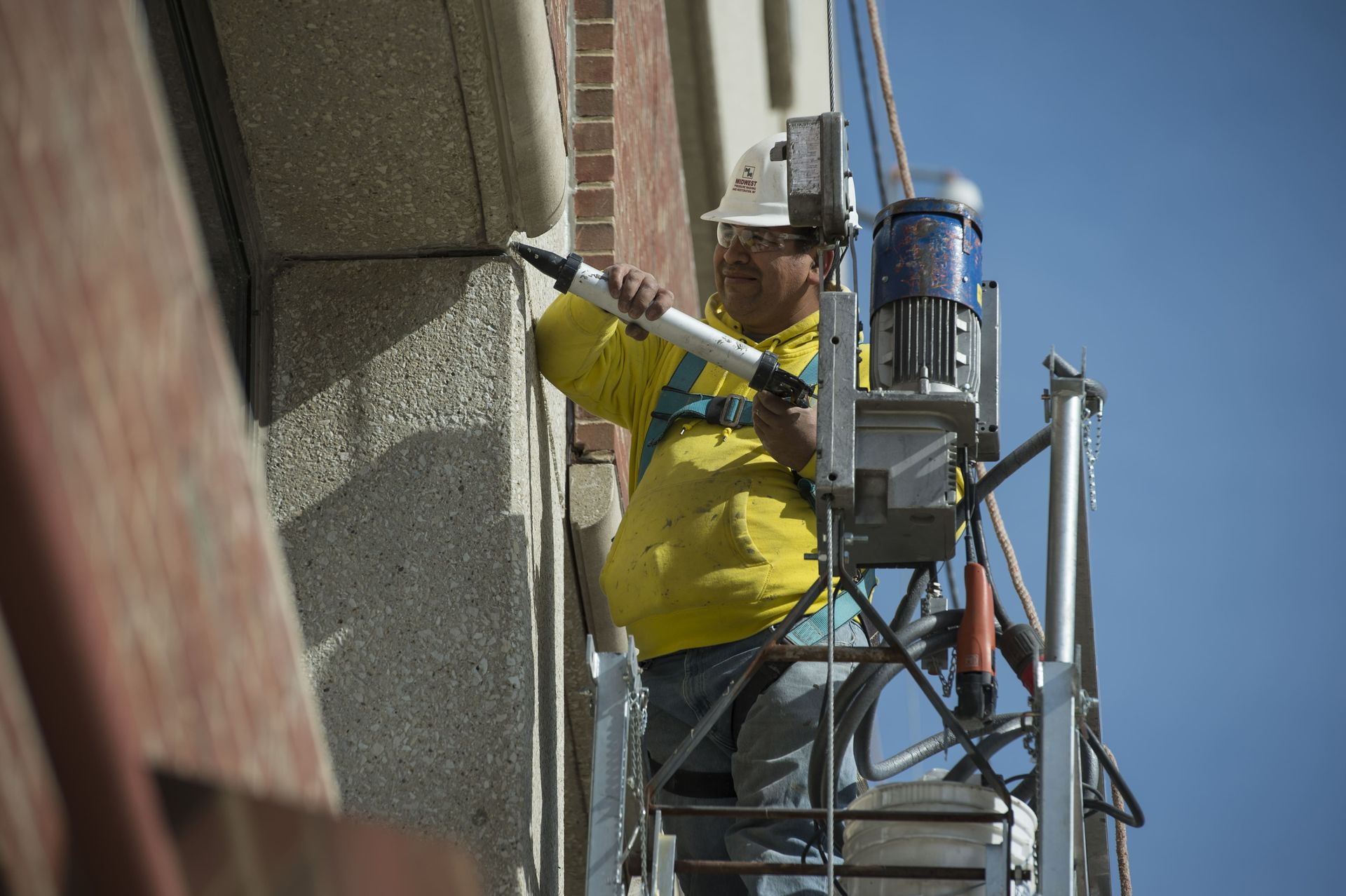
Failed sealant around windows, doors, expansion joints, and material transitions can allow water into the wall.
Sealant conditions should be reviewed when cracking appears nearby. Replacing masonry without repairing an open joint can leave a direct path for water behind the new work.
When Does a Crack Need Faster Attention?
Property teams do not need to treat every hairline crack as an emergency. Some conditions, however, deserve quicker evaluation.
Pay closer attention when you see:
- Cracks that are noticeably widening
- Loose or displaced masonry
- Bowing or bulging areas
- Rust staining around lintels
- Spalling over sidewalks or entrances
- Active water infiltration
- Cracks that have returned after previous repairs
- Movement around balconies or other projecting elements
Location also affects priority. Deteriorated masonry above a building entrance or heavily traveled sidewalk creates a different risk than the same condition in an inaccessible area.
If there is uncertainty about structural movement or the stability of the wall, an architect or structural engineer may need to evaluate the condition before repairs are planned.
Why Schedule Masonry Repairs Before Winter in Chicago?
Masonry work does not stop as soon as temperatures fall, but colder conditions affect how the work is performed.
The Concrete Masonry & Hardscapes Association, in its All-Weather Concrete Masonry Construction guidance, considers temperatures between 40°F and 90°F normal for masonry construction. When temperatures fall below 40°F, additional cold-weather procedures and protection may be required.
Depending on conditions, that can include heating mixing water or sand, protecting completed masonry with insulating blankets, using temporary enclosures and supplemental heat, and keeping masonry surfaces at the proper temperature before new work is installed. Mortar also sets and develops early strength more slowly at lower temperatures unless the materials and work area are properly managed.
That does not mean masonry repairs cannot be completed during cold weather. It means the contractor has more variables to account for, which can affect scheduling, site setup, and production.
Starting the evaluation earlier leaves more time to:
- Determine the cause of the cracking
- Develop the repair scope
- Coordinate with an architect or engineer when needed
- Match brick, stone, and mortar
- Arrange access and staging
- Complete a mock-up for larger restoration work
- Schedule repairs before cold-weather protection becomes necessary
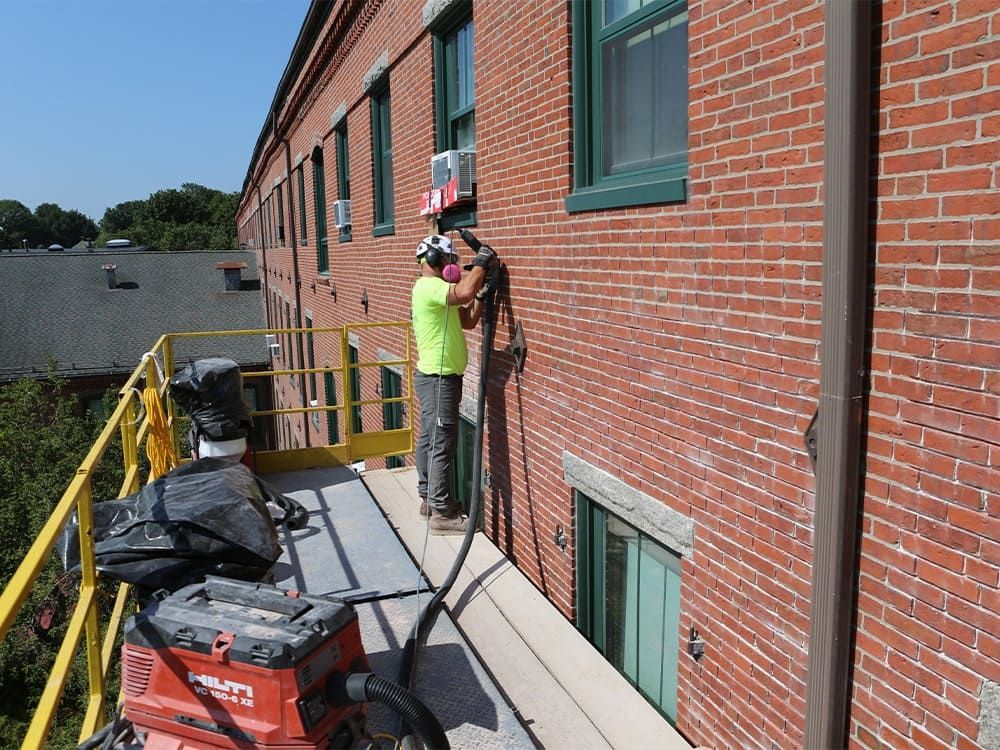
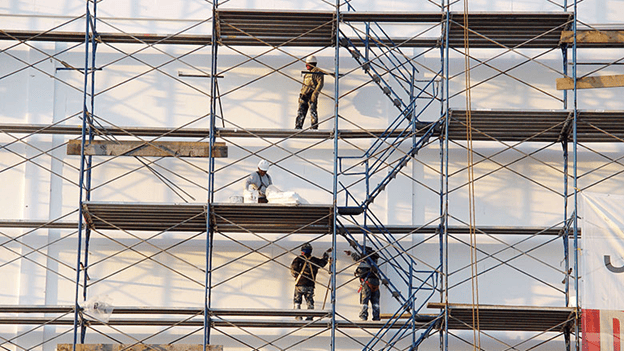
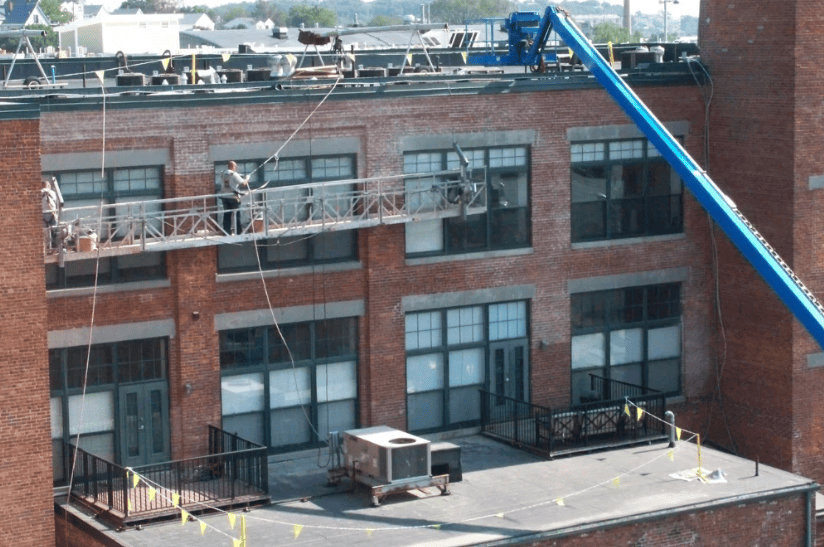
This matters on commercial and multi-family properties where even a relatively small façade repair may require lifts, swing stages, sidewalk protection, or coordination with tenants and building operations.
Planning earlier gives the project team more flexibility. If temperatures drop before the work is complete, the contractor can then plan around the required cold-weather procedures instead of reacting to them after the project has already started.
What Should Property Managers Check This Fall?
A ground-level walk around the property can help identify areas that need a closer inspection.
Look at the same areas where water and movement problems commonly develop: parapets, coping, windows, doors, lintels, shelf angles, corners, balconies, and material transitions.
Compare current conditions with older building photos when they are available. Changes in crack width, staining, displacement, or mortar loss can help show whether a condition is progressing.
For taller buildings or areas that cannot be seen clearly from the ground, a closer façade inspection may be necessary.
Frequently Asked Questions About Masonry Cracks
Can masonry cracks be repaired during winter in Chicago?
Yes, masonry repairs can be performed during cold weather, but temperature affects mortar curing, sealant installation, and jobsite conditions. Some projects require temporary protection, heating, or enclosures. Evaluating the masonry earlier gives property teams more flexibility to schedule repairs before cold-weather procedures add cost or complexity.
What causes stair-step cracks in brick masonry?
Stair-step cracks can develop from settlement, thermal movement, moisture-related movement, or other changes in the building. The crack pattern alone does not identify the cause. Cracks that widen, displace the surrounding brick, or return after previous tuckpointing should be evaluated before another repair is made.
Is tuckpointing enough to fix cracks in a brick wall?
Tuckpointing can repair cracks when deterioration is limited to mortar joints and the surrounding masonry is stable. It will not correct problems caused by corroded steel, failed flashing, damaged masonry, or continuing building movement. The surrounding conditions should be checked before deciding that tuckpointing is the complete repair.
When should a masonry crack be evaluated by an engineer?
Consider an engineering evaluation when cracking is associated with noticeable displacement, bowing, bulging, recurring movement, structural supports, balconies, or other signs that the condition may extend beyond the masonry itself. An engineer can determine whether structural movement is involved and help define the repair before masonry work begins.
Address Masonry Cracks Before the Repair Scope Grows
Cracked masonry is easier to plan for when the condition is identified early.
A deteriorated mortar joint may need tuckpointing. Cracking above a window may lead to lintel and flashing repairs. Widespread cracking, spalling, and moisture problems may point toward a larger masonry restoration scope.
For Chicago property managers and owners, inspecting these areas before cold weather provides time to determine what is happening, develop the right repair, and schedule the work around the building's needs. Contact RestoreWorks to schedule your free masonry assessment.