Window Leak Detection: How to Diagnose Moisture Pathways in Masonry Buildings
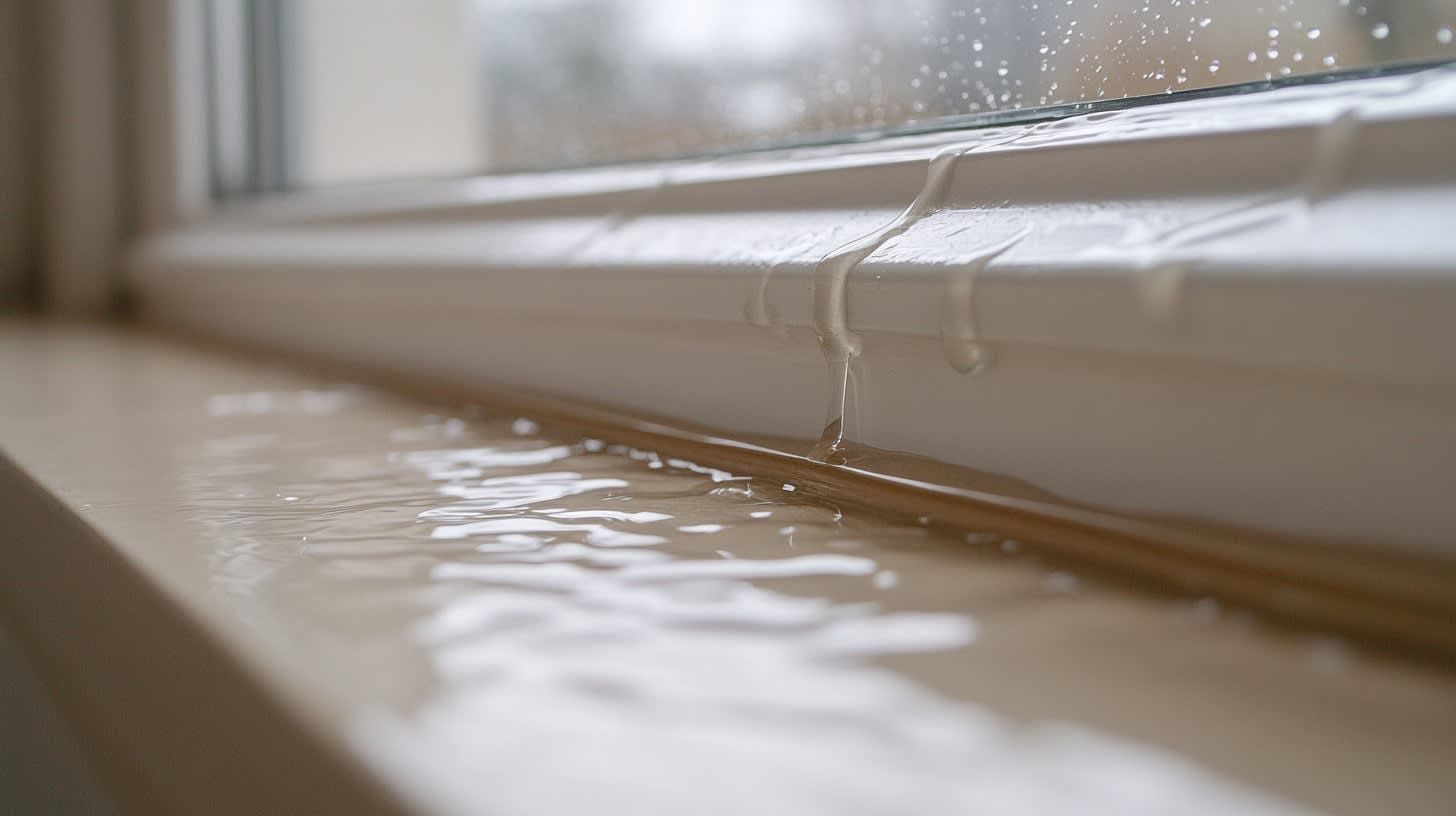
Water stains around windows are often treated as isolated leaks. In reality, they are frequently symptoms of larger building envelope issues that allow moisture to travel through multiple pathways before becoming visible inside the building.
For property managers, building engineers, architects, and building owners, effective window leak detection is about identifying where water enters the building, not simply where it appears. Diagnosing moisture pathways correctly helps prevent recurring leaks, unnecessary repairs, and long-term deterioration of masonry, sealants, steel components, and interior finishes.
This guide explains how moisture travels through commercial masonry buildings, what inspectors look for during window leak investigations, and why solving the root cause often requires more than replacing a window.
Why Window Leaks Are Often Misdiagnosed
Water rarely travels in a straight line.
Rainwater can enter through one part of a building envelope and migrate several feet before becoming visible inside. Gravity, wind-driven rain, air movement, drainage pathways, and the way wall assemblies manage moisture can all influence where water ultimately appears. As the Association of the Wall and Ceiling Industry (AWCI) explains, moisture naturally moves from areas of higher pressure to lower pressure, making the visible leak only one part of a much larger moisture pathway.
For example, water dripping from the top of an interior window may actually originate from:
- Failed sealant joints above the window
- Cracked mortar joints several courses higher
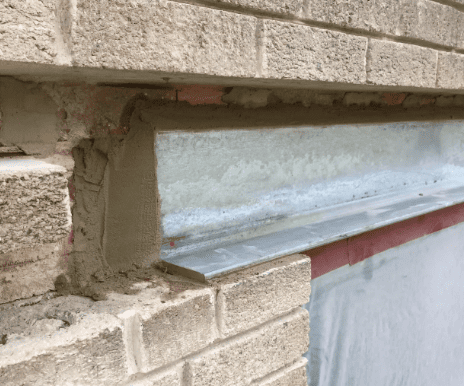
- Deteriorated shelf angle flashing
- Failed coping joints
- Open masonry expansion joints
- Roof-to-wall transitions
Replacing the window without identifying the actual moisture pathway often leads to repeated leaks, unnecessary window replacements, and additional repair costs.
How Does Water Enter a Masonry Building?
Commercial masonry walls are designed to manage water, not completely stop it.
Even well-constructed masonry absorbs some moisture during rain events. The goal of the building envelope is to control bulk water, which includes rain driven by gravity and wind, and direct any incidental moisture back to the exterior through flashing, drainage cavities, weep systems, weather-resistant barriers, and properly installed sealants. As the Concrete Masonry & Hardscapes Association (CMHA) explains, effective moisture management depends on all of these components working together rather than any single product preventing water intrusion.
Problems begin when one or more components fail.
Common moisture entry points include:
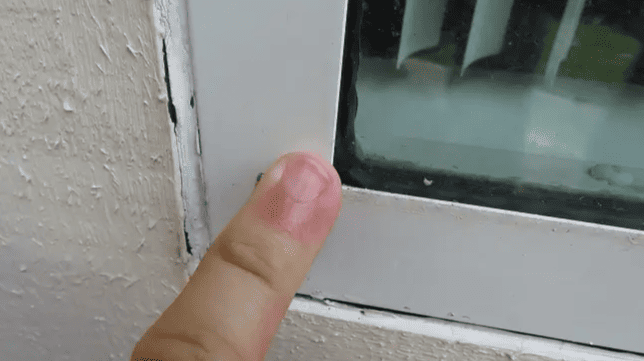
- Failed window perimeter sealants
- Cracked mortar joints
- Missing or deteriorated flashing
- Open expansion joints
- Damaged lintels
- Deteriorated stone or concrete
- Failed parapet walls
- Roof flashing failures
- Poorly sealed wall penetrations
Because these components function as a complete moisture management system, identifying only one defect may overlook additional pathways that allow water to enter the building envelope. For example, a leak around a window may actually originate from deteriorated flashing, failed sealants, or another component located higher on the façade.
What Does a Professional Window Leak Detection Investigation Look For?
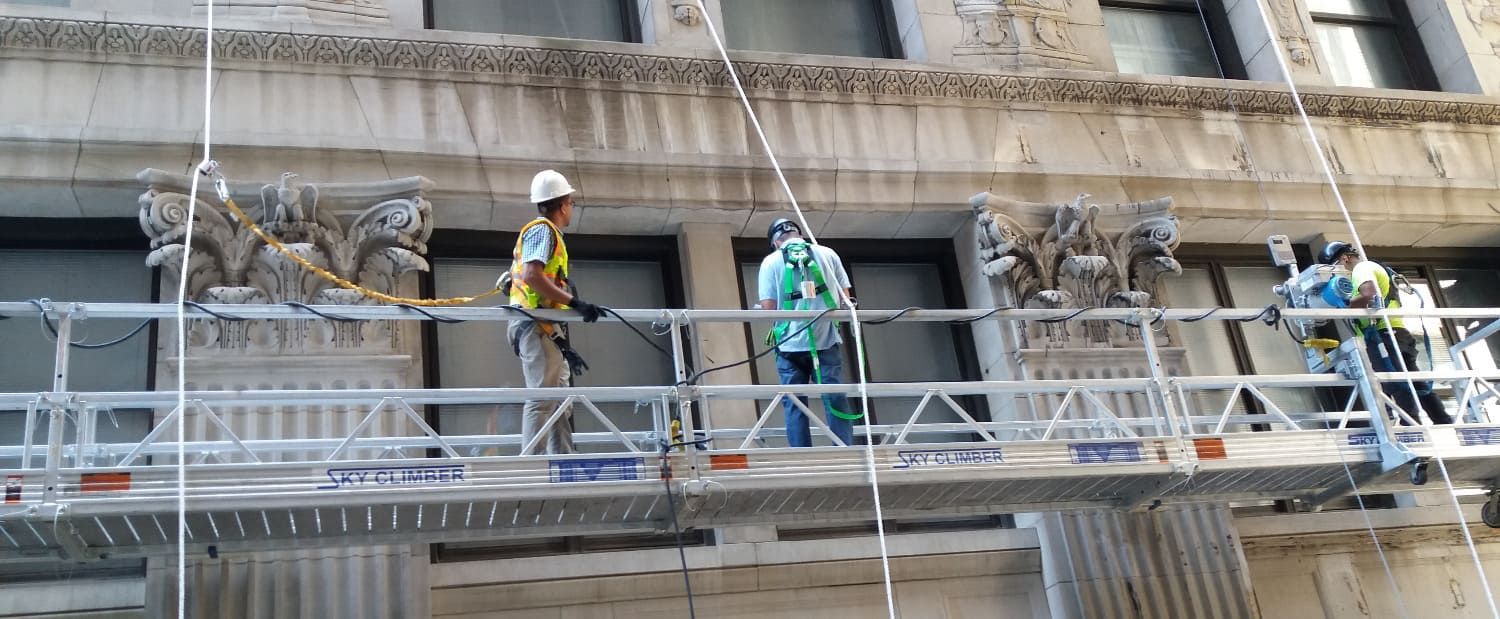
Rather than focusing solely on the window itself, building envelope specialists evaluate the entire surrounding assembly.
A typical investigation includes:
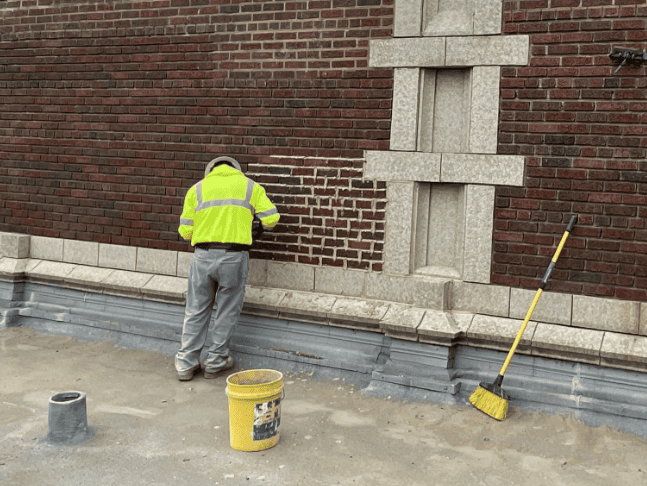
Exterior Visual Inspection
Inspectors evaluate:
- Window perimeter sealants
- Mortar joint condition
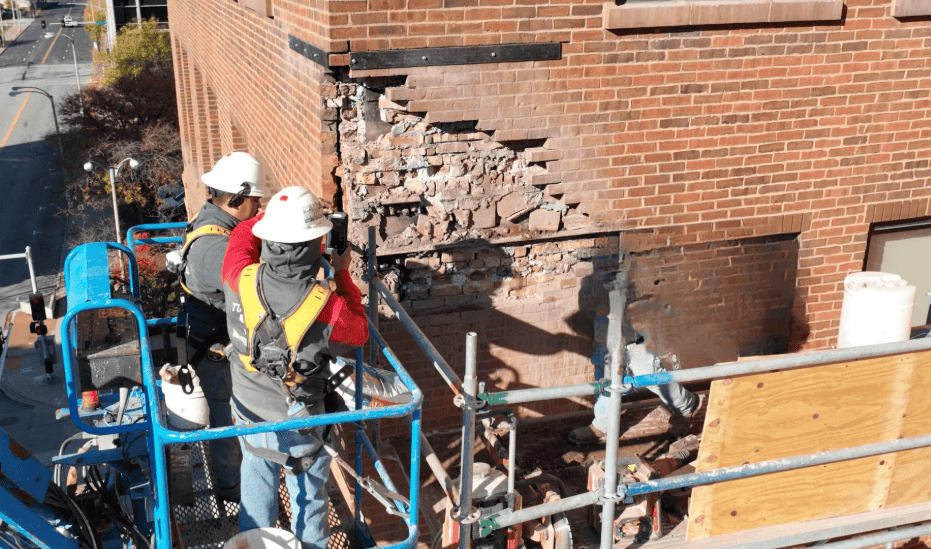
- Brick and stone cracking
- Concrete deterioration
- Expansion joints
- Shelf angles
- Flashing details
- Weep openings
- Lintel condition
- Parapets directly above the affected area
Even small openings can allow significant water intrusion during wind-driven rain.
Interior Moisture Evaluation
Inside the building, investigators document:
- Water staining
- Paint bubbling
- Efflorescence
- Mold growth
- Wet insulation
- Damaged drywall
- Ceiling staining
- Interior cracking
These observations help establish how moisture is traveling through the wall assembly.
Moisture Testing
Depending on the project, investigators may use:
- Moisture meters
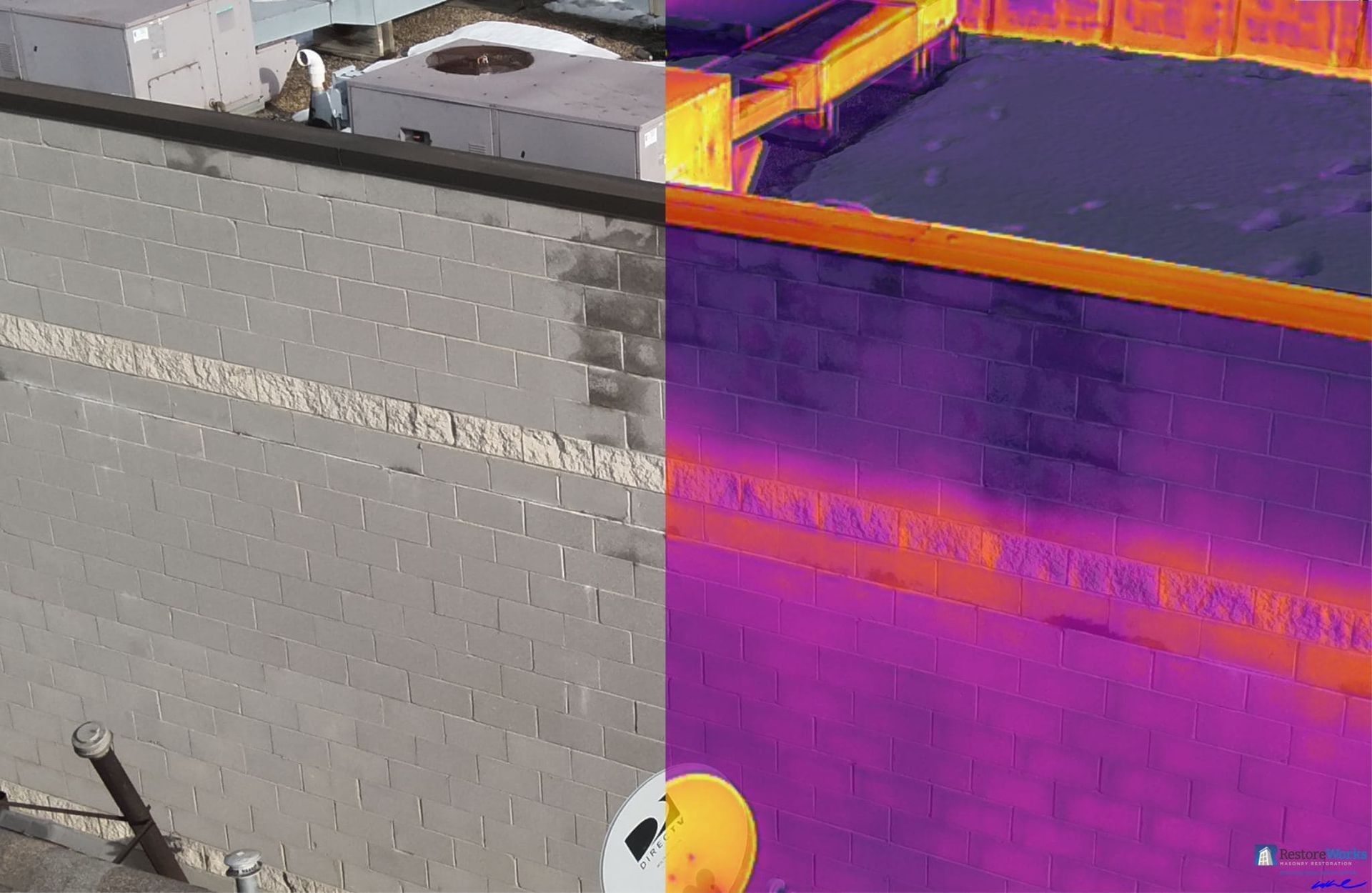
- Infrared thermography
- Controlled water testing
- Building envelope testing
- Selective exploratory openings
Testing helps isolate the actual point of water entry instead of relying on visual assumptions alone.
Why Chicago Buildings Face Higher Leak Risks
Commercial buildings throughout the Chicago area experience conditions that accelerate building envelope deterioration.
These include:
- Freeze-thaw cycling
- Wind-driven rain
- Seasonal temperature swings
- Lakefront exposure
- Aging masonry construction
- Decades-old sealants reaching the end of their service life
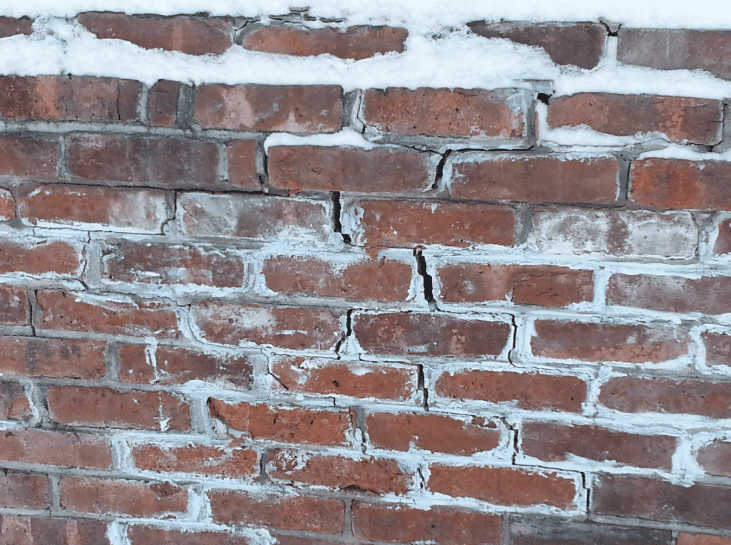
The Concrete Microscopy Library explains that water trapped within the pores of concrete expands as it freezes, creating internal stresses that can lead to cracking over repeated freeze-thaw cycles. Although this research focuses on concrete, the same freeze-thaw principle contributes to the deterioration of many porous building materials, allowing small cracks to grow over time and creating additional pathways for moisture intrusion.
As masonry expands and contracts throughout the year, sealants and mortar joints gradually lose flexibility. Small openings that may seem insignificant during dry weather can allow considerable moisture intrusion during heavy storms.
For many older commercial and institutional buildings, multiple building envelope components may require repair at the same time.
Common Signs That Moisture Is Following Hidden Pathways
Visible water is rarely the first warning sign.
Property managers should watch for:
- Water stains around windows
- Damp drywall
- Efflorescence on masonry
- Interior paint blistering
- Rust staining near lintels
- Mold or mildew odors
- Cracked mortar joints
- Deteriorated exterior sealants
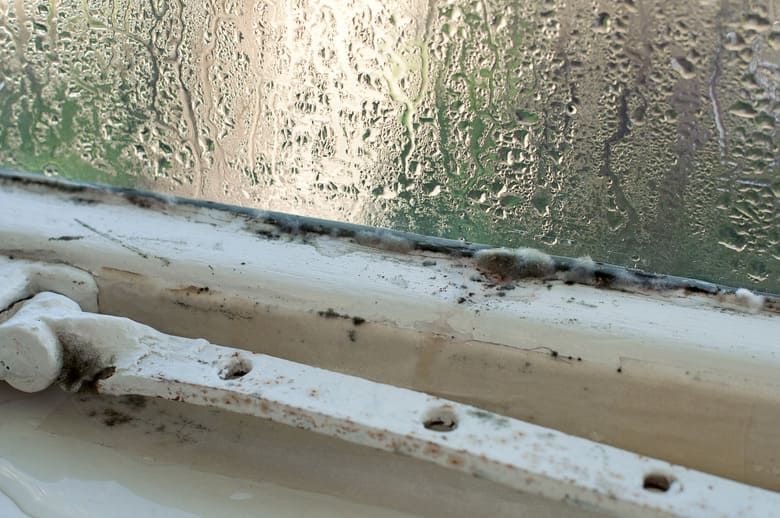
- Interior condensation that appears only after rain
- Recurring leaks despite previous window repairs
The longer these conditions remain unaddressed, the greater the likelihood of concealed deterioration inside the wall assembly.
Why Window Replacement Alone May Not Solve the Problem
A leaking window does not necessarily mean the window has failed.
In many commercial masonry buildings, the surrounding building envelope components are responsible for directing water away from the opening. If flashing, sealants, or masonry joints fail, water can bypass otherwise functional windows.
Depending on the investigation findings, corrective work may involve:
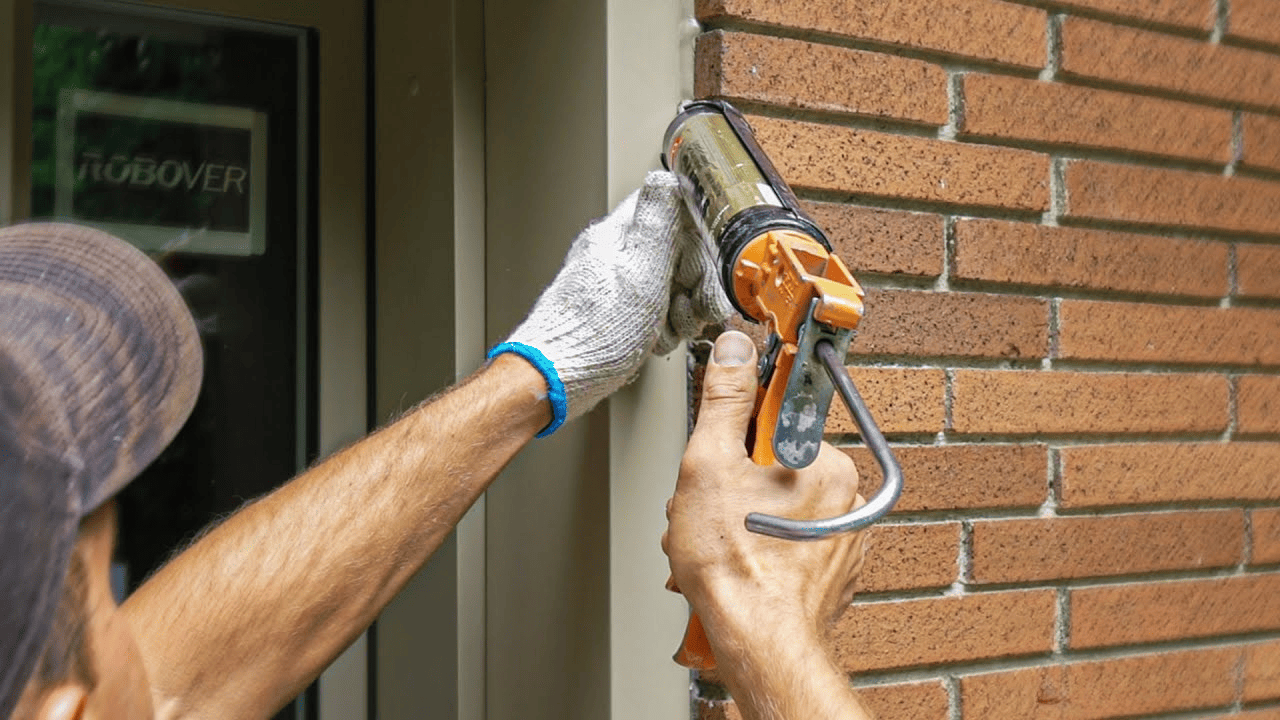
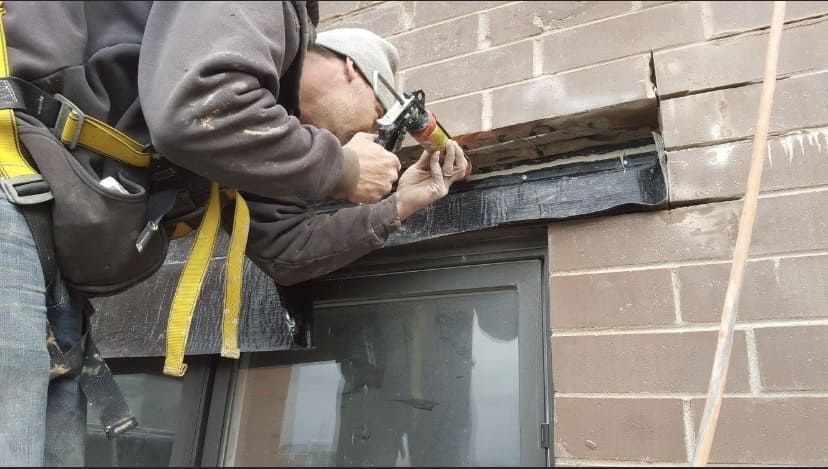
- Caulking and sealant repairs around window perimeters
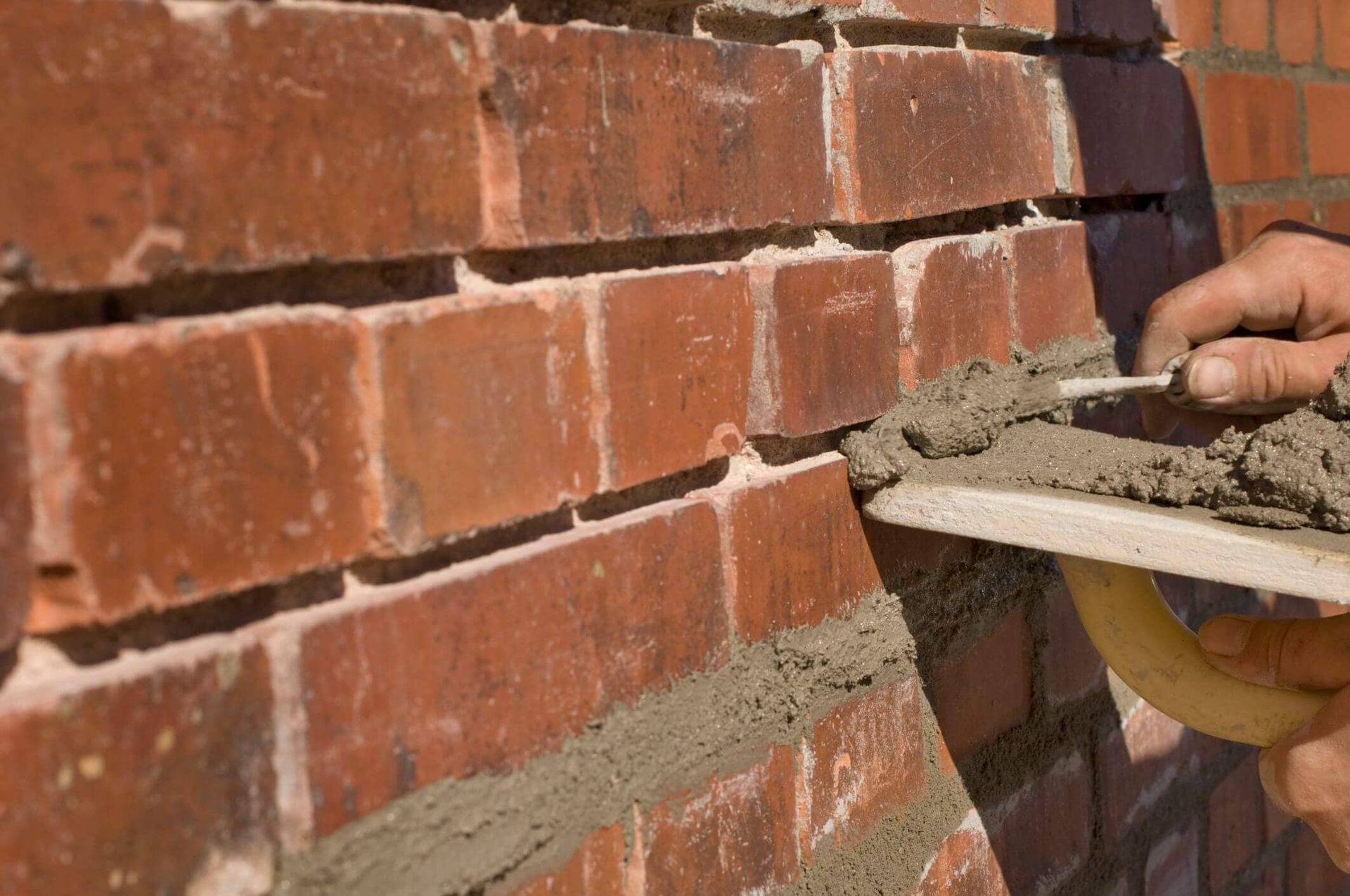
- Tuckpointing deteriorated mortar joints
- Lintel and shelf angle flashing repairs to restore drainage
- Localized masonry restoration
- Concrete façade repair if deterioration affects adjacent concrete components
- Replacing failed flashing systems
- Repairing expansion joints
Addressing all contributing defects helps reduce the likelihood of recurring leaks.
Why Early Leak Detection Saves Money
Water intrusion often begins long before occupants notice interior damage.
The International Institute of Building Enclosure Consultants (IIBEC) explains that weather-induced moisture can contribute to steel corrosion, mold growth, efflorescence, freeze-thaw damage, wood deterioration, and premature failure of interior finishes. By the time staining or active leakage becomes visible, moisture may already have affected concealed components within the wall assembly.
Early investigation can help reduce:
- Interior repair costs
- Structural steel corrosion
- Masonry deterioration
- Mold remediation
- Damage to insulation and concealed wall components
- Tenant disruption
- Emergency repairs
Finding the moisture pathway early also gives building owners an opportunity to address related defects together. Sealant repairs, tuckpointing, flashing repairs, and localized masonry restoration can often be coordinated within one project instead of being handled as separate emergency repairs over several years.
When Should a Building Owner Schedule a Window Leak Investigation?
Consider scheduling an investigation if:
- Leaks occur during heavy rain
- Water returns after previous repairs
- The building is more than 20 years old
- Sealants show visible deterioration
- Efflorescence continues to appear
- Masonry cracking is increasing
- Rust stains develop near windows
- Interior finishes repeatedly become damaged
Recurring leaks almost always indicate that the underlying source has not yet been identified.
Building Envelope Components Work Together
Successful window leak detection requires understanding how the entire building envelope manages water.
Windows, sealants, flashing, masonry, lintels, expansion joints, and drainage systems all play interconnected roles. Focusing on only one component can leave hidden moisture pathways untreated, allowing deterioration to continue behind the façade.
A comprehensive investigation helps identify the root cause, prioritize repairs, and extend the service life of the building envelope before more significant damage develops.
Frequently Asked Questions
How do you detect where a window leak is coming from?
Professionals typically combine exterior inspections, interior moisture evaluations, moisture meters, infrared imaging, and controlled water testing. The goal is to identify where water enters the building envelope rather than where it becomes visible inside, since moisture often travels through concealed wall cavities before appearing.
Can masonry cause a window to leak?
Yes. Cracked mortar joints, deteriorated brick or stone, failed flashing, and damaged sealants can all allow water to enter the wall assembly and migrate around windows. In many cases, the surrounding masonry (not the window itself) is the source of the leak.
Why does my commercial building only leak during heavy rain?
Heavy rain combined with wind pressure can force water through small openings in masonry, sealants, or flashing that remain dry during lighter storms. These conditions often expose building envelope deficiencies that are otherwise difficult to detect.
Should I replace my windows if they are leaking?
Not necessarily. A professional window leak investigation can determine whether the leak originates from the window, surrounding masonry, flashing, sealants, or another part of the building envelope. Replacing windows without diagnosing the actual moisture pathway may not resolve the problem.
Need Help Identifying the Source of a Window Leak?
RestoreWorks helps commercial property owners, managers, engineers, and architects identify moisture pathways and complete the masonry, sealant, flashing, and façade repairs needed to stop water intrusion. Contact our team to schedule an exterior evaluation for your Chicago-area property.