Building Envelope Restoration: Lessons from Three Commercial Restoration Projects
Commercial buildings rarely develop exterior problems overnight. Water intrusion, cracked masonry, deteriorated sealants, and rusting steel typically develop over years of exposure to weather, movement, and deferred maintenance. By the time interior leaks or visible deterioration appear, moisture may have been moving through the building envelope long before the first signs became noticeable.
That's why successful building envelope restoration involves more than replacing damaged materials. It begins with understanding how the building manages water and identifying where that system has broken down. The goal isn't simply to repair what looks damaged. It's to restore the exterior so it can continue protecting the building for years to come.
Whether you're responsible for a commercial office, school, healthcare facility, condominium, government building, or historic property, understanding how building envelope systems work can help you make better repair decisions and avoid more extensive damage later.
The following projects demonstrate how building envelope restoration can solve water intrusion issues, preserve existing structures, and extend the service life of commercial buildings across the greater Chicago area and Northwest Indiana.
What Is Building Envelope Restoration?
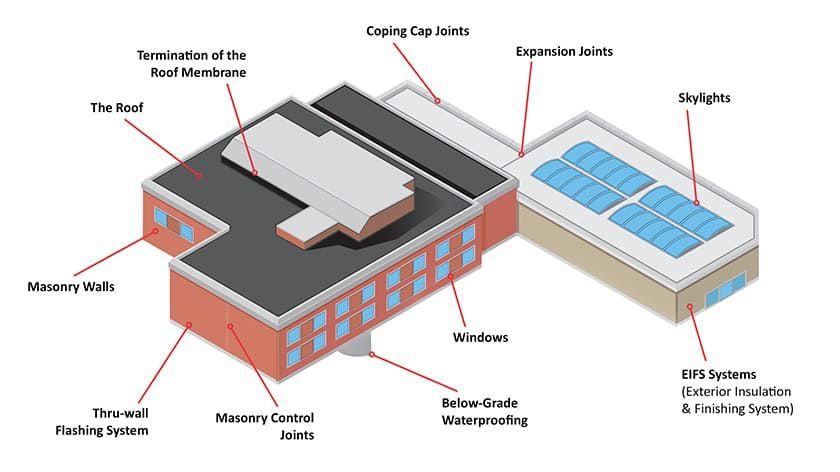
A building envelope includes every exterior component that separates the conditioned interior of a building from the outside environment. Together, these components help protect the building from precipitation, wind, temperature fluctuations, and other environmental conditions while managing the movement of water, air, heat, and moisture. As Energy Education explains, a building envelope functions as a complete system, meaning the performance of each component depends on how well it works with the others.
Depending on the building, the envelope may include:
- Brick masonry
- Mortar joints
- Concrete walls and façade elements
- Steel lintels
- Flashing systems
- Sealants and expansion joints
- Windows and doors
- Coping stones and parapet walls
The connections between these systems are just as important as the materials themselves. Flashing, sealants, and other transition points help direct water away from the building and prevent moisture from entering the wall assembly. When one component begins to fail, the surrounding systems often become vulnerable as well.
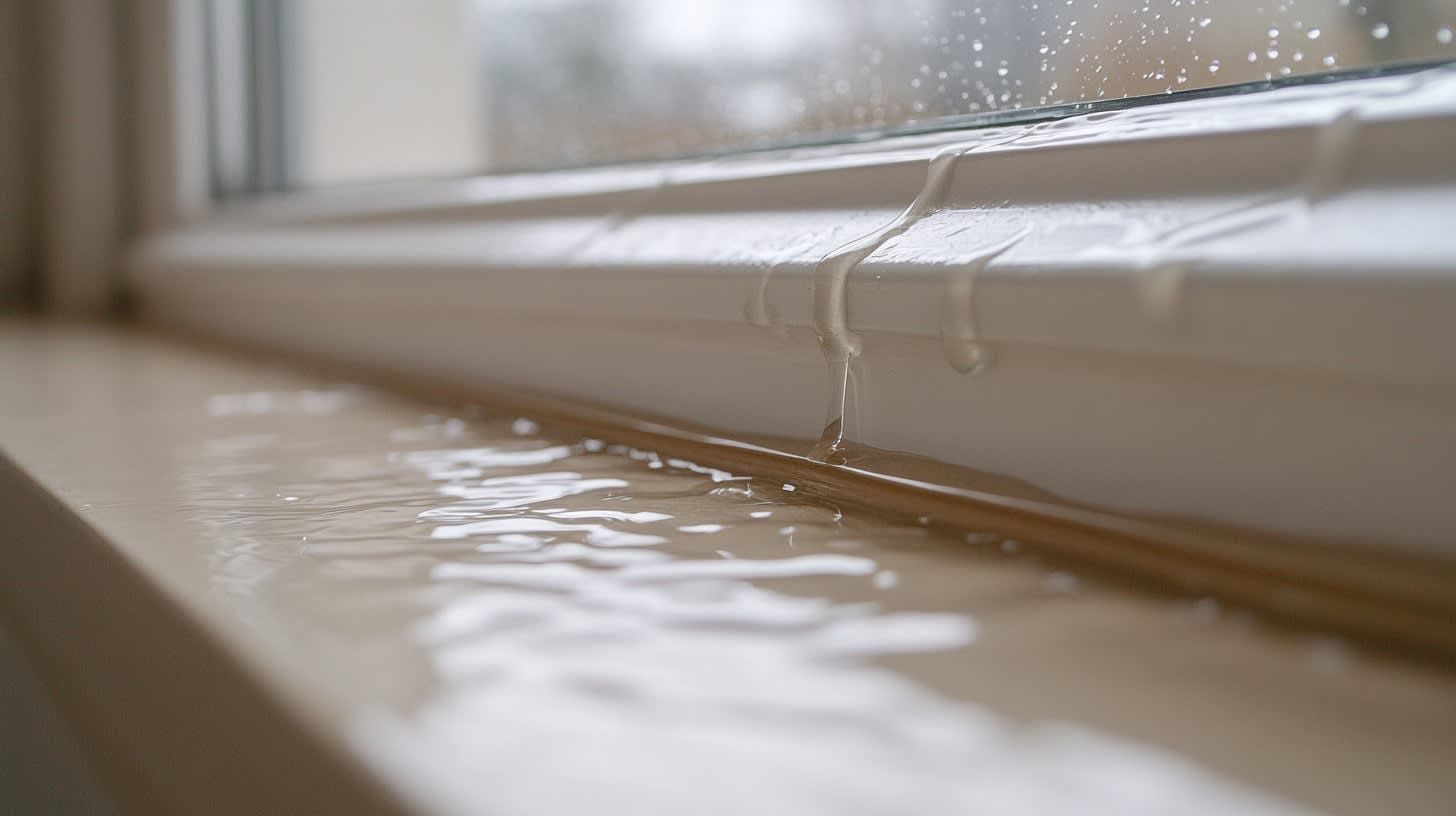
For example, deteriorated sealant around a window may allow water behind the masonry veneer. Failed flashing above that opening may prevent water from draining properly. Over time, steel lintels can corrode, mortar joints deteriorate, and interior leaks begin to appear.
Building envelope restoration focuses on identifying those interconnected failures and repairing the systems that allow the building to manage water and perform as intended before more extensive deterioration occurs.
Why Water Intrusion Usually Has More Than One Cause
One of the biggest misconceptions about commercial buildings is that every leak originates with the roof.
While roofing failures certainly contribute to water intrusion, many leaks begin within the wall assembly itself. Failed sealants, deteriorated mortar joints, cracked concrete, damaged flashing, rusting lintels, and improperly detailed transitions can all allow water to enter the building envelope.
According to the Brick Industry Association, successful masonry wall design doesn't assume water will never penetrate the exterior. Instead, it assumes some moisture will enter the wall system and focuses on controlling that moisture through proper detailing, drainage, flashing, and other water-management components before it can damage the building.
Chicago-area buildings face additional challenges because of seasonal freeze-thaw cycles.
When water enters small cracks or deteriorated joints, freezing temperatures cause that moisture to expand. Over repeated seasons, those openings become larger, allowing even more moisture to enter the wall system. Wind-driven rain, fluctuating temperatures, and decades of weather exposure accelerate deterioration, particularly on older masonry buildings.
That's why repairing only the visible damage often leads to recurring problems. Successful building envelope restoration begins by identifying where water is entering the building, correcting deficiencies in the wall's water-management system, and then repairing the resulting damage.
Modern Building Envelope Evaluations Go Beyond What You Can See
Not every building envelope problem is visible from the ground or during a routine visual inspection. In some cases, moisture can become trapped within the wall assembly long before deterioration appears on the surface.
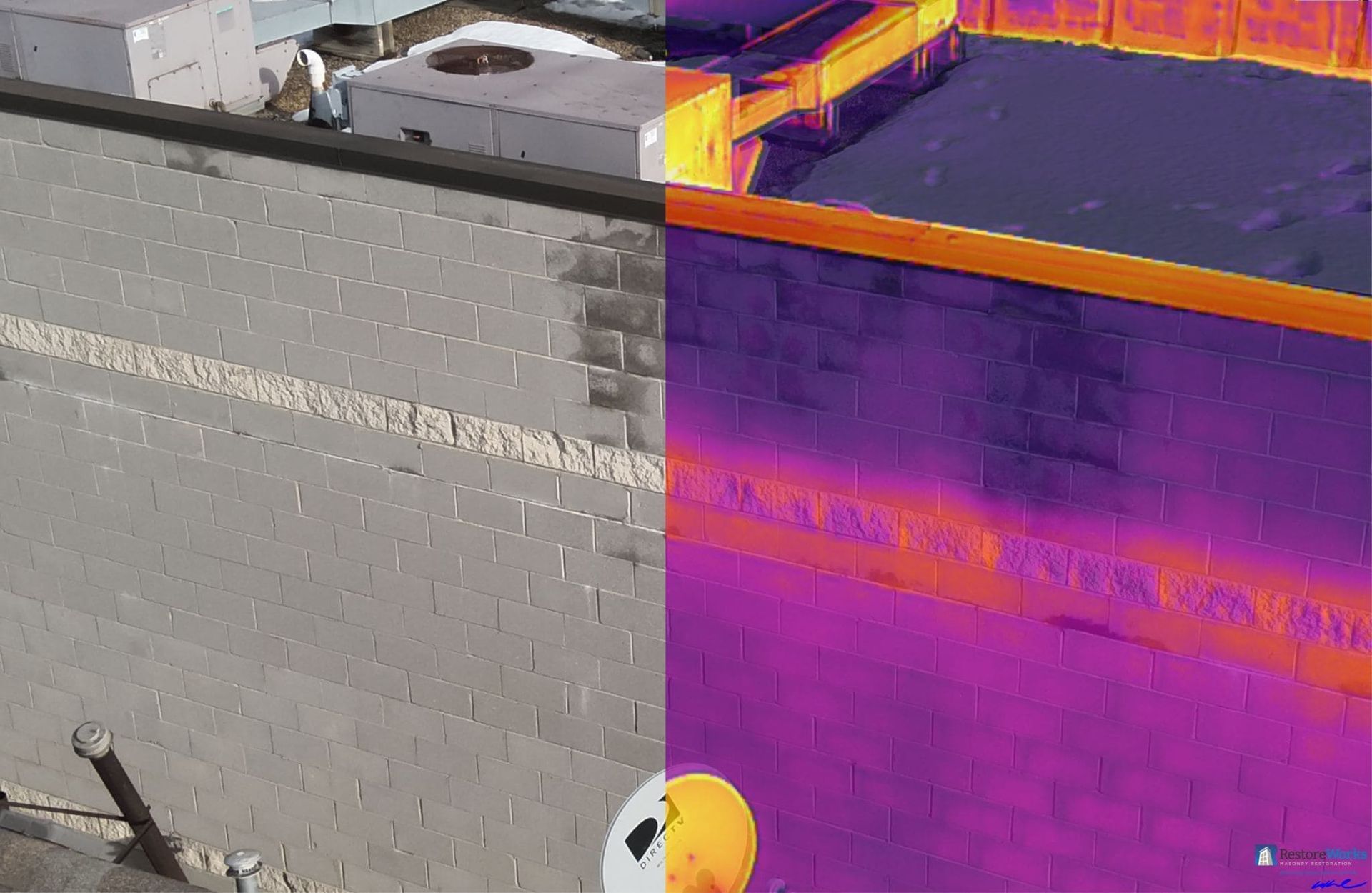
According to research published by Simpson Gumpertz & Heger (SGH), building envelope professionals may use technologies such as infrared thermography as a non-destructive evaluation tool to help identify hidden conditions. By detecting differences in surface temperature, infrared imaging can help locate areas where moisture intrusion, air leakage, missing insulation, or other building envelope anomalies may warrant further investigation.
However, infrared thermography is only one part of the evaluation process. As SGH explains, interpreting thermal images requires an understanding of building envelope construction, heat transfer, moisture migration, and environmental conditions. Infrared findings should be verified through additional inspection methods before repair decisions are made.
Case Study: Calvary Academy
Calvary Academy in South Holland, Illinois, provides a strong example of how building envelope restoration addresses the source of water intrusion rather than simply repairing the symptoms.
School administrators had begun experiencing active leaks throughout the building. Water staining appeared on interior walls, hallways, bathrooms, the library, and the gymnasium floor. While those problems were visible inside, the underlying causes were found throughout the exterior wall system.
A detailed evaluation identified several conditions contributing to the moisture intrusion, including:
- Hairline concrete cracks
- Failed control joints
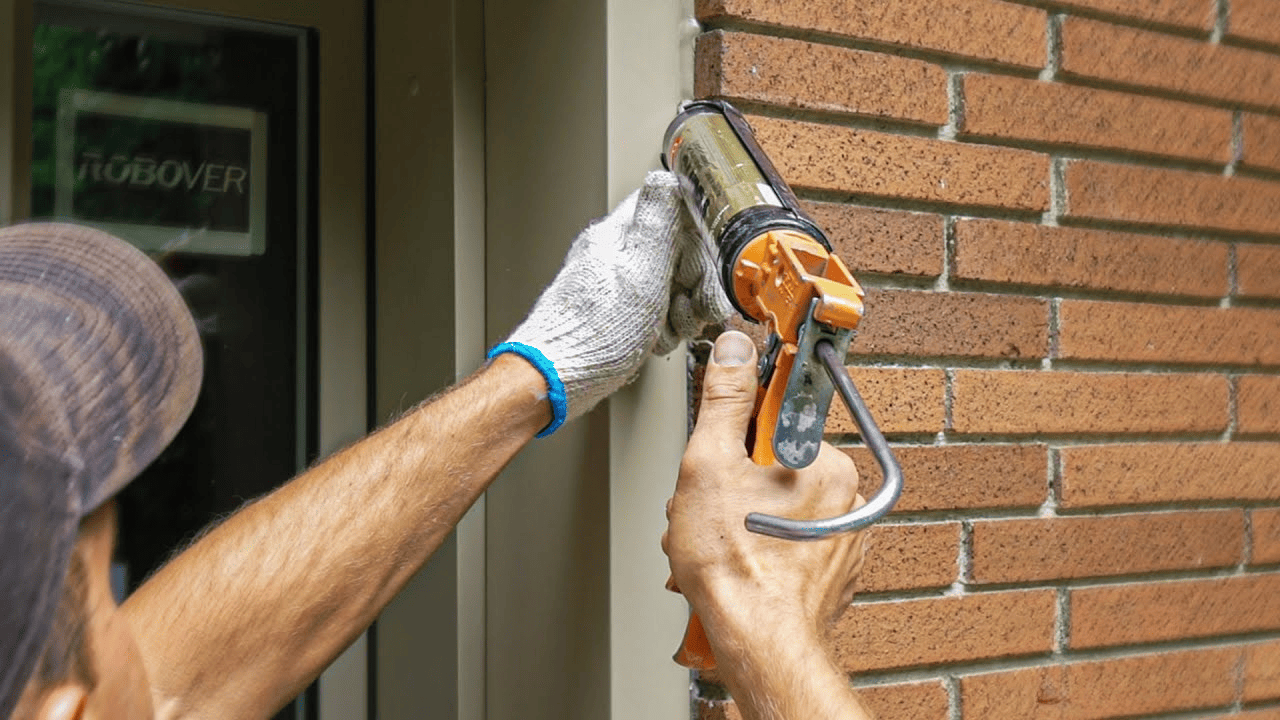
- Deteriorated perimeter sealants
- Improperly overlapping metal copings
- A previously repointed brick parapet with improperly prepared mortar joints
Rather than treating each leak individually, RestoreWorks evaluated how those failures were working together to allow water into the building.
Because the school remained occupied throughout construction, repairs were divided into two phases spanning two years. That approach allowed critical repairs to move forward while minimizing disruption to students, faculty, and daily operations.
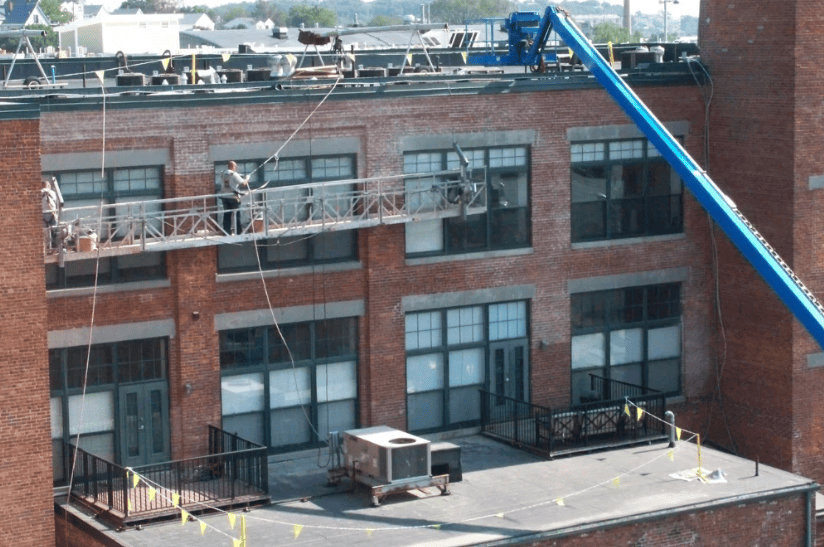
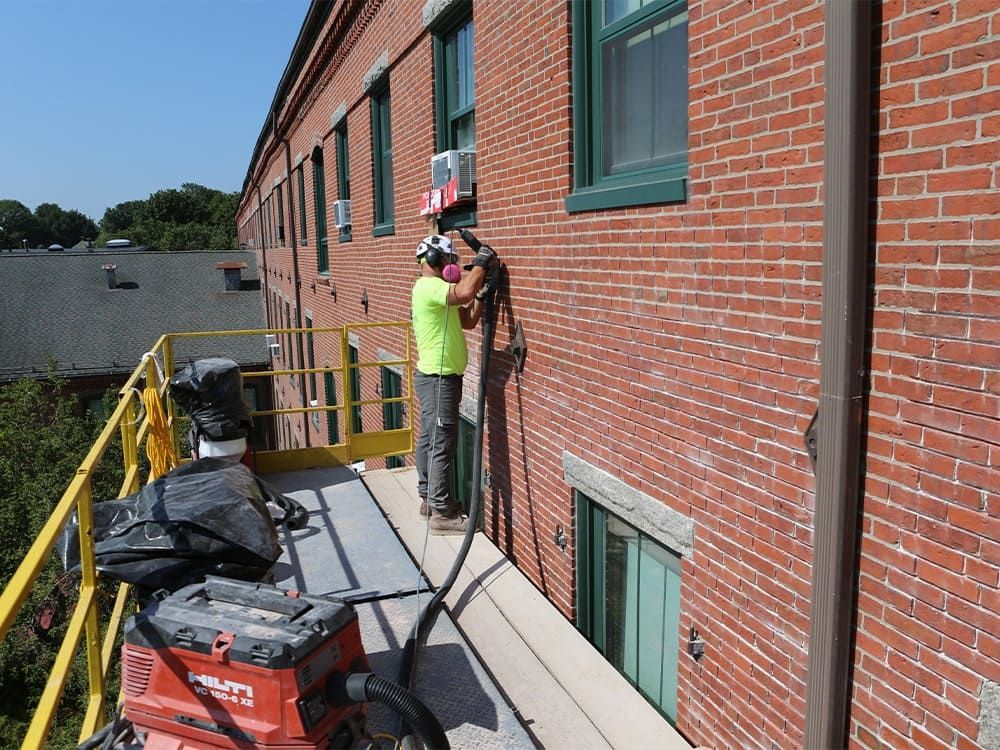
The first phase focused on the east elevation, where crews repaired concrete cracks, replaced failed control joints, installed new sealants around windows and doors, repointed deteriorated brick and CMU masonry, repaired stair towers, and restored transitions between masonry and roofing materials.
After structural repairs were completed, the exterior surfaces were professionally cleaned before protective coatings were applied.
The second phase extended those same restoration principles across the remaining elevations. Additional masonry repairs, sealant replacement, concrete restoration, and localized stair tower work completed the building envelope improvements while carefully coordinating equipment staging around school activities.
One of the most important outcomes occurred before the protective coatings were even installed.
Once deteriorated joints and cracked areas were properly repaired, the active interior leaks stopped. That reinforced an important principle of building envelope restoration: long-term performance comes from addressing the actual source of water intrusion rather than covering the symptoms.
The project also demonstrated the value of phased restoration. Instead of waiting until conditions required a larger capital project, Calvary Academy restored the building envelope over multiple construction seasons while maintaining normal school operations.
Building Envelope Restoration Often Extends Beyond Masonry
Many people associate building envelope restoration exclusively with brick repair or tuckpointing. In reality, successful projects typically involve multiple building systems working together.
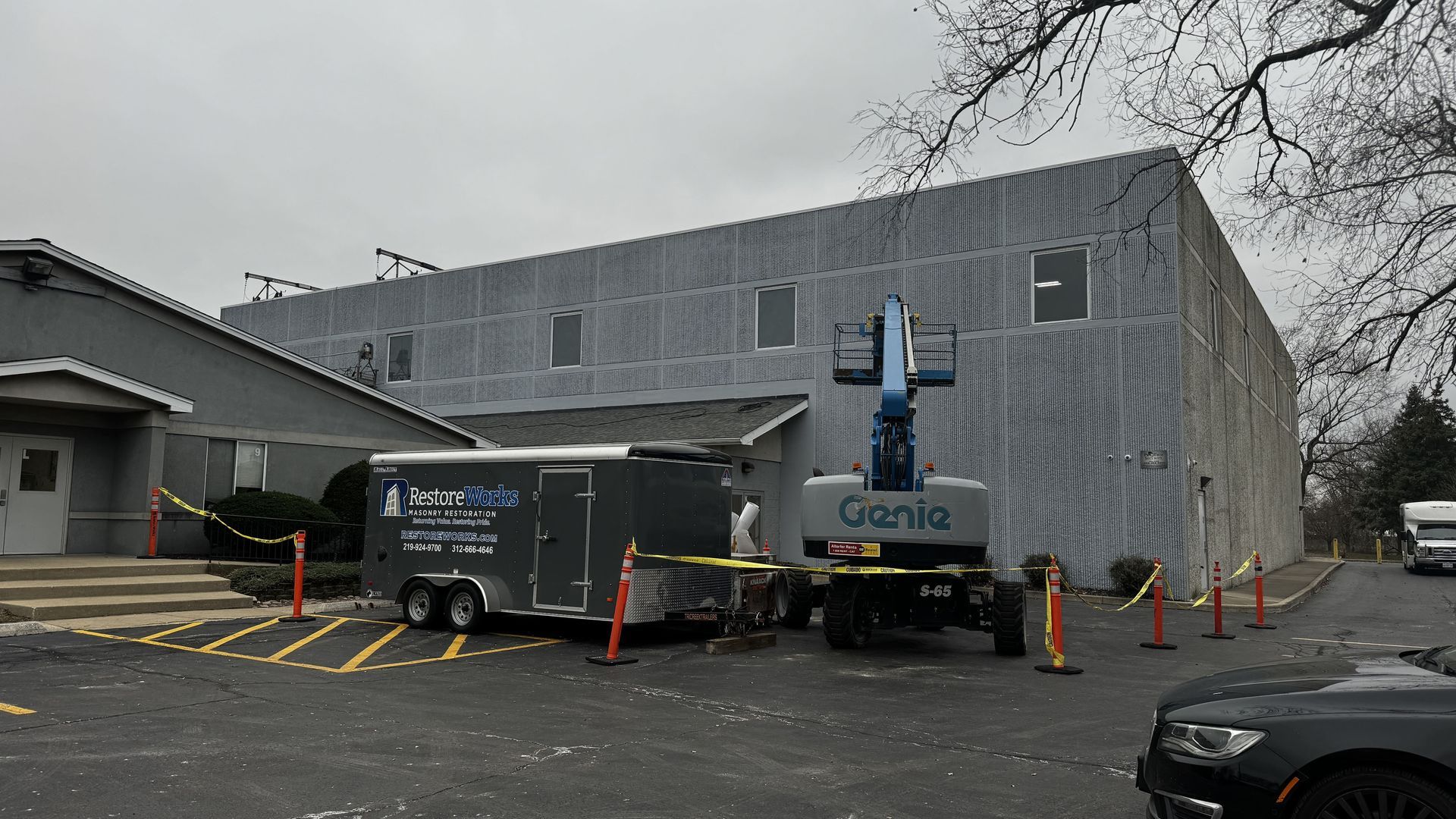
At Calvary Academy, restoring the building envelope required repairs to concrete, masonry, sealants, drainage details, and protective coatings. Addressing only one of those components would not have fully resolved the moisture intrusion.
The same principle applies across commercial buildings of every type. A successful restoration project evaluates how each exterior component contributes to managing water and protects the structure as a complete system.
Case Study: Porter County 911 Central Communications Center
Building envelope restoration often requires looking beyond visible deterioration. In many cases, the most significant problems are hidden behind the exterior masonry, where failed flashing, deteriorated sealants, and corroding structural components allow water to enter the wall assembly.
A restoration project at the Porter County 911 Central Communications Center in Valparaiso, Indiana, demonstrated how addressing those concealed issues can restore long-term building performance without requiring a complete façade replacement.
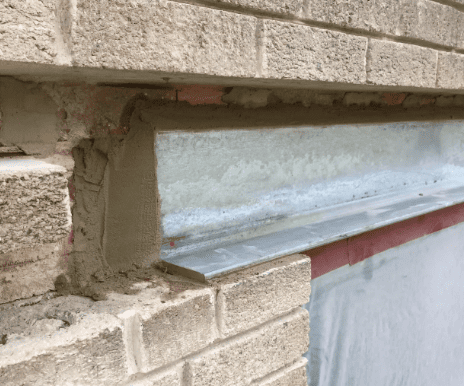
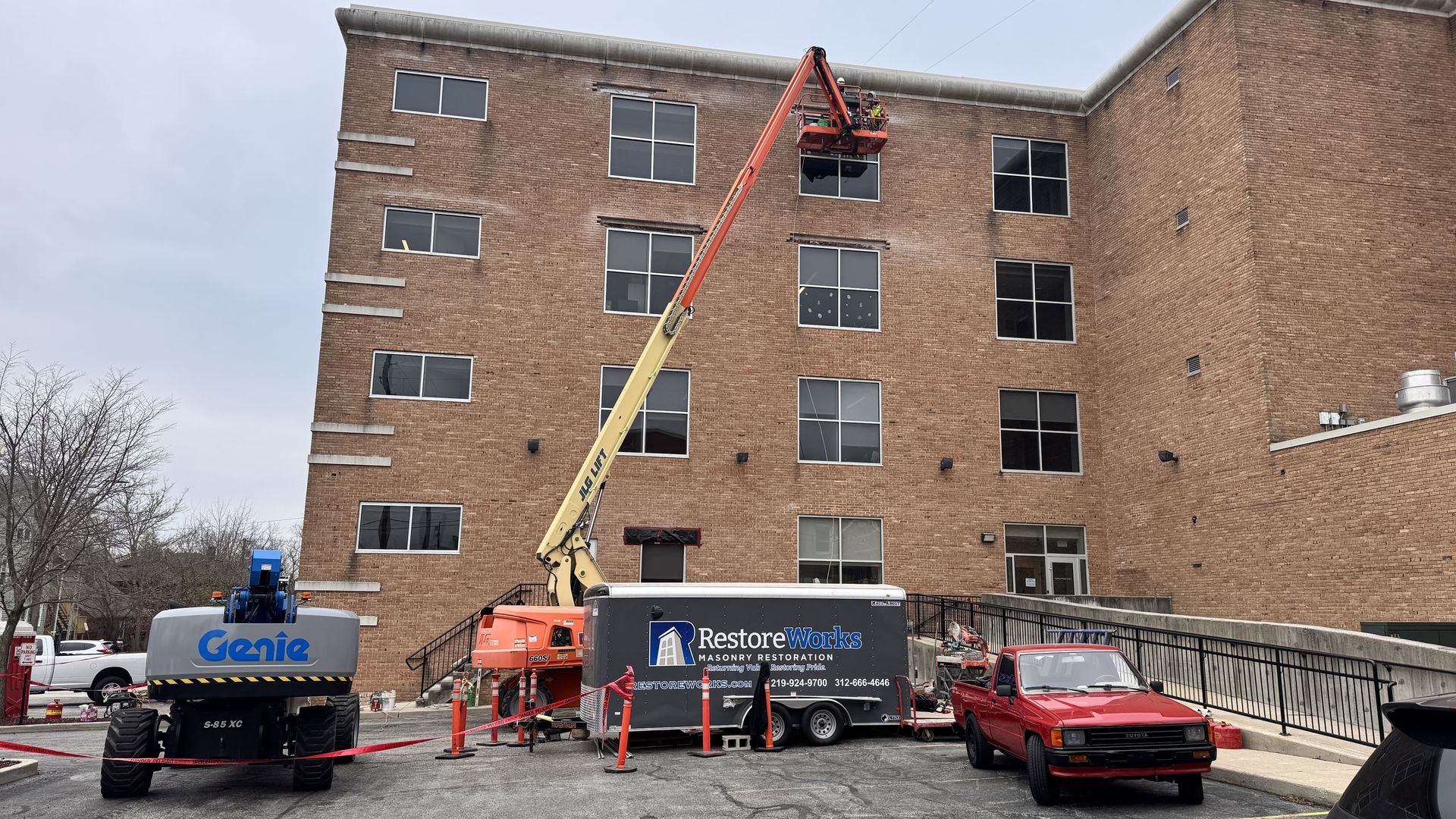
Originally constructed as the Porter County Jail, the historic building had experienced ongoing water infiltration around numerous window openings. During the initial assessment, several deficiencies became apparent. Previous flashing repairs had failed because of improper installation, perimeter sealants had deteriorated, and steel lintels concealed behind the brick veneer had begun to corrode after years of moisture exposure.
Rather than simply replacing deteriorated mortar or sealing visible cracks, the restoration focused on correcting the building's water management system.
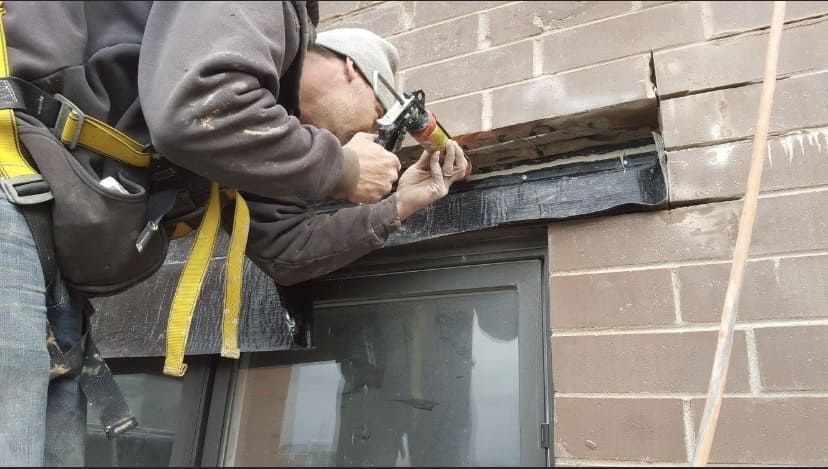
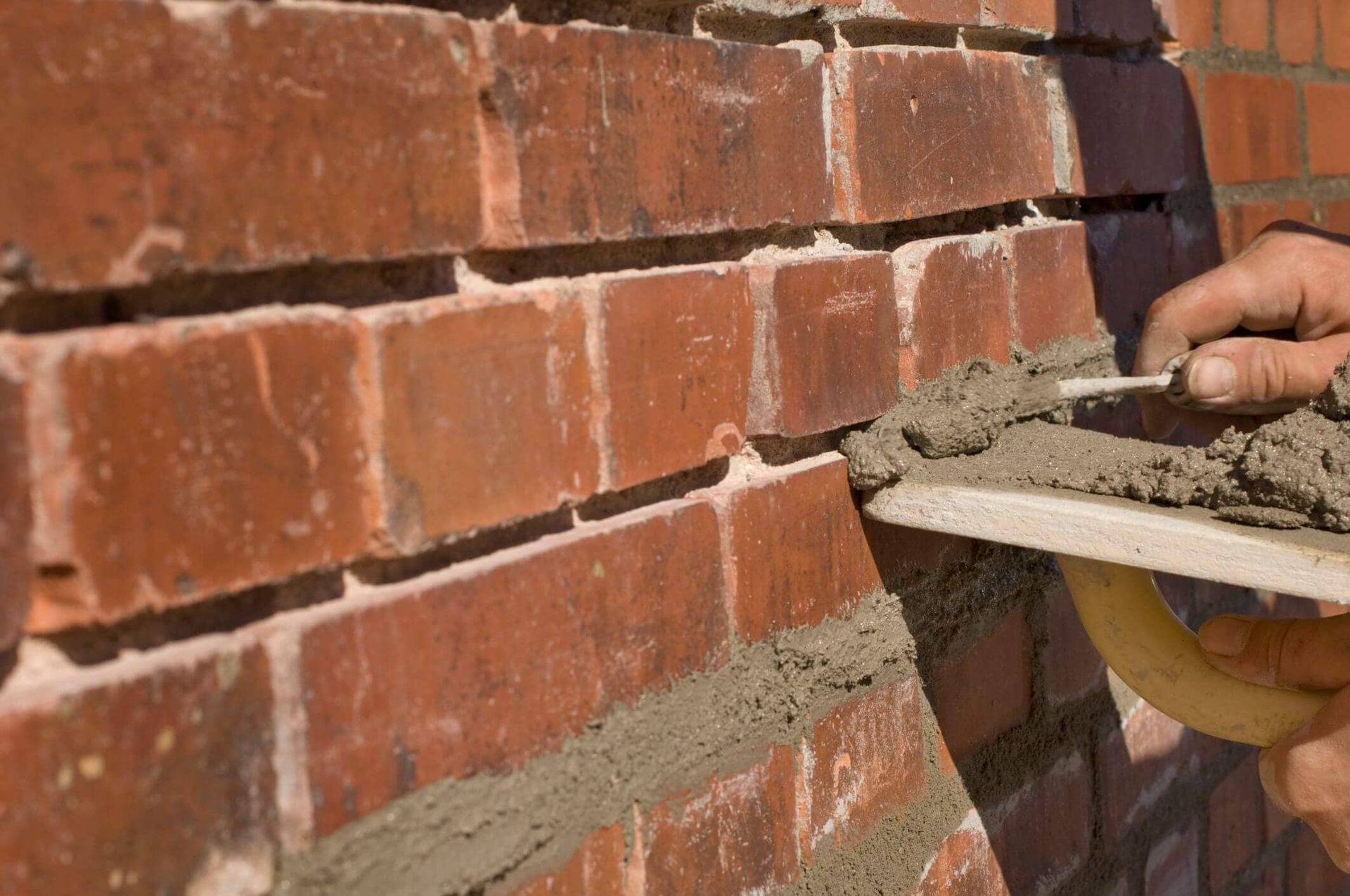
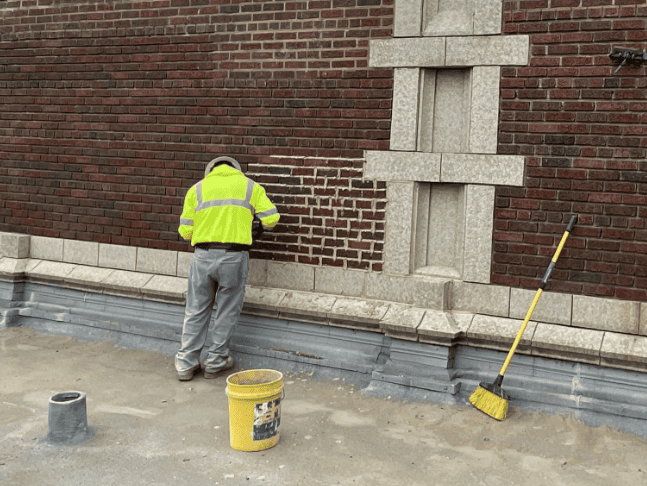
Brick surrounding each opening was carefully removed to expose the existing steel lintels and flashing. Corroded steel was cleaned, prepared, and protected before a new flashing assembly was installed to direct water safely back to the exterior. Salvaged brick was then reset wherever possible, matching replacement brick was installed where necessary, and mortar joints were repointed to restore the appearance and integrity of the façade.
The project also included replacing deteriorated perimeter sealants around windows and doors to eliminate additional pathways for water intrusion. During construction, crews identified failing control joints that were replaced as part of the overall restoration effort, further improving the building's long-term performance.
Although much of this work became hidden once the masonry was rebuilt, those concealed repairs were among the most important aspects of the project. Flashing, lintels, and sealants all play essential roles in managing water behind the façade. When any one of those components fails, moisture can remain trapped within the wall system, accelerating deterioration long before damage becomes visible on the surface.
By restoring those critical building envelope components, the project improved drainage, protected structural steel from continued corrosion, and preserved the appearance of a historic civic building that continues to serve Porter County today.
Building Envelope Restoration Across Commercial Properties
While every building presents different challenges, the objective of building envelope restoration remains the same: identify where moisture is entering the structure, repair the affected systems, and restore the exterior's ability to protect the building for years to come.
RestoreWorks has completed building envelope restoration projects across a variety of commercial and institutional properties throughout the greater Chicago area and Northwest Indiana.
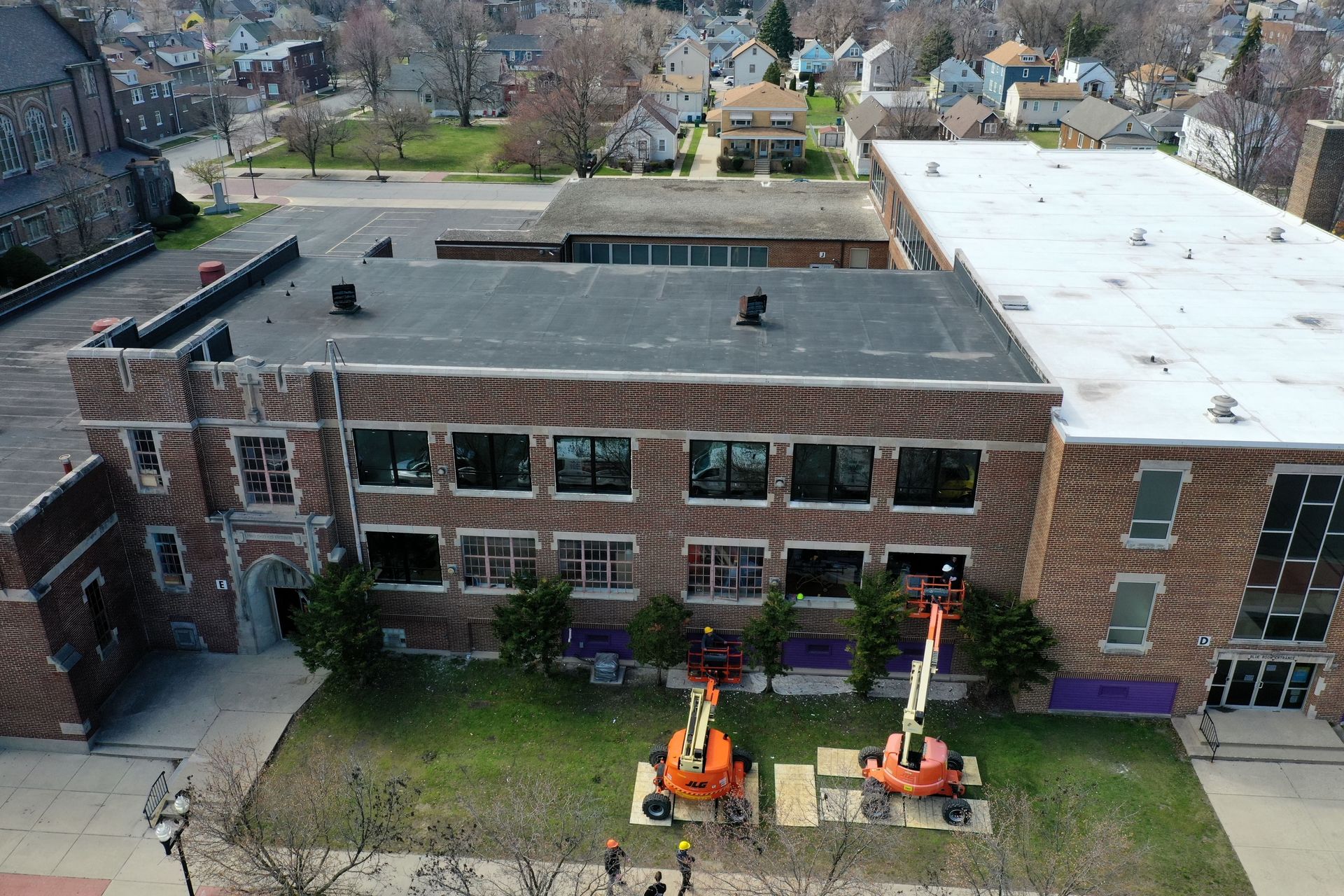
In addition to Calvary Academy and the Porter County 911 Central Communications Center, RestoreWorks completed exterior restoration work at St. Casimir School in Hammond, Indiana. The project included comprehensive tuckpointing, selective brick replacement, coping sealant replacement, and installation of new energy-efficient windows. By combining masonry restoration with improvements to the window and sealant systems, the project strengthened the building envelope while preserving a school that has served the community for more than 120 years.
Although these projects differed in age, size, and occupancy, they shared the same objective: restore the exterior systems that keep water out, extend the service life of the building, and help owners protect their investment through planned restoration rather than reactive repairs.
What These Projects Have in Common
Every building envelope restoration project is unique, but these projects highlight several consistent principles.
- Water intrusion rarely originates from a single deficiency.
- Successful restoration begins with identifying the source of moisture rather than repairing interior damage alone.
- Flashing, sealants, masonry, concrete, and structural components must work together as a complete system.
- Addressing deterioration early can help prevent more extensive and costly repairs later.
- Phased restoration allows owners to spread costs over multiple budget cycles while minimizing disruption to occupants and daily operations.
Whether the project involves a school, government facility, commercial office, or historic structure, restoring the building envelope is about improving long-term performance, not simply replacing deteriorated materials.he Manage Text button to change the font, color, size, format, and more. To set up site-wide paragraph and title styles, go to Site Theme.
How to Tell if Your Building May Need Building Envelope Restoration
Building owners and facility managers should consider scheduling a professional evaluation if they notice:
- Interior water stains or recurring leaks
- Cracked, missing, or deteriorated mortar joints
- Failed sealants around windows, doors, or control joints
- Cracked or spalling concrete
- Rust staining near steel lintels
- Efflorescence or persistent staining on masonry
- Loose brick or other exterior materials
- Evidence of previous repairs that continue to experience moisture problems
Addressing these issues early can help preserve the building envelope and reduce the likelihood of more extensive repairs in the future.
Frequently Asked Questions About Building Envelope Restoration
What is building envelope restoration?
Building envelope restoration is the process of repairing the exterior systems that protect a building from water, air, and weather infiltration. Depending on the building's condition, work may include masonry restoration, tuckpointing, concrete repairs, flashing replacement, sealant replacement, lintel repairs, and restorative cleaning.
How do I know if my building envelope is failing?
Common warning signs include recurring leaks, deteriorated mortar joints, cracked concrete, failed sealants, rust staining, loose masonry, and interior water damage. A professional inspection can identify whether those symptoms are caused by isolated issues or broader building envelope failures.
Can building envelope restoration be completed in phases?
Yes. Many commercial restoration projects are completed over multiple phases to align with available budgets and reduce disruption to building occupants. Prioritizing the most critical repairs first allows owners to address immediate concerns while planning future restoration work.
Does every water leak come from the roof?
No. Water can enter through failed flashing, deteriorated sealants, cracked masonry, rusting lintels, or other deficiencies within the building envelope. Determining the true source of water intrusion is one of the most important steps in developing an effective restoration plan.
Protect Your Building Envelope Before Small Problems Become Larger Repairs
Building envelope deterioration rarely improves with time. Small cracks, deteriorated mortar joints, failed sealants, and aging flashing systems can gradually allow more moisture into the building, increasing the likelihood of structural damage and more costly repairs.
Whether you're responsible for a commercial office building, school, healthcare facility, condominium, government building, or historic property, understanding the condition of your building envelope allows you to make informed maintenance and capital planning decisions before problems become more extensive.
If you've noticed signs of water intrusion or exterior deterioration, contact RestoreWorks so we can evaluate your building's condition and recommend restoration solutions based on the underlying causes, helping protect both the building and the people who rely on it every day.