Why Limestone Restoration Matters in Chicago
Limestone is a defining material across Chicago’s commercial and institutional buildings, from early 20th-century landmarks to mid-century office façades.
Much of this stone is Indiana limestone (Bedford limestone), which is a durable, workable material widely used for cladding and architectural detailing, as documented by the Chicago Architecture Center.
That durability doesn’t make it immune to deterioration.
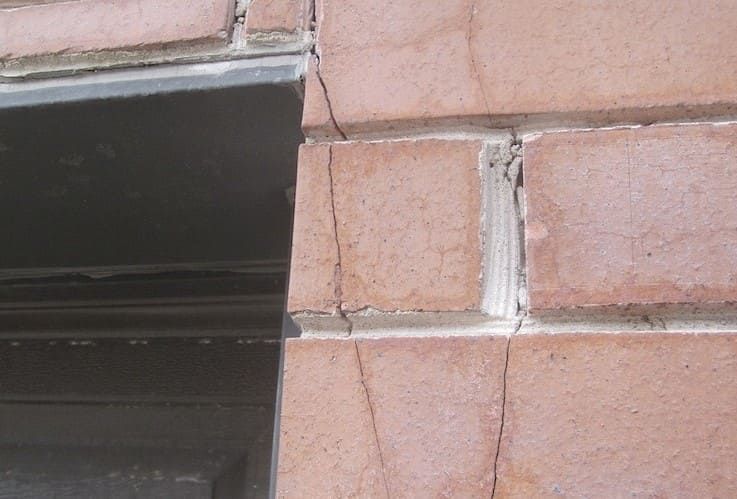
In Chicago, freeze–thaw cycles, wind-driven rain, and long-term pollutant exposure accelerate breakdown. Because limestone is porous, it absorbs moisture that expands when frozen, leading to cracking, spalling, and joint failure over time.
Limestone restoration focuses on addressing these issues early, before they develop into larger water infiltration or structural problems.
What Is Limestone Restoration?
Limestone restoration is the process of repairing, cleaning, and preserving limestone elements while maintaining their original appearance and performance.
This typically includes:
- Restorative cleaning to remove staining and buildup
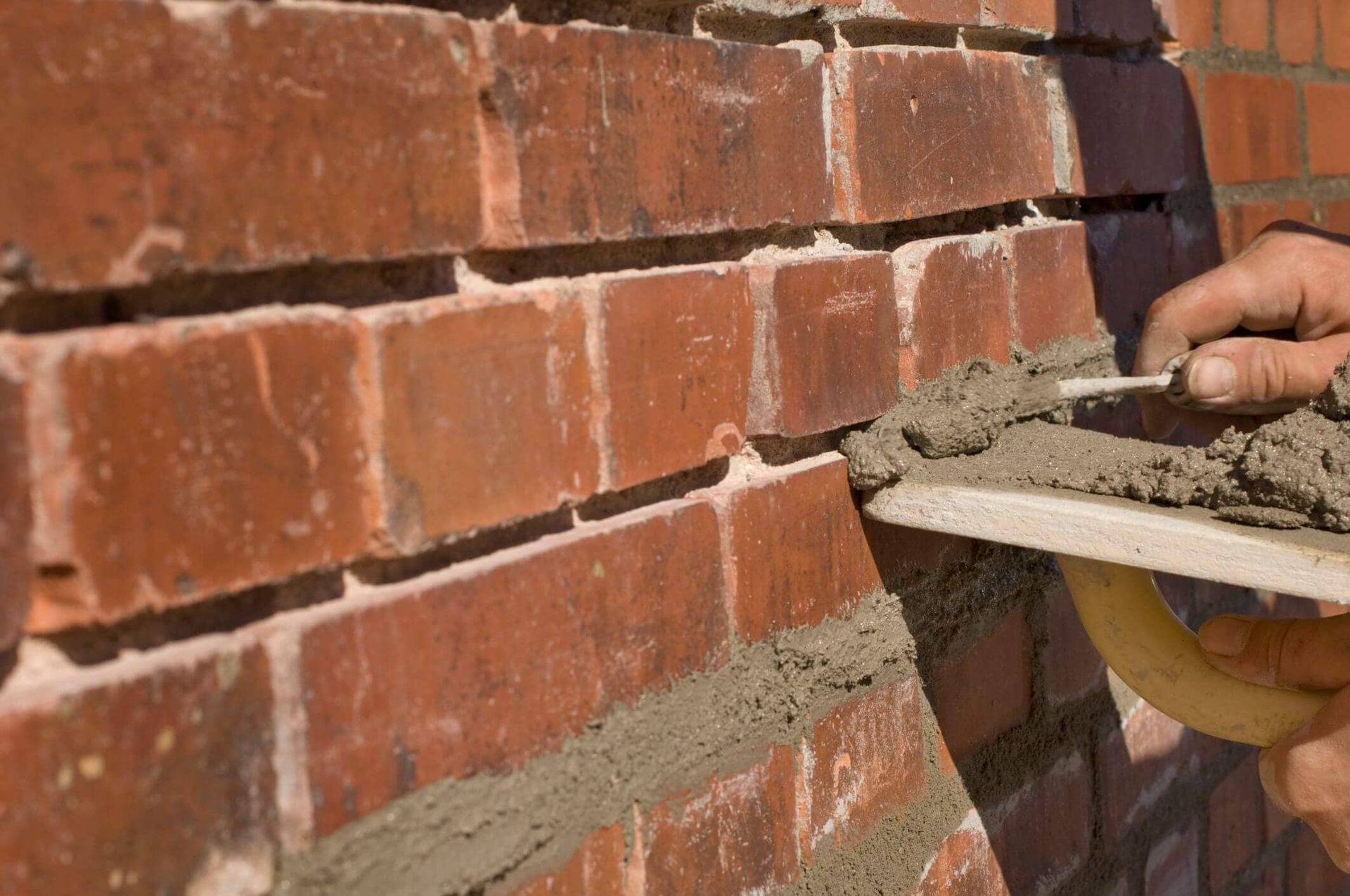
- Tuckpointing to replace deteriorated mortar joints
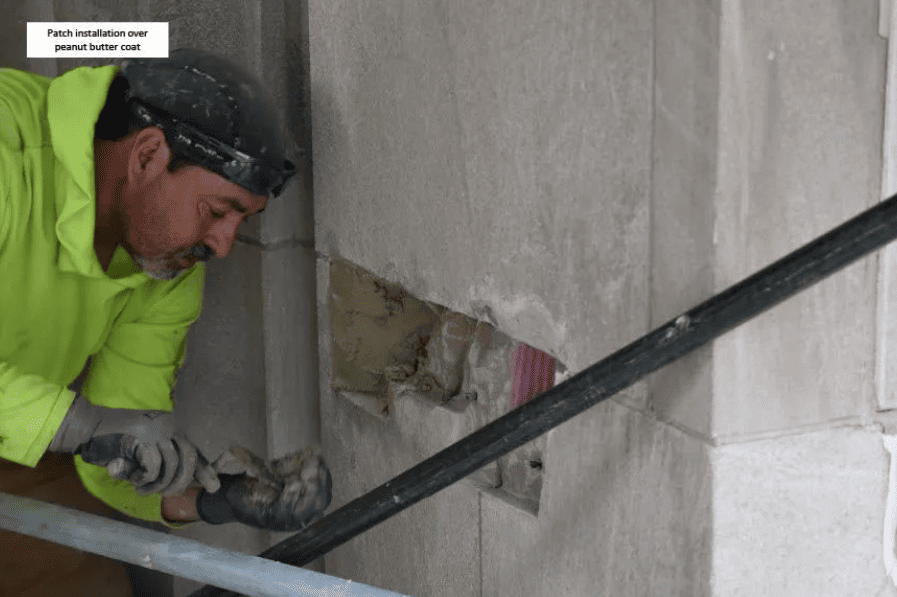
- Stone patching to repair localized damage
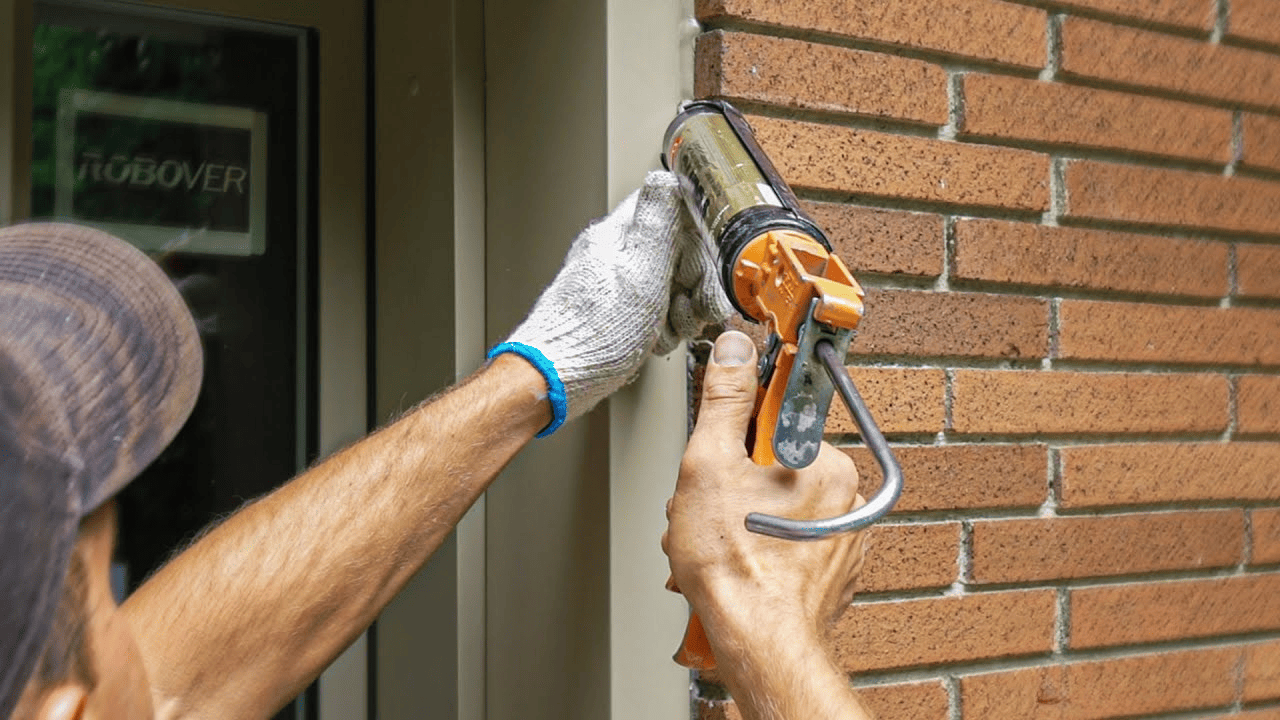
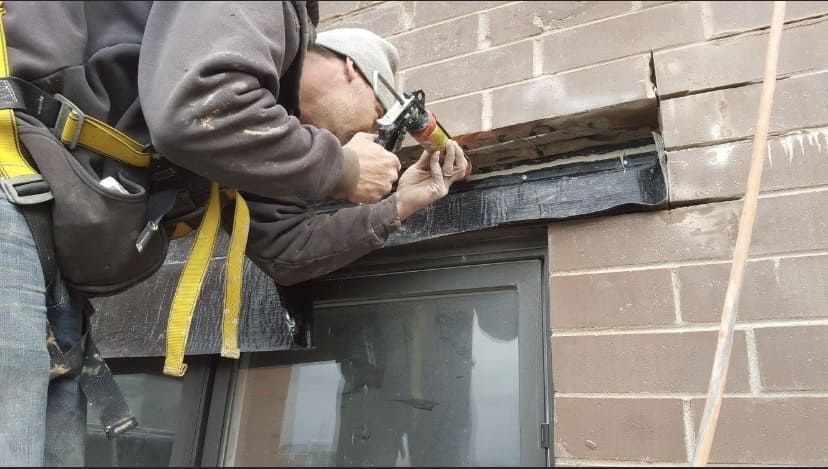
- Sealant replacement at joints and transitions
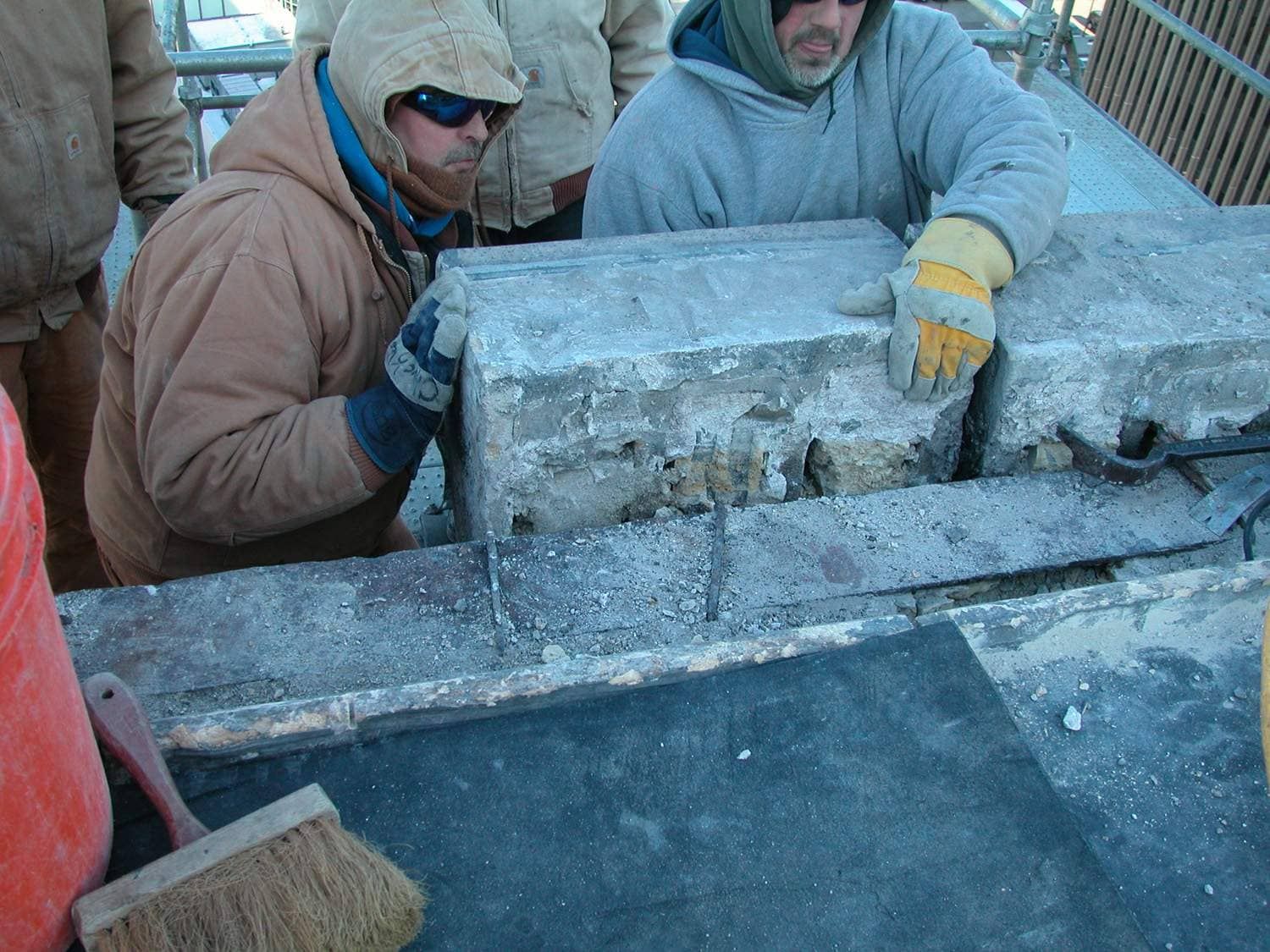
- Selective stone replacement when deterioration is advanced
On large-scale buildings, the difference between a repair that lasts and one that fails often comes down to preparation and execution.
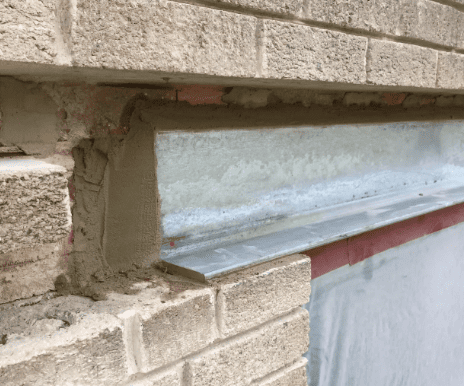
On projects like the Merchandise Mart in Chicago, limestone patching required precise surface preparation before any repair material was applied. That included creating squared edges for proper bonding, isolating the patch from adjacent materials to allow movement, and using stainless steel pinning where needed for added structural support. Without those steps, even a well-matched patch can fail prematurely.
Common Signs Your Building Needs Limestone Restoration
Limestone deterioration is often gradual. By the time it becomes obvious, water infiltration is usually already occurring.
Look for:
- Surface scaling or flaking (spalling)
- Cracks within stone units or along joints
- Open or deteriorated mortar joints
- Dark staining or streaking from water runoff
- Efflorescence (white, chalky residue caused by salts left behind as moisture evaporates)
- Rust staining near embedded steel
If multiple conditions are present, the issue is typically systemic, not isolated.
What Causes Limestone Deterioration in Commercial Buildings?
Most limestone failures trace back to moisture, and how the building manages movement, materials, and long-term exposure.
In Chicago, environmental conditions accelerate these issues, but the root causes are usually tied to a combination of design, materials, and maintenance.
Key causes include:
1. Freeze–thaw exposure
Repeated expansion and contraction from trapped moisture gradually weakens the stone. Over time, this leads to surface scaling, cracking, and spalling, especially on exposed elevations.
2. Water infiltration from failed joints
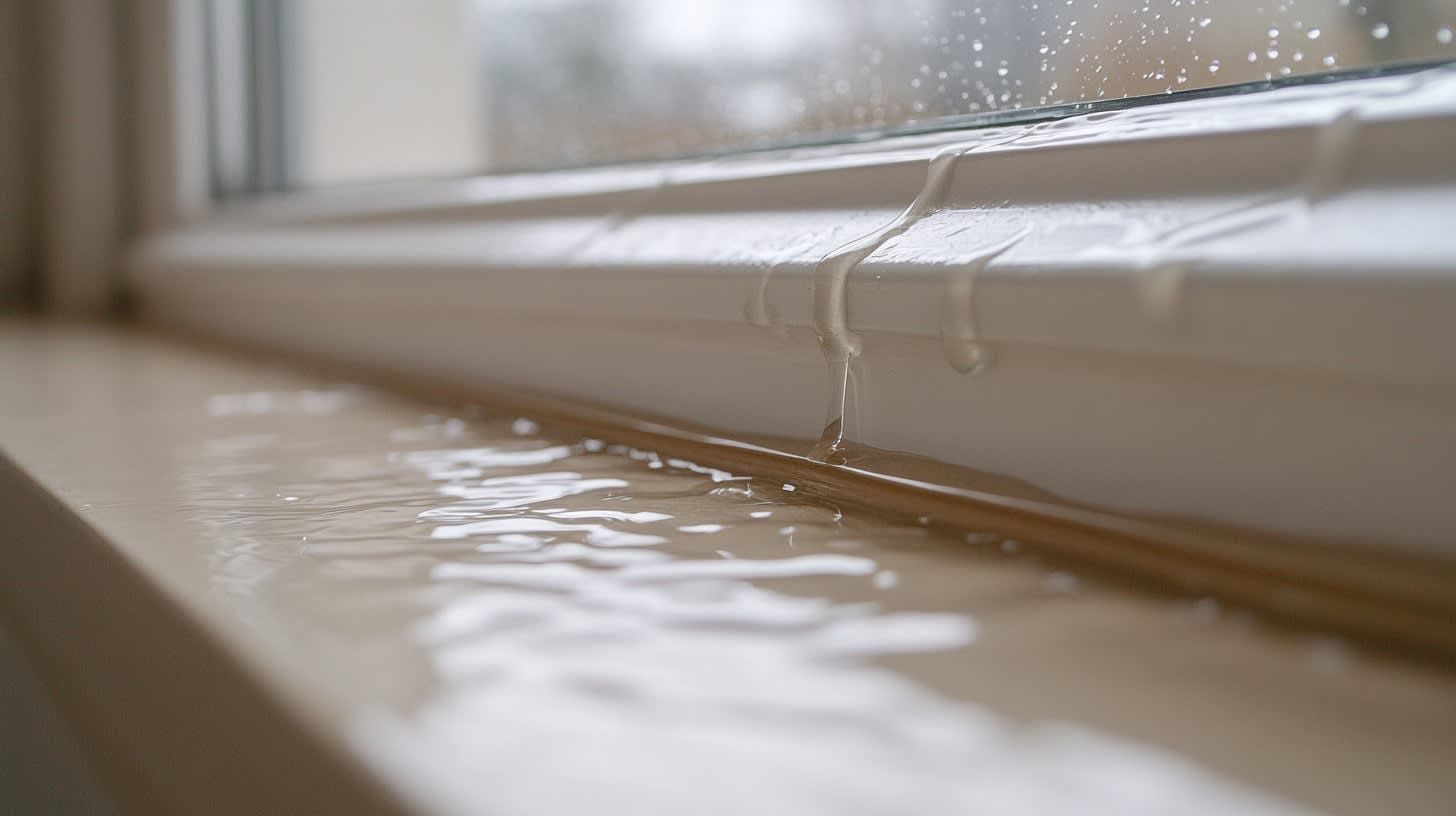
Once mortar joints or sealants fail, water enters the wall system. Limestone is porous, so it absorbs and retains that moisture, accelerating deterioration during seasonal temperature swings. As noted by the
International Masonry Institute, ongoing maintenance, particularly repointing, is critical to preventing moisture-related damage in masonry systems.
3. Corroding steel components (rust jacking)
Many commercial masonry buildings contain embedded steel, such as lintels or anchors. When these elements corrode, they expand and exert pressure on the surrounding stone. This process (commonly referred to as rust jacking) can crack or displace limestone units and often leads to more invasive repairs if not addressed early.
4. Movement and building settlement
Buildings naturally move over time due to settlement, thermal expansion, or structural shifts. Limestone, like all masonry, responds to that movement through cracking. Cracks don’t always indicate structural failure, but they do signal that stress is being redistributed, and they often create pathways for water intrusion.
5. Material incompatibility and prior repairs
Not all repair materials perform the same way. Using mortars or patching materials that are too hard (or incompatible with the original limestone) can trap moisture or create stress within the wall system. Over time, these repairs often fail and can accelerate deterioration rather than prevent it.
6. Environmental exposure and pollution buildup
Chicago’s urban environment contributes to long-term surface degradation. Carbon buildup, pollutants, and biological growth don’t just affect appearance, but they can also contribute to chemical breakdown of the stone surface.
Limestone Cleaning vs. Restoration: What’s the Difference?
Cleaning improves appearance. Restoration improves performance.
- Cleaning removes dirt, staining, and biological growth
- Restoration includes cleaning plus repairs that address water intrusion and deterioration
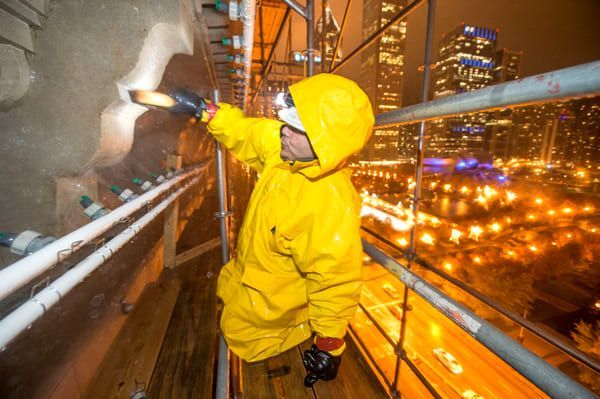
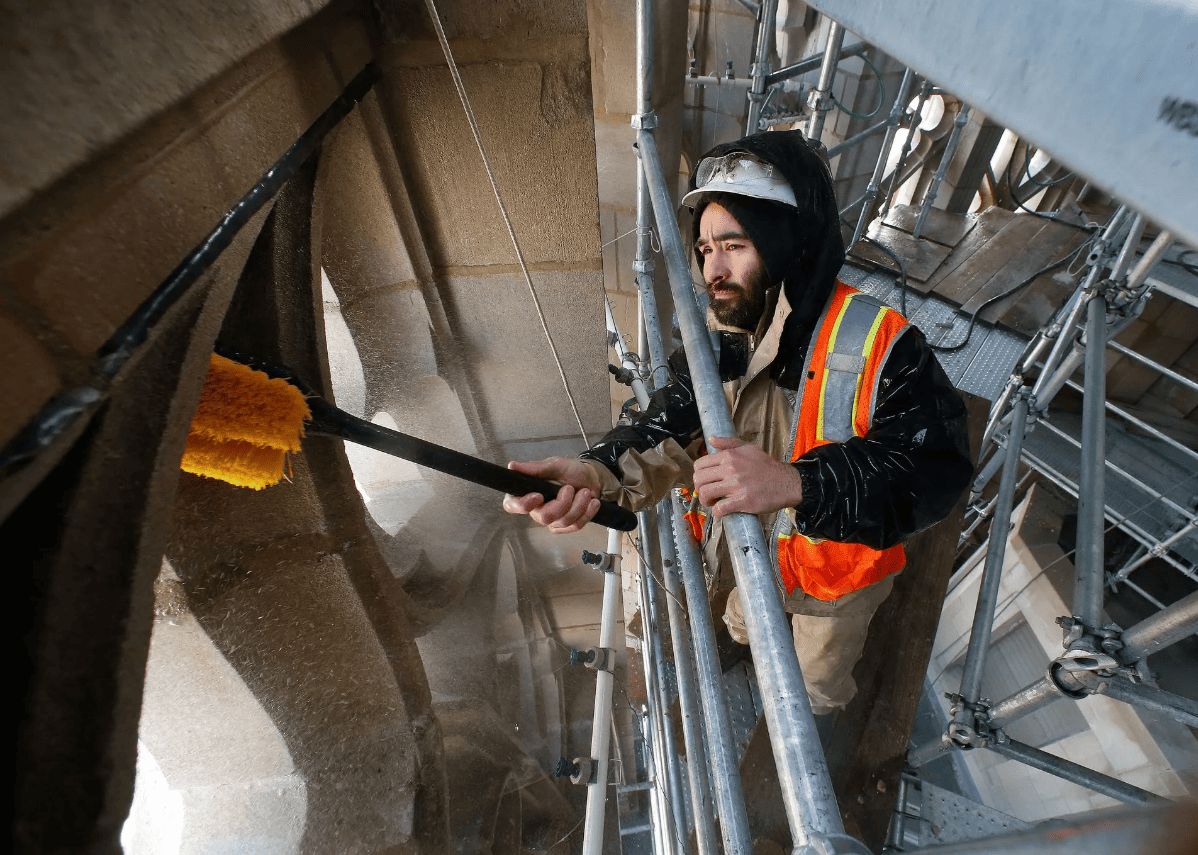
For example, at the Chicago Athletic Association, restoration cleaning focused on a controlled cleaning process. Each section of limestone was misted and hand scrubbed with soft brushes to remove over a century of dirt, carbon, and environmental buildup.
By contrast, buildings with open joints or failing stone require both cleaning and repair to prevent continued damage.
How Limestone Restoration Projects Are Scoped
A proper restoration plan starts with evaluation, not assumptions.
Typical process:
- Site inspection and condition assessment
- Identification of failure patterns, not just visible symptoms
- Mock-ups to confirm cleaning methods or repair techniques
- Phased repair planning based on priority and budget
Mock-ups are especially important for limestone. They allow teams to validate cleaning results, color matching, and repair performance before full-scale work begins.
Budgeting for Limestone Restoration
Costs vary depending on access, extent of deterioration, and repair type.
Most projects fall into:
- Maintenance-level work: Localized repairs and sealant replacement
- Moderate restoration: Cleaning, tuckpointing, and patching
- Full restoration: Extensive stone replacement and structural repairs
Key cost drivers include:
- Building height and access requirements
- Percentage of façade requiring repair
- Extent of underlying issues (water damage, steel corrosion)
- Project phasing to maintain operations
The longer issues go unaddressed, the more likely the project shifts from maintenance to full restoration.
When to Plan Limestone Restoration Work
Timing affects both cost and performance.
In Chicago, most exterior limestone restoration is completed:
- Spring through early fall, when temperatures allow proper curing
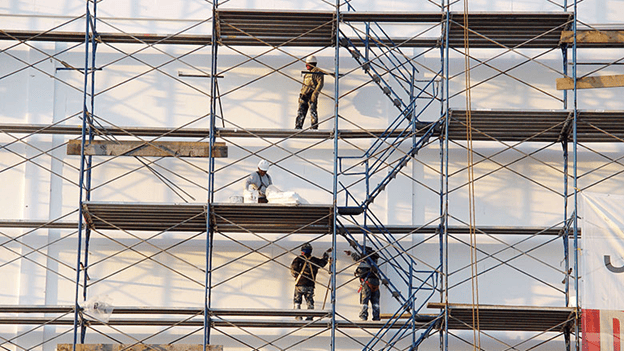
Planning, however, should begin well in advance, especially for occupied buildings or large façades.
Waiting until deterioration is widespread often limits repair options and increases disruption.
Real-World Considerations for Chicago Buildings
Limestone deterioration tends to follow patterns:
- South and west elevations weather faster
- Areas near rooflines or poor drainage see concentrated damage
- Buildings with deferred maintenance often have layered issues (stone, joints, and steel)
On projects like Tribune Tower Residences, restoration required a controlled cleaning approach using a specialized water soaking process. The goal was to remove buildup while preserving the limestone’s original character, demonstrating how even cleaning methods must be tailored to the building.
Understanding these patterns helps determine whether a project can be phased or if it needs a more comprehensive approach.
Frequently Asked Questions About Limestone Restoration
How do I know if my building needs limestone restoration or just cleaning?
If deterioration is limited to staining or buildup, cleaning may be enough. But if you see cracking, spalling, or open joints, restoration is typically required to address underlying water infiltration and prevent further damage.
How long does limestone restoration last?
When properly executed, limestone restoration can last 20–30 years or more. Longevity depends on material compatibility, installation quality, and whether underlying issues, like water entry, were fully addressed.
Can damaged limestone be repaired instead of replaced?
Yes. Many areas can be repaired using patching techniques that restore both function and appearance. However, severely deteriorated stone may require replacement, especially if structural integrity is compromised.
Is limestone restoration disruptive to building operations?
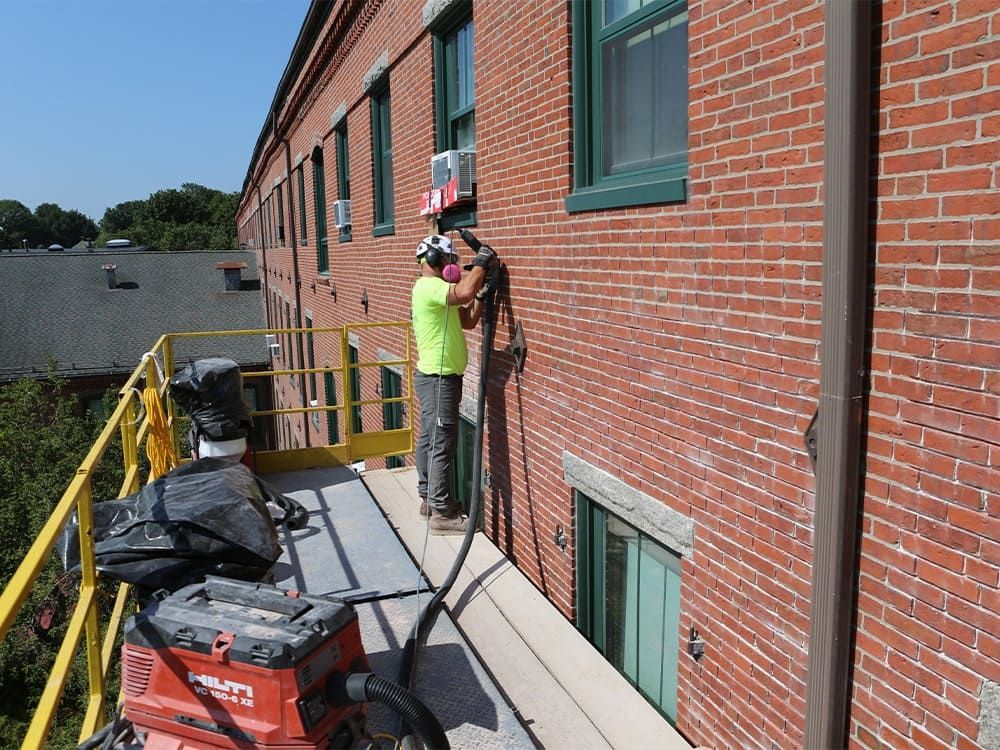
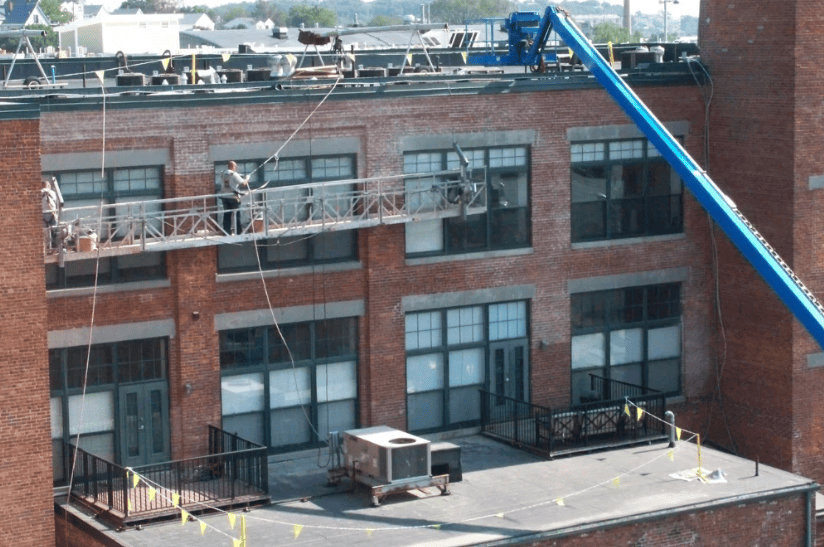
It can be managed with proper planning. Work is typically phased, and access systems like swing stages allow buildings to remain operational while restoration is underway.
Do you have more questions about limestone restoration? Contact RestoreWorks to learn more.