The Complete Guide to Masonry Cleaning for Commercial Buildings
What Masonry Cleaning Actually Means
in a Commercial Restoration Context
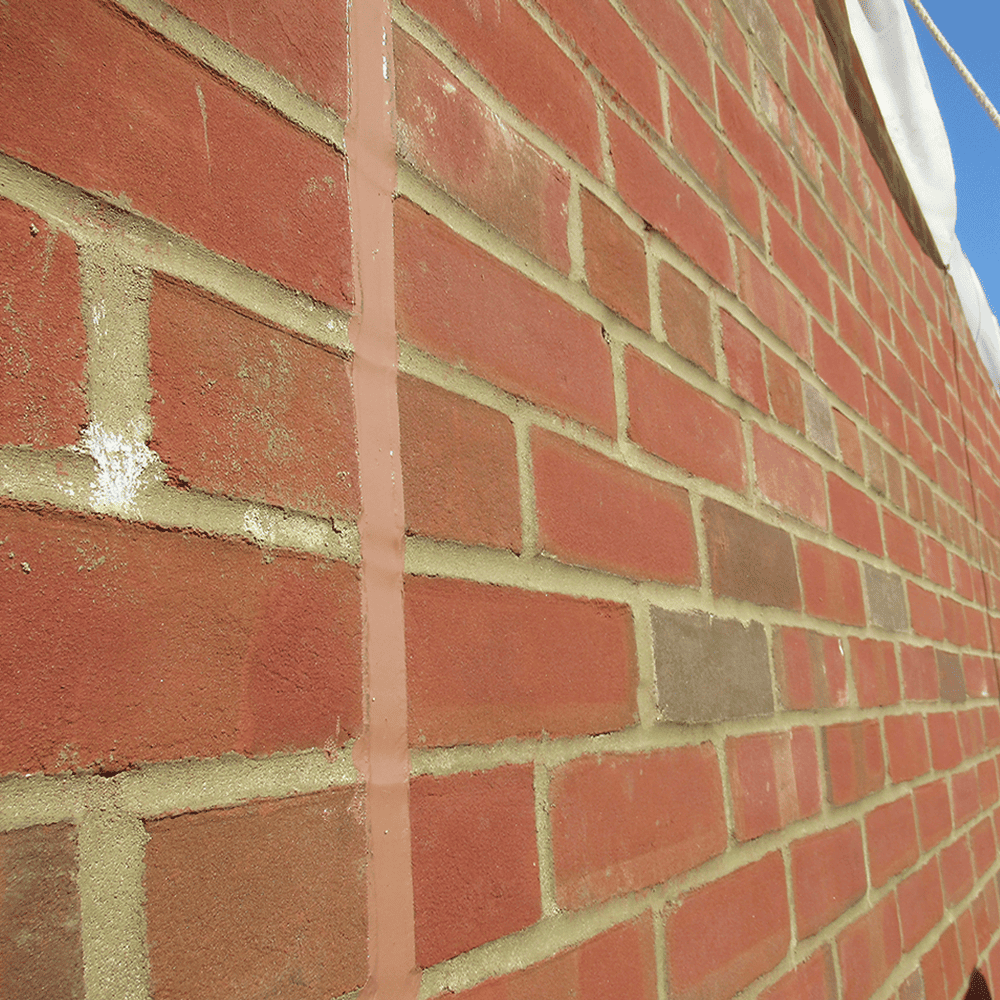
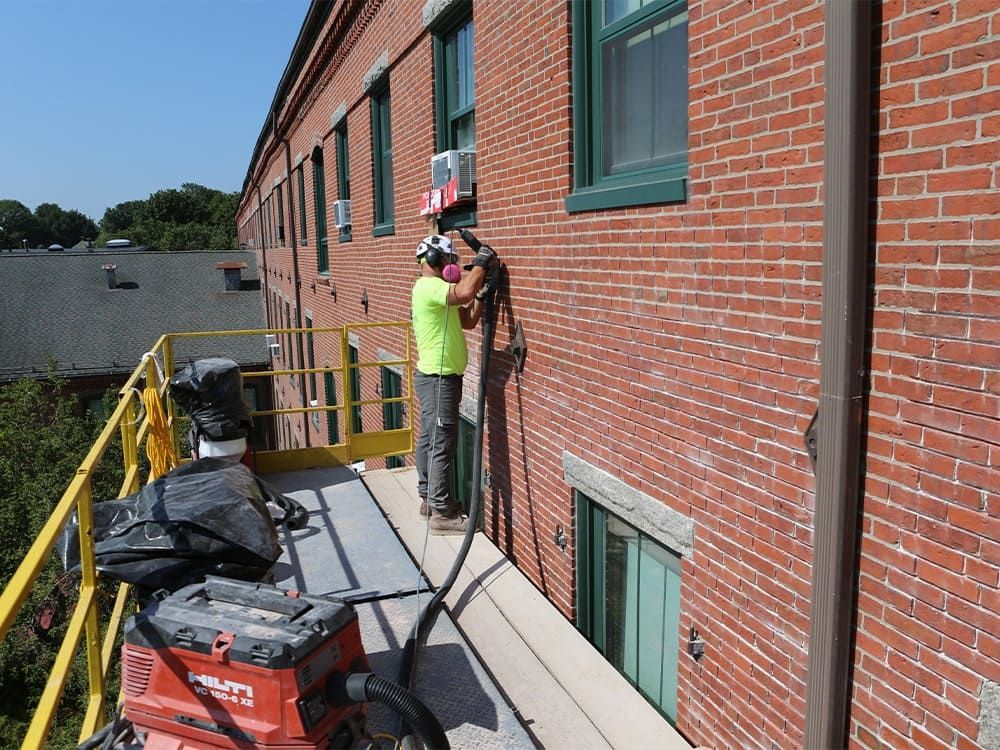
Masonry cleaning, in a commercial setting, is not a maintenance task, but rather a controlled intervention into the building envelope.
At its core, cleaning is about removing contaminants without altering the substrate’s physical or chemical properties. That sounds simple, but in practice, it’s where most failures occur.
Every masonry surface (brick, limestone, terra cotta, cast stone, concrete) has:
- A specific porosity profile
- A defined compressive strength
- A surface layer that acts as a first line of defense against moisture
Cleaning improperly disrupts all three. What separates a professional restorative cleaning project from a basic wash is this:
The goal is not to make the building look clean, but to remove what’s harmful while preserving what’s protecting it.
Why Most Masonry Cleaning Goes Wrong
(And Why It Matters Long-Term)
If you look at failed projects across Chicago, the pattern is consistent. The damage doesn’t show up immediately, it shows up 2–5 years later.
The Most Common Root Causes of Failure
- Excessive pressure removing the fired surface of brick
- Acidic cleaners etching limestone or reacting with mortar
- Over-saturation leading to internal moisture retention
- Incomplete rinsing leaving chemical residues behind
- No mock-up validation before full-scale execution
These aren’t small mistakes. They fundamentally change how the wall performs.
What Happens After a Bad Masonry Cleaning Job
- Increased water absorption → freeze–thaw expansion
- Surface softening → accelerated erosion
- Mortar joint breakdown → need for premature tuckpointing
- Uneven coloration → permanent aesthetic damage
This is why experienced contractors approach cleaning conservatively. You can always clean more, but you can’t undo damage. Industry guidance from PROSOCO reinforces this reality, noting that improper cleaning can permanently alter the appearance of masonry, making prevention far more critical than correction.
Chicago Conditions That Change How Masonry Cleaning Must Be Performed
Chicago is one of the most unforgiving environments for masonry in the country. That directly impacts how cleaning should be approached.
Freeze–Thaw Cycles
Water is introduced during almost every cleaning method. In Chicago, that water becomes a liability if not controlled.
- Water enters pores during cleaning
- Temperatures drop overnight
- Water freezes and expands (by roughly 9%) exerting internal pressure on the material
- Microfractures develop internally
You don’t see the damage immediately, but it’s already started.
Carbon and Pollution Buildup
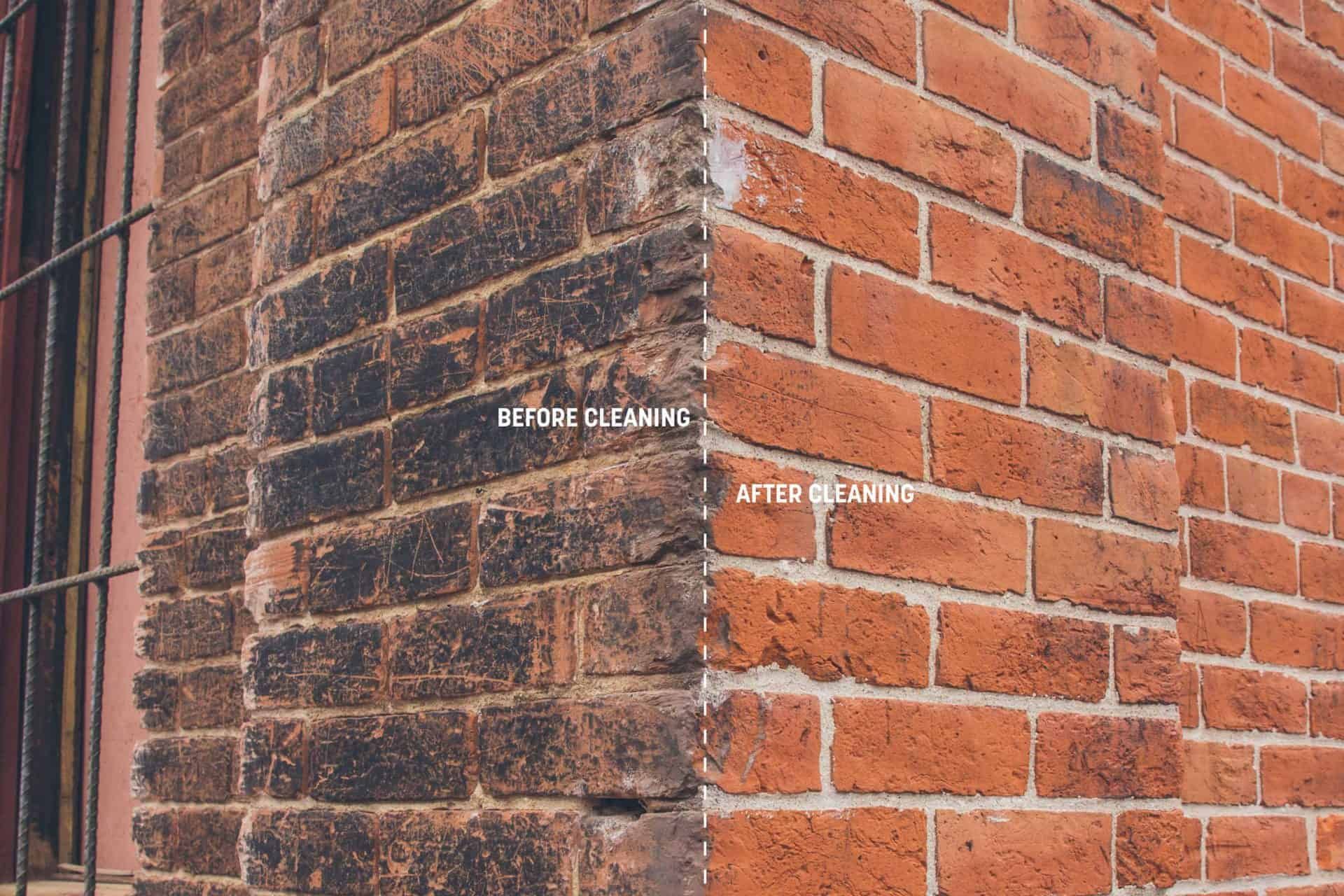
Buildings in dense urban corridors accumulate decades of carbon deposits. These are not just surface-level stains, they bond to the substrate.
Removing them requires:
- Controlled dwell time
- Proper solution selection
- Mechanical assistance (when necessary)
Trying to “blast them off” is where damage begins.
Historic Construction Materials
Many buildings in Chicago (especially pre-war) use softer masonry materials than modern construction.
That means:
- Lower tolerance for pressure
- Higher sensitivity to chemicals
- Greater risk of irreversible damage
The cleaning approach must match the material, not the stain.
Step One: Identifying the Contaminant (Not Just the Stain)
Before selecting a cleaning method, the first question should be whether cleaning is necessary at all. Guidance from Building Conservation emphasizes that not all surface soiling is harmful, as some buildup can act as a protective layer, and removing it without understanding its role can accelerate deterioration or lead to faster re-soiling.
This is where inexperienced teams go wrong, as they treat all discoloration the same.
Categories of Contaminants
1. Atmospheric Carbon
- Black or dark gray staining
- Common on limestone and brick
- Typically requires chemical assistance + low-pressure rinsing

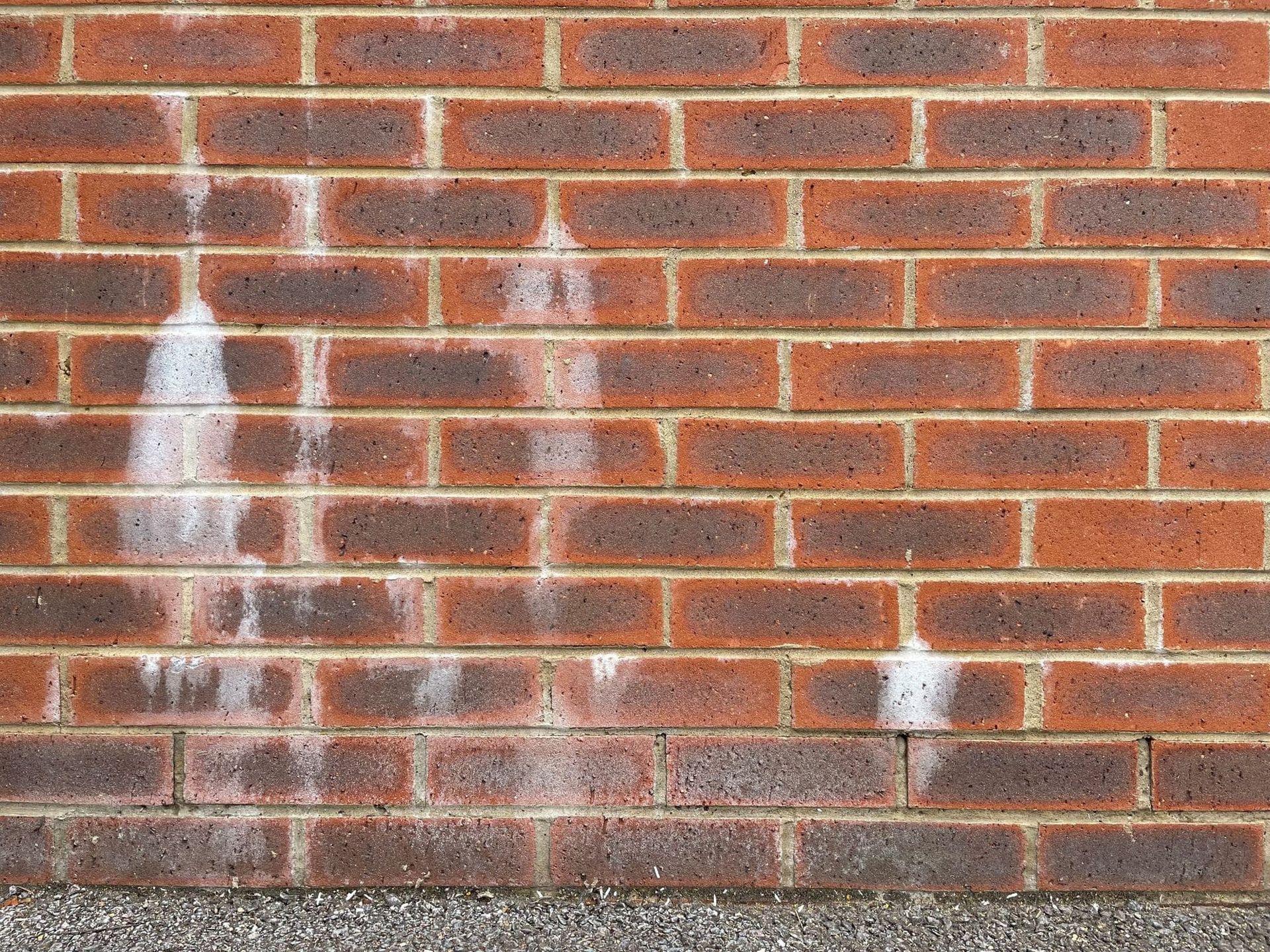
2. Efflorescence
- White, powdery deposits
- Caused by soluble salts migrating through moisture
- Requires addressing moisture source and not just cleaning
3. Biological Growth
- Green, black, or organic patterns
- Found in shaded or moisture-prone areas
- Requires biocide treatment, not just washing

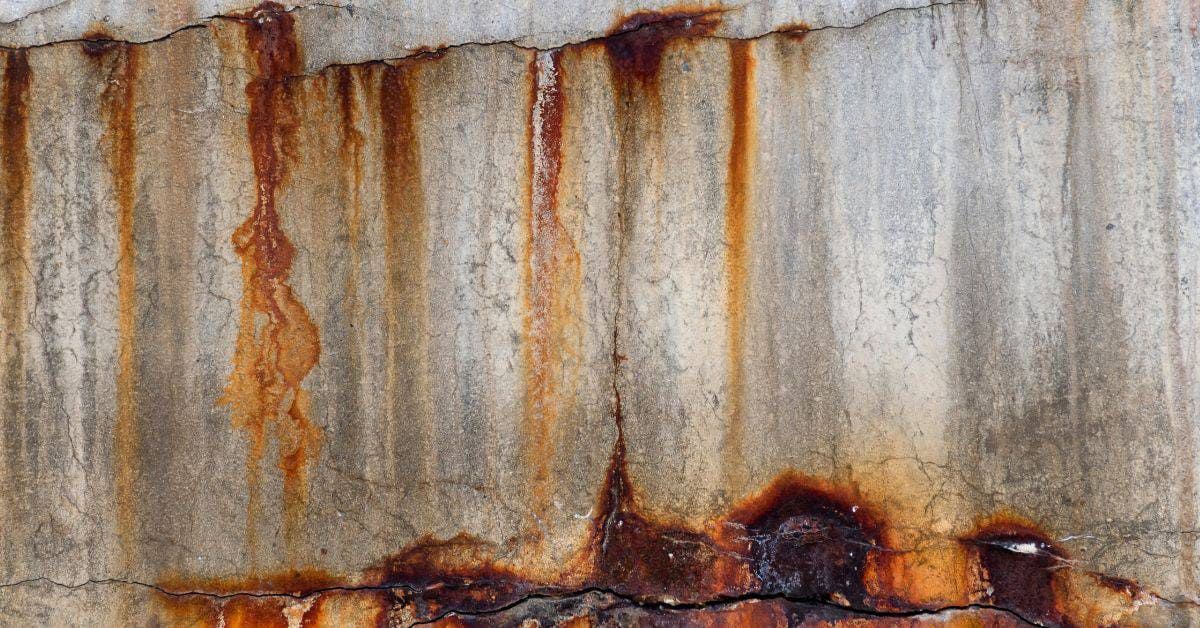
4. Rust Staining
- Orange or brown streaks
- Often indicates embedded steel corrosion
- Cleaning alone won’t solve the root issue
5. Previous Coatings or Paint
- Requires specialized removal methods
- Risk of ghosting or incomplete removal
If you misidentify the contaminant, you choose the wrong method, and that’s where damage starts. Industry guidance from the Concrete Masonry & Hardscapes Association reinforces this, emphasizing that cleaning should not begin until the stain is properly identified, as using the wrong method can spread the stain or make it more difficult to remove.

The Decision Framework:
How Cleaning Methods Are Actually Chosen
This is the part most blogs skip, and it’s the most important.
Cleaning isn’t chosen based on preference. It’s chosen based on constraints.
Key Variables That Drive the Decision
- Material type (limestone vs brick vs terra cotta)
- Age and condition of the façade
- Type and severity of staining
- Environmental exposure
- Access conditions (height, surrounding materials)
- Upcoming restoration work
A professional contractor evaluates all of these before selecting a method.
Water-Based Cleaning:
Why It’s the Foundation of Most Projects
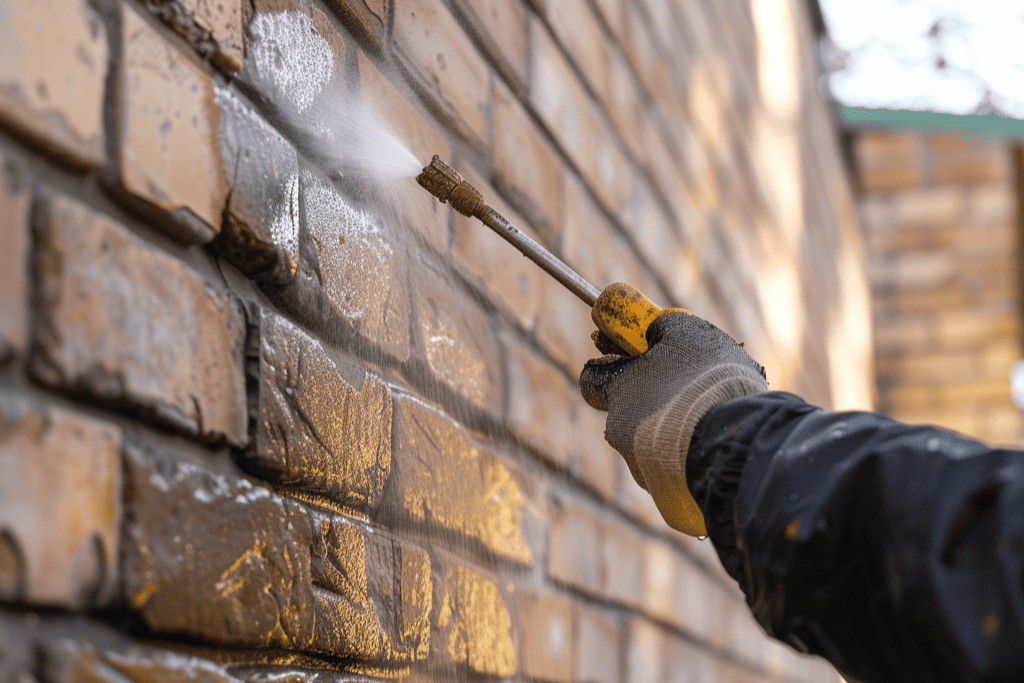
Water-based cleaning is the starting point, not because it’s simple, but because it’s controllable.
What “Low-Pressure” Actually Means
Low-pressure isn’t a guess. It’s typically:
- 100–400 PSI depending on material
- Controlled flow rate
- Wide fan pattern to distribute force
The goal is to avoid disrupting the surface while still removing loosened contaminants.
What often gets misunderstood is that pressure alone does not determine cleaning effectiveness, it only helps break the bond between the contaminant and the surface. Once that bond is broken, the material must be rinsed clean without forcing water deeper into the substrate.
Industry guidance from the Mason Contractors Association of America reinforces this point: excessive pressure doesn’t just increase the risk of damage, it can actually reduce effectiveness by scattering contaminants rather than removing them from the surface.
In practice, most masonry cleaning falls within a controlled range of roughly 500 to 1,000 PSI, depending on the material and condition, with adjustments made during testing. Higher pressures, especially above 1,500–2,000 PSI, are typically reserved for preparation work on more durable substrates, not restorative cleaning of finished façades.
Equally important is water volume. Once the contaminant bond is broken, sufficient flow (gallons per minute) is required to carry residues off the surface. Without adequate rinsing, dirt, salts, or cleaning agents can remain embedded in the masonry, leading to long-term staining or performance issues.
This is why experienced contractors prioritize adjustability over raw power, the ability to fine-tune pressure and flow is far more important than maximum output when working on commercial masonry.
The Role of Soaking (This Is Where Most Value Comes From)
The biggest misconception is that cleaning is about pressure. It’s not, it’s about time and saturation.
Extended soaking:
- Softens bonded contaminants
- Reduces the need for aggressive methods
- Allows for safer removal
Real-World Application: Tribune Tower Residences
At the Tribune Tower Residences, limestone cleaning required a water soaking process, not aggressive washing.
Why?
- The façade includes intricate detailing and historic stone
- Aggressive methods would have damaged the surface
- Soaking allowed contaminants to release gradually
This is the difference between restoration and cleaning.

Chemical Cleaning: Where Precision Matters Most
Chemical cleaning is often necessary, but it’s also where the highest risk exists.
What Chemicals Actually Do
They:
- Break down carbon bonds
- Dissolve mineral deposits
- Loosen embedded contaminants
But they also interact with the substrate. Because masonry is inherently porous, cleaning agents don’t just sit on the surface. They can be absorbed into the material if not properly controlled. This matters because masonry systems rely on that porosity to “breathe,” and residue left behind can interfere with that behavior and lead to long-term performance issues. Guidance from Sherwin-Williams reinforces that maintaining breathability is critical when treating masonry surfaces.
Not all cleaning agents are designed to remove soiling. Some are effective at killing biological growth or breaking down organic matter but do little to actually lift contaminants from the surface. Guidance from the International Masonry Institute also notes that certain cleaning products can leave behind residues or soluble salts if not properly rinsed, which can contribute to long-term staining or surface degradation.
The Important Variables in Chemical Cleaning
- pH level (acidic vs alkaline)
- Dwell time (too short = ineffective, too long = damage)
- Surface temperature
- Rinse quality and volume
Field guidance published by Masonry Magazine reinforces that proper chemical cleaning depends on controlled application, specifically pre-wetting surfaces, using low-pressure equipment, and ensuring thorough rinsing to prevent residue-related staining and damage.
If any of these are off, you get:
- Etching
- Discoloration
- Residue buildup
Real-World Application: Chicago Theological Seminary
Interior limestone surfaces were at the Chicago Theological Seminary cleaned using mild detergents and hand scrubbing.
Why not stronger chemicals?
- Decorative painted elements were present
- Adjacent materials required protection
- Precision mattered more than speed
This is what experienced decision-making looks like.

Hand Cleaning: Where Craftsmanship Replaces Speed
Hand cleaning is slow, and that’s the point.
It’s used when:
- The material is too sensitive for mechanical methods
- The detailing requires precision
- The risk of damage outweighs efficiency
Real-World Application: Chicago Athletic Association
At the Chicago Athletic Association Hotel, limestone was:
- Misted
- Hand scrubbed with soft brushes
- Cleaned inch-by-inch
Over 100 years of buildup was removed without compromising the surface.

Terra Cotta and Specialty Materials:
Why Standard Methods Fail
Materials like terra cotta require different handling.
Example: The Wrigley Building
The terra cotta façade required:
- Controlled cleaning methods
- Scheduling around building operations
- Careful execution to preserve the signature white finish
Aggressive cleaning here would have permanently altered the appearance
Why Mock-Ups Are Non-Negotiable
If a contractor skips a mock-up, that’s a red flag.
Mock-ups are not just a best practice, they are a required validation step on high-level restoration projects, especially those involving historic masonry. Guidance from the General Services Administration (GSA), which oversees federal historic properties, requires small test patches, often no larger than 6 inches by 6 inches, to determine the safest and most effective cleaning method before any full-scale work begins.
What a Proper Mock-Up Actually Confirms
- The cleaning method removes the intended contaminant
- The substrate does not experience etching, softening, or discoloration
- The dwell time and rinse process are sufficient
- Adjacent materials can be protected effectively
- Runoff and waste handling procedures are controlled
GSA standards define the “best method” as the one that successfully cleans the masonry with minimal or no damage to the substrate, not the one that produces the most dramatic visual change.
Why This Matters in Real Projects
Once a mock-up is approved, it becomes the quality control benchmark for the entire project. Every elevation, crew, and phase of work is expected to match that standard.
Skipping this step (or rushing through it) is where most cleaning failures originate. By the time issues show up at scale, the damage is already done.

What Cleaning Reveals
(And Why That Matters for Your Budget)
Cleaning exposes what’s actually happening behind the façade.
Common Findings After Cleaning
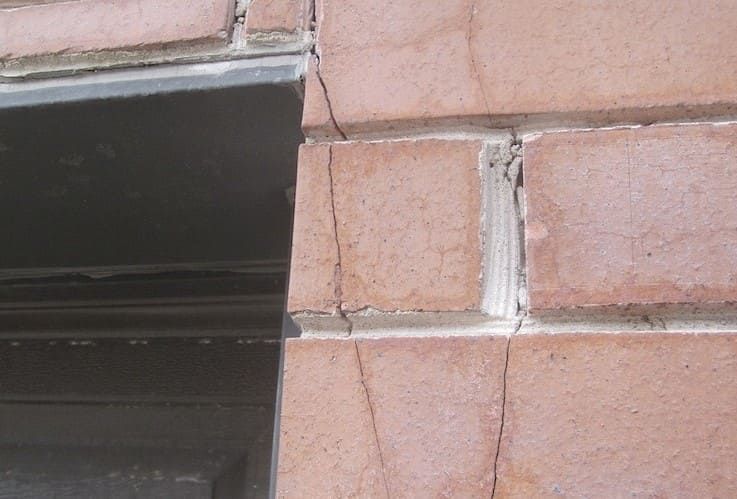
- Open mortar joints → requires tuckpointing
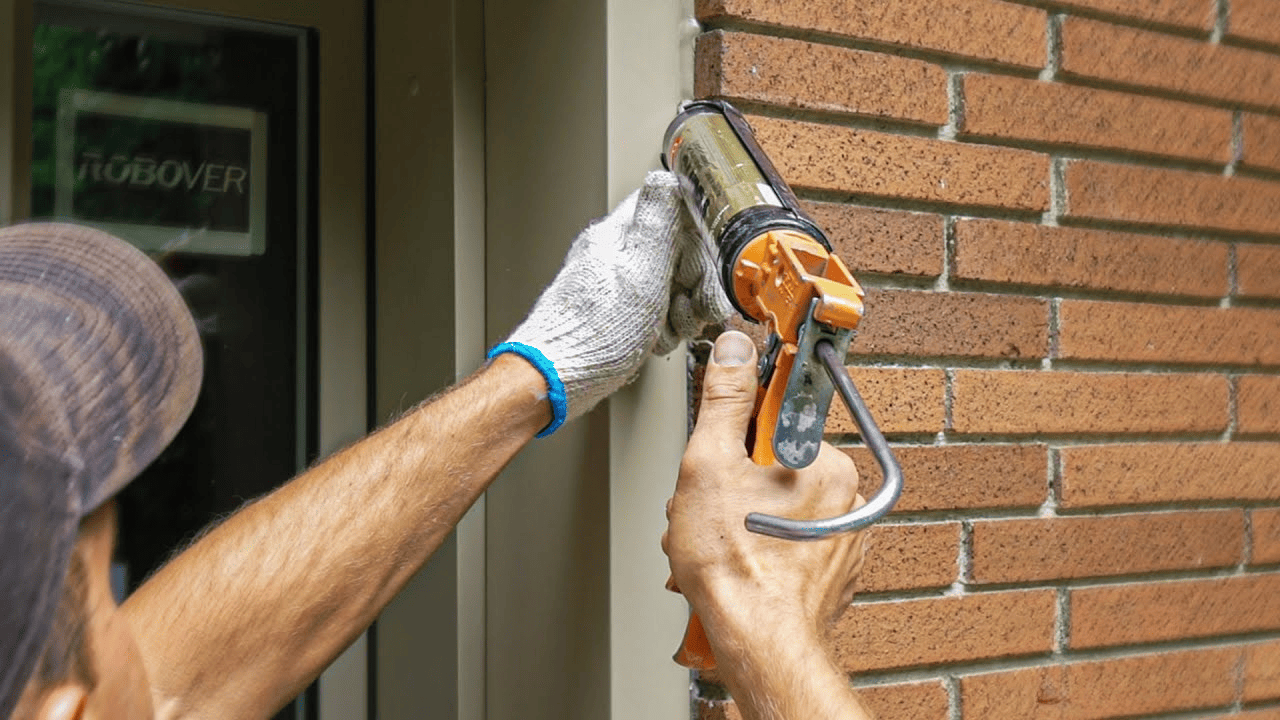
- Failed sealants → requires caulking and sealant repair
- Rust staining → indicates lintel issues
- Surface scaling → early-stage material failure
This is why cleaning often leads to additional scope. If you’re budgeting for cleaning, you should expect follow-up work.
Sequencing: Cleaning Is Not Always the First Step
Another mistake is assuming cleaning always comes first.
Correct Sequencing Depends On:
- Severity of deterioration
- Structural issues present
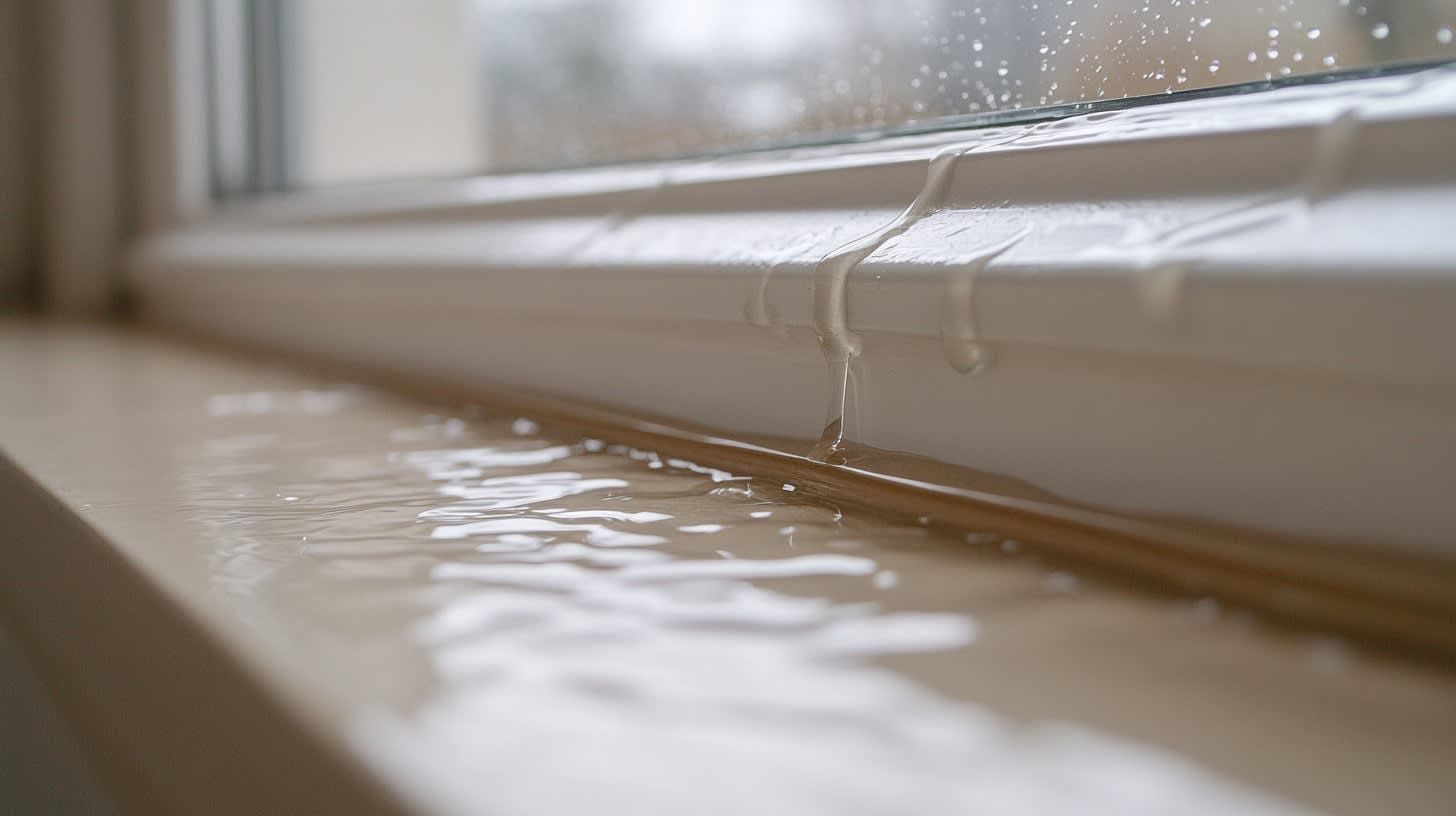
- Water infiltration concerns
In some cases:
- Emergency repairs come first
- Cleaning follows
- Final restoration work completes the system
Getting this wrong leads to rework.
Operational Constraints on Active Commercial Buildings
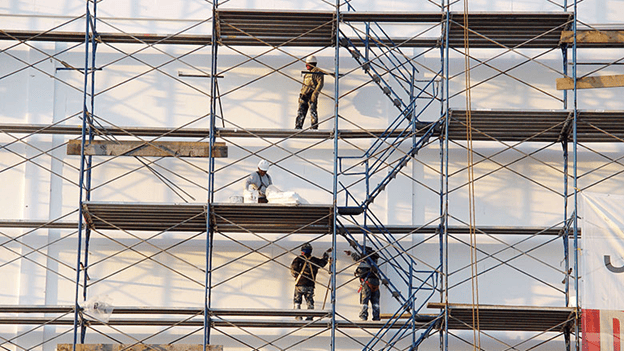
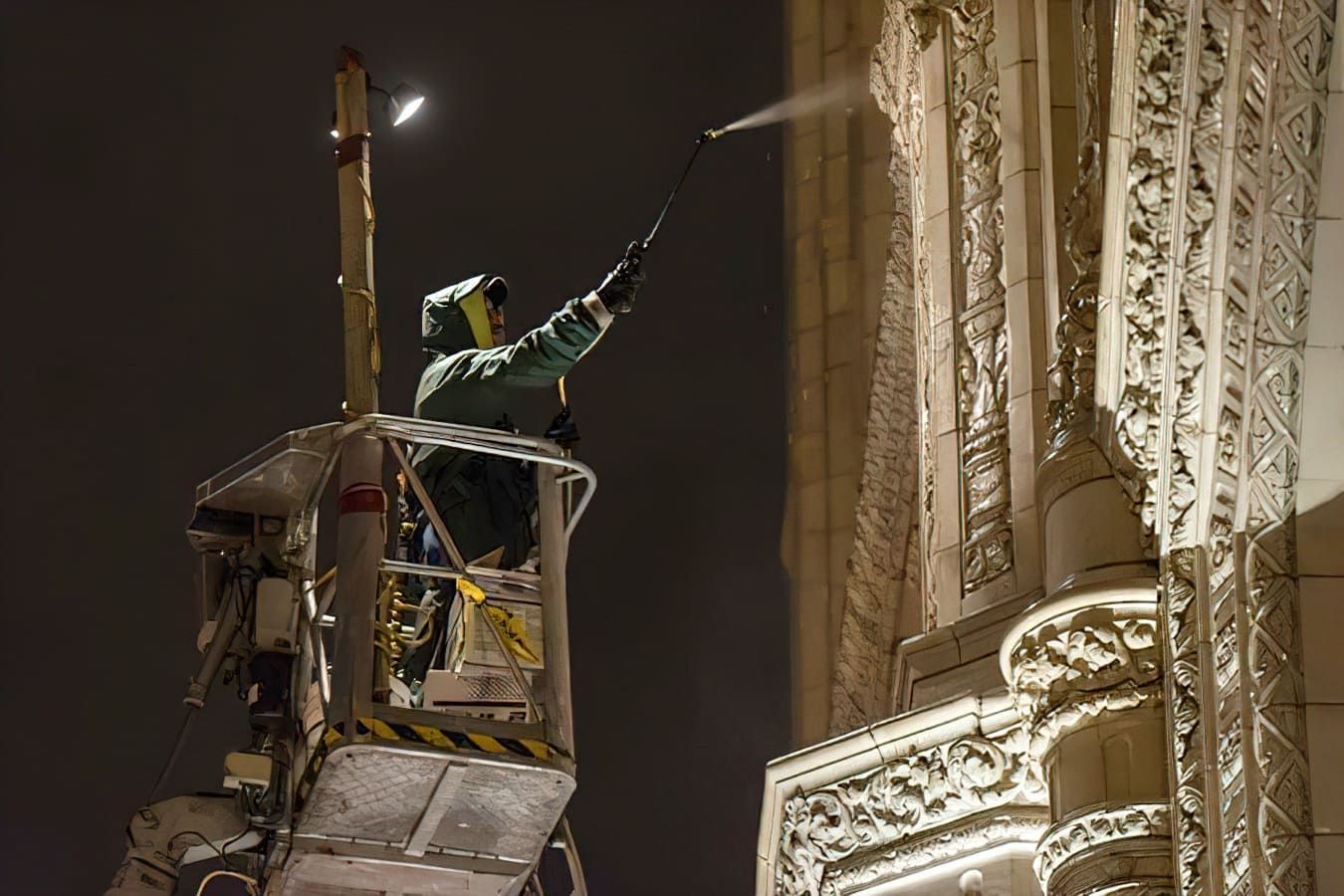
Cleaning doesn’t happen in a vacuum, it happens on occupied buildings.
What Must Be Managed
- Pedestrian safety
- Tenant access
- Overspray protection
- Noise restrictions
At historic, occupied buildings like Willoughby Tower in downtown Chicago, crews often work at night to avoid disrupting tenants and visitors. In that project, restoration work also required coordination inside the building to monitor for water infiltration during the cleaning process, highlighting how exterior cleaning decisions directly impact interior conditions.
This adds complexity, but it’s required.

Long-Term Impact: Cleaning as a Performance Decision
Not all cleaning objectives are the same, and that distinction matters. Guidance from Traditional Building notes that cleaning should not aim to make masonry look “like new,” but to remove harmful contaminants while preserving the natural patina of the material. Cleaning driven purely by aesthetics should always be weighed against the potential for long-term damage.
Cleaning is one of the few restoration activities that directly affects long-term performance.
Done Correctly
- Removes harmful contaminants
- Improves moisture behavior
- Extends service life
Done Incorrectly
- Accelerates deterioration
- Increases maintenance costs
- Shortens lifecycle of the façade
This is not a cosmetic decision, it’s a capital planning decision.
Frequently Asked Questions about Masonry Cleaning
How much does commercial masonry cleaning cost?
Costs vary based on access, material type, and cleaning method. Water-based cleaning is typically less expensive, while detailed hand cleaning or chemical processes increase labor and complexity. Pricing is driven more by risk and precision than square footage alone.
Can all stains be completely removed from masonry?
No. Some staining penetrates deeply into the material. The goal is controlled improvement without damaging the substrate, not always complete removal.
When is the best time of year to clean masonry in Chicago?
Late spring through early fall is ideal. Temperatures must stay above freezing to prevent water-related damage and allow proper drying.
Should cleaning be done before or after tuckpointing?
Typically before, but it depends on conditions. Cleaning reveals joint deterioration, but severely deteriorated mortar may need stabilization first.
If you have more questions about restorative masonry cleaning, contact RestoreWorks today.