Why Historic Masonry Restoration Matters in Chicago
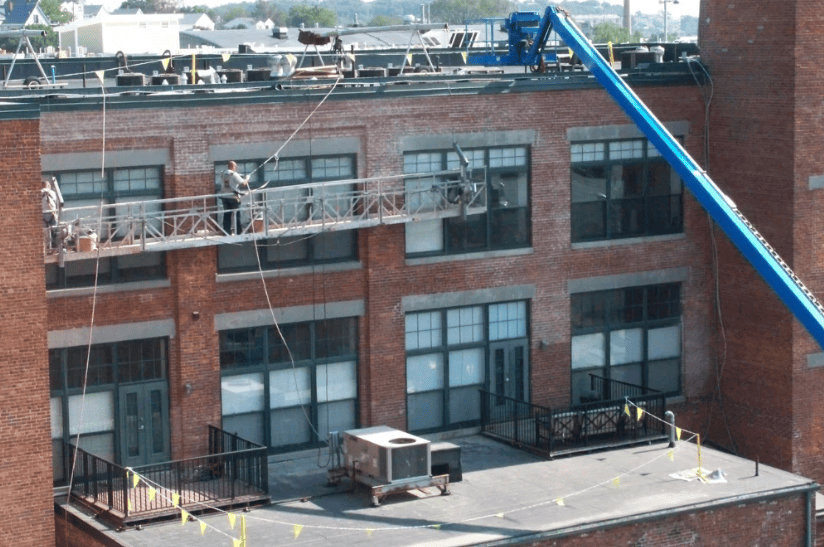
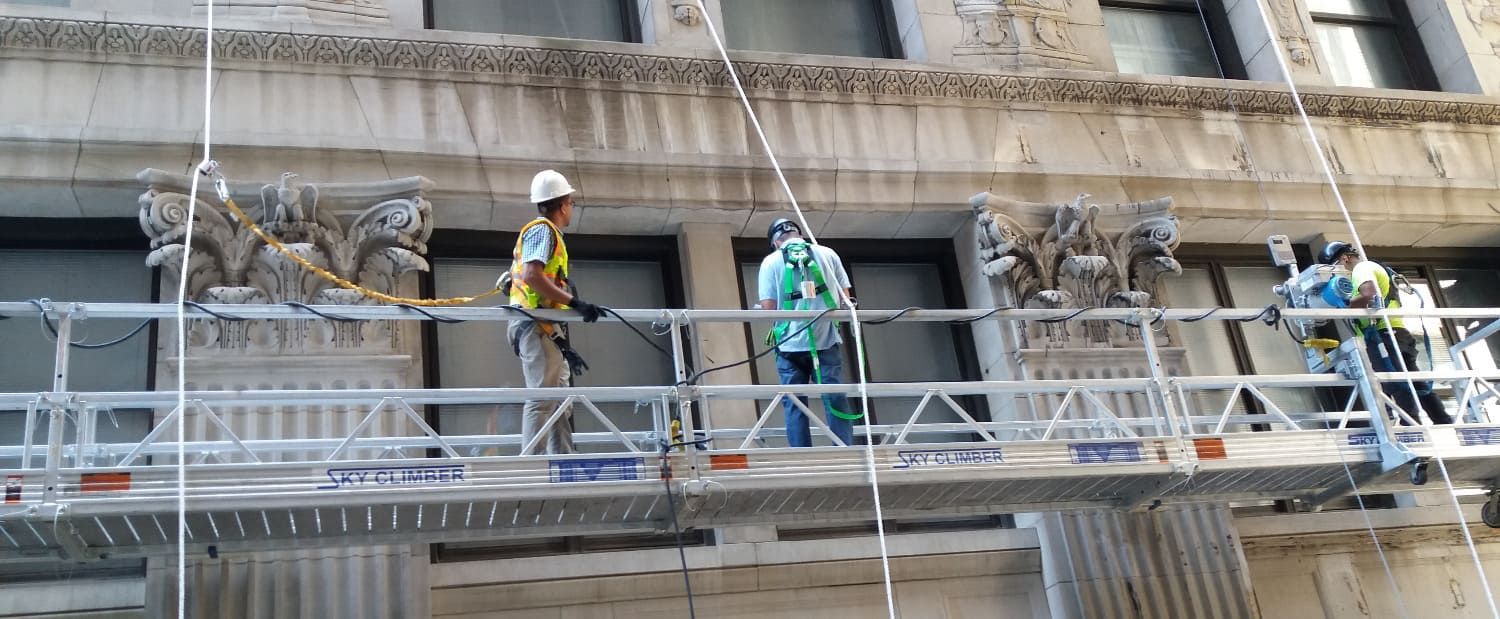
Chicago’s skyline is famous for its architectural diversity, from early 20th-century limestone façades to ornate terra cotta towers and historic brick structures. Preserving these buildings requires specialized historic masonry restoration, a process that repairs deterioration while maintaining the building’s original materials and design.
Historic buildings face unique challenges in the Chicago region. Freeze–thaw cycles, lakefront winds, airborne pollutants, and decades of moisture exposure gradually break down masonry joints, stone surfaces, and embedded steel components. Without timely intervention, small issues can escalate into structural or water-infiltration problems.
Historic restoration focuses on repairing rather than replacing original materials, helping protect both the building’s structural integrity and its architectural significance.
What Is Historic Masonry Restoration?
Historic masonry restoration involves repairing and stabilizing masonry systems on older buildings while preserving their historical character.
Unlike standard façade repairs, restoration work must balance two goals:
- Structural performance
- Architectural preservation
This often includes specialized techniques tailored to older construction methods and materials.
Typical historic masonry restoration work includes:
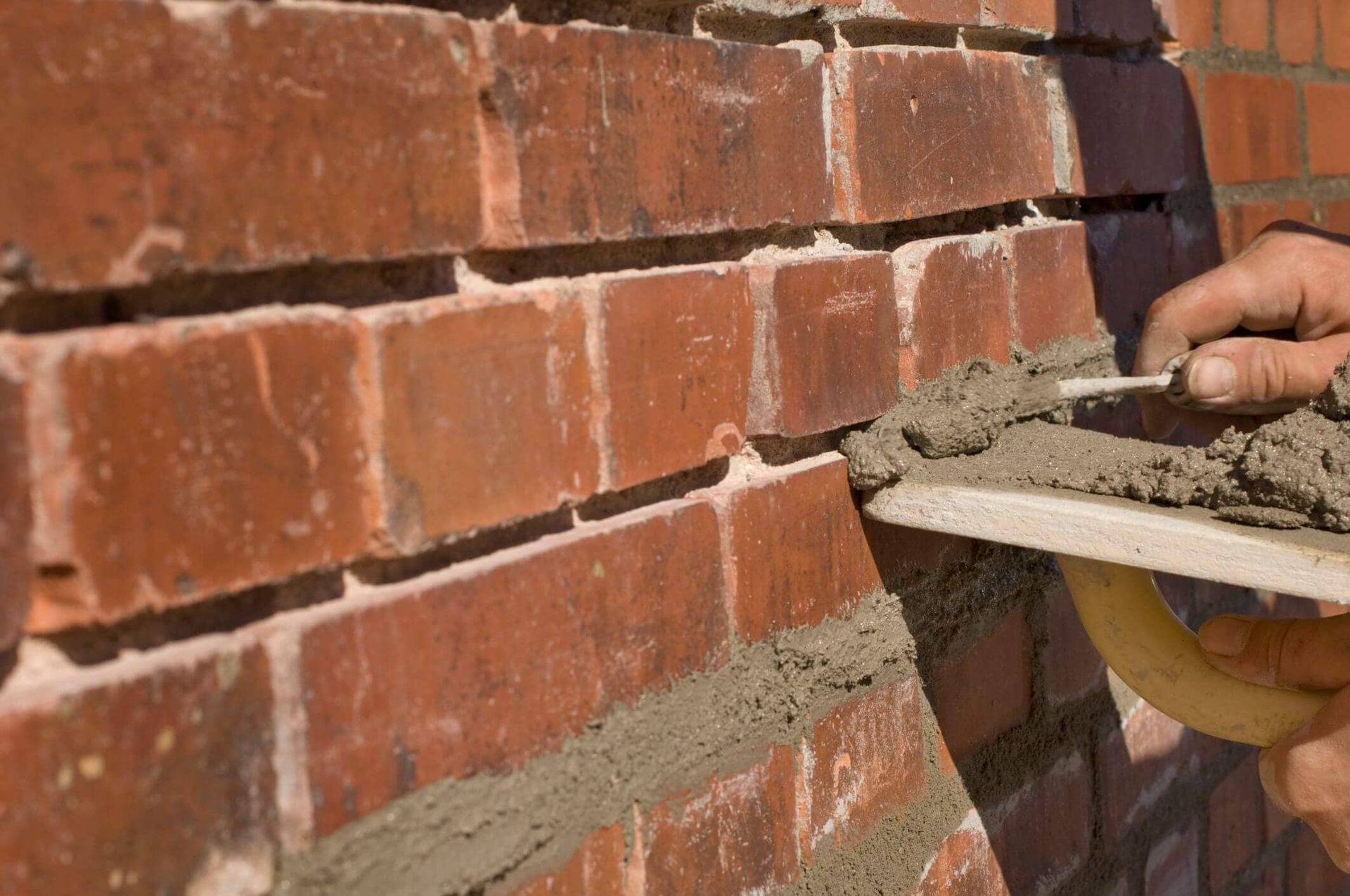
- Tuckpointing deteriorated mortar joints
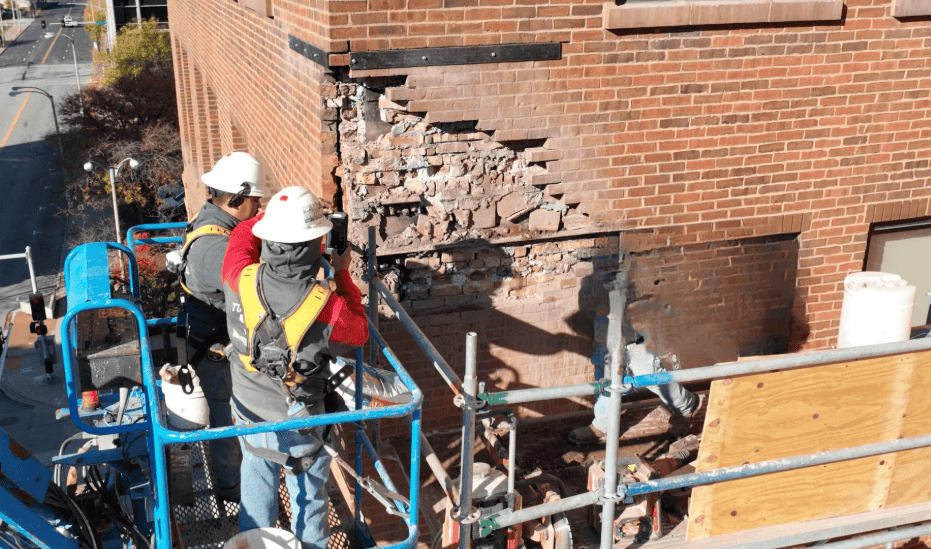
- Masonry rebuilding or brick replacement
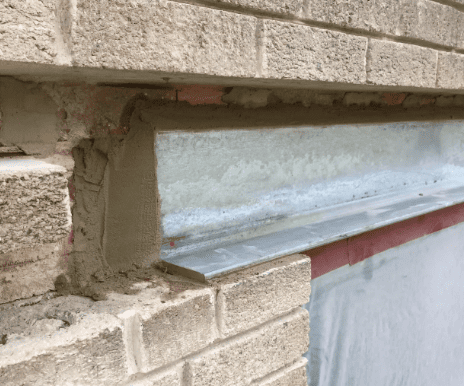
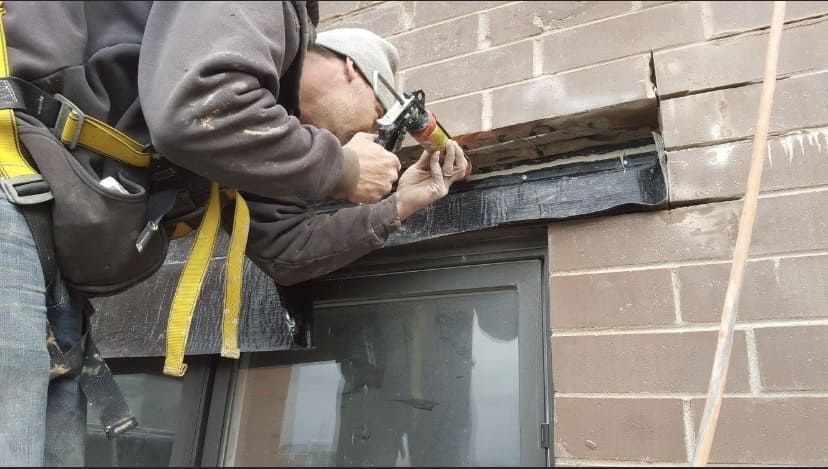
- Lintel and shelf flashing repairs
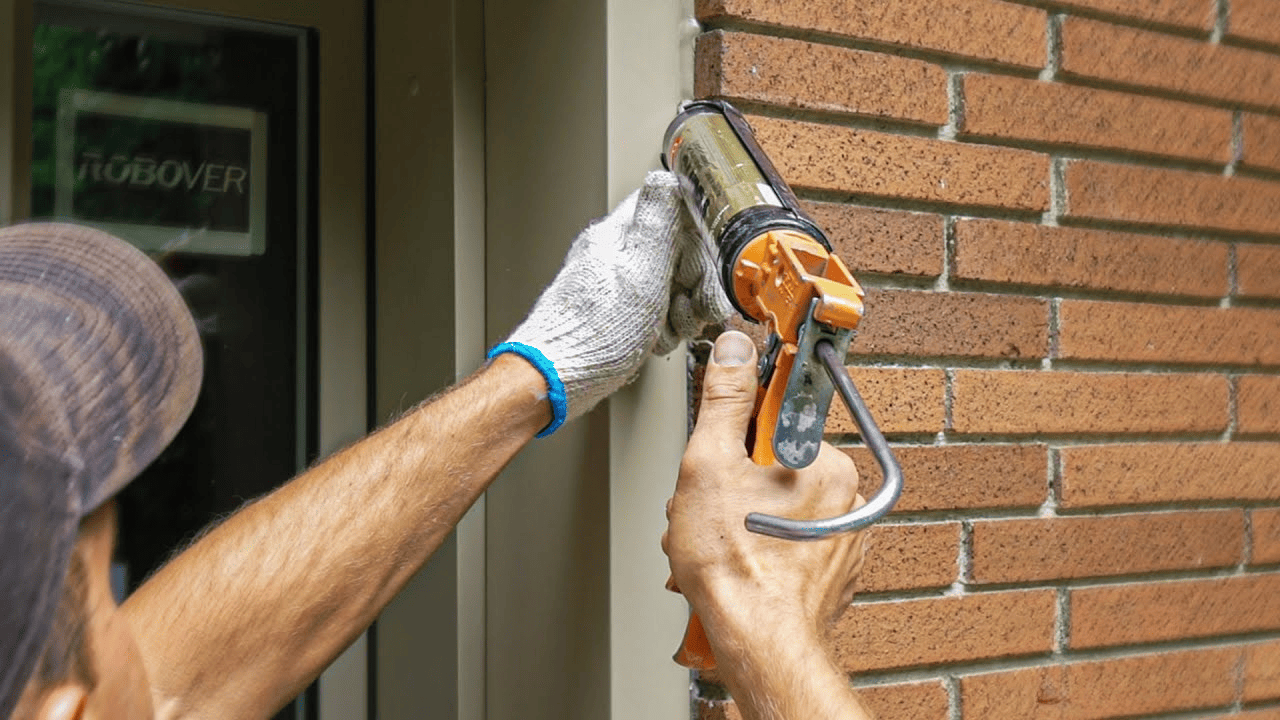
- Caulking and sealant replacement
- Restorative cleaning of stone and brick
- Concrete façade repair on historic concrete elements
- Balcony repair and restoration on historic structures
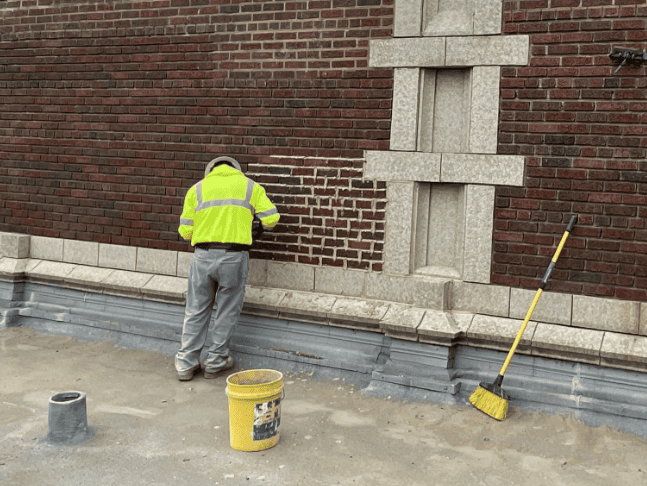
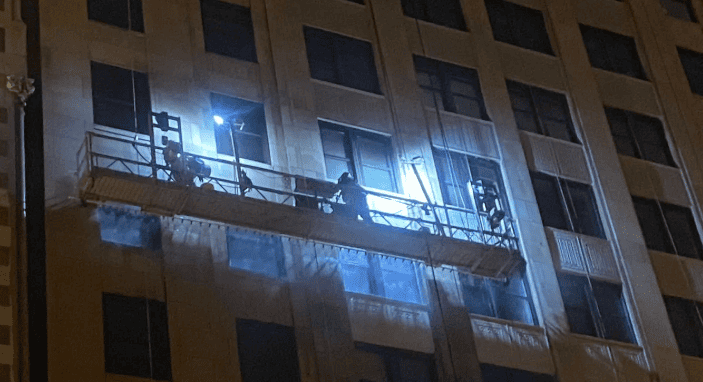
Because historic masonry materials behave differently than modern ones, restoration requires careful analysis before repairs begin, something we experienced during the restoration of Willoughby Tower in downtown Chicago, as you can see below during the night cleaning process.
Common Deterioration Issues in Historic Chicago Buildings
Many masonry issues found on historic buildings develop slowly over decades.
Mortar Joint Deterioration
Historic mortar is often softer than modern mortar mixes. Over time, weather exposure and freeze–thaw cycles break down mortar joints, allowing water to penetrate the wall assembly.
When joints deteriorate, tuckpointing restores the wall by removing damaged mortar and replacing it with a compatible mix.
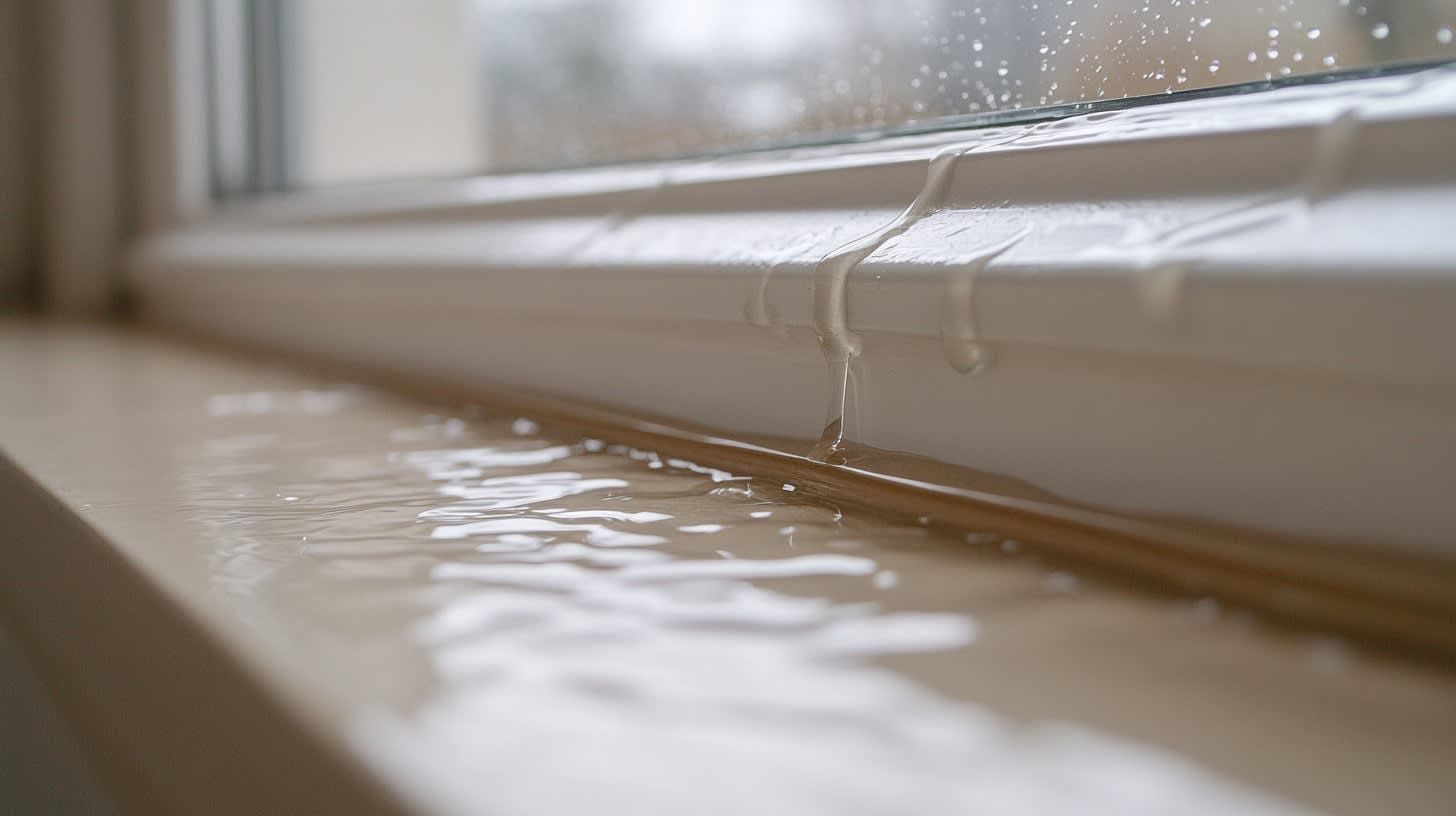
Water Infiltration
Water is one of the most damaging forces affecting historic masonry. Common entry points include:
- Failed sealant joints
- Deteriorated flashing
- Cracked mortar joints
- Open parapet walls
- Failed stone joints
Once moisture enters the wall system, it can cause:
- Rusting of embedded steel
- Brick displacement
- Stone cracking
- Interior leaks
Embedded Steel Corrosion
Many historic buildings include hidden steel elements such as lintels or structural supports. When moisture reaches these components, corrosion causes expansion that can crack surrounding masonry.
Addressing these issues often requires:
- Masonry removal
- Steel repair or replacement
- Rebuilding masonry with new flashing systems
The Role of Restorative Cleaning in Historic Preservation
Historic masonry often becomes heavily stained from pollution, biological growth, and decades of environmental exposure.
However, cleaning historic buildings must be done carefully. Aggressive methods can permanently damage masonry surfaces.
Guidance from the U.S. General Services Administration (GSA) emphasizes that historic masonry should always be cleaned using the gentlest method capable of achieving the desired result, typically starting with low-pressure water and soft natural-bristle brushes before more aggressive techniques are considered.
Restorative cleaning methods often include:
• Low-pressure water cleaning
• Specialized masonry cleaning solutions
• Soft-brush hand cleaning
• Controlled water soaking processes
These methods remove contaminants while protecting the original masonry surface.
Case Study: Navy Pier Masonry Restoration
Historic masonry restoration often involves large-scale coordination across complex structures.
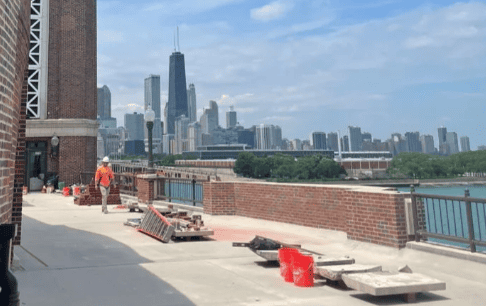
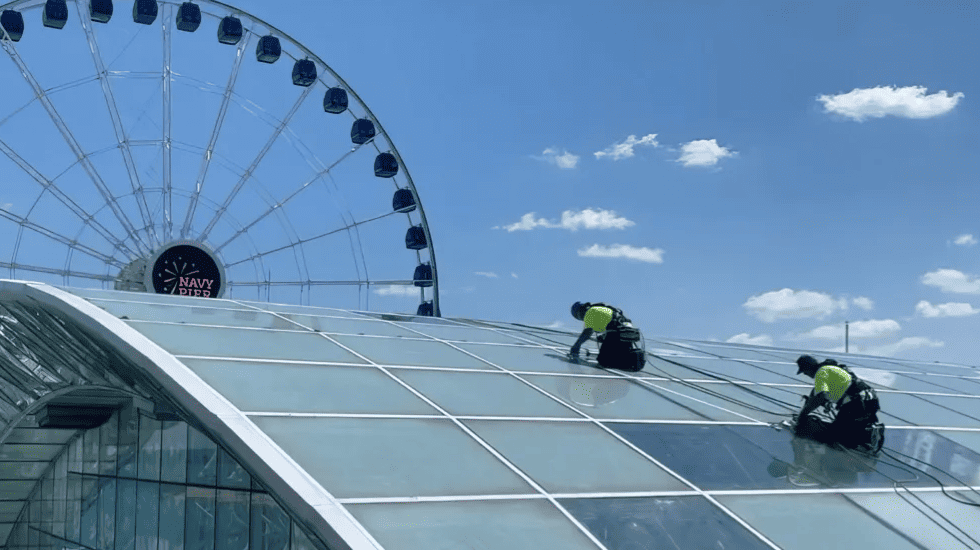
At Navy Pier, RestoreWorks performed restoration work across multiple buildings over an eight-month project. Work included repairs on the Headhouse, Crystal Garden, Festival Hall, and the pier’s ballroom structures.
Scope of work included:
- Brick parapet rebuilding
- Tuckpointing repairs
- Masonry resetting
- Terra cotta capstone resetting
- Installation of through-wall flashing
- Caulking and sealant repairs
- Industrial rope access restoration work
- Steel exposure and repair within masonry walls
Because Navy Pier hosts conferences and public events year-round, restoration work required careful coordination with facility management to minimize disruptions.
Case Study: Chicago Athletic Association Restoration Cleaning
Historic restoration projects often require highly controlled cleaning techniques.
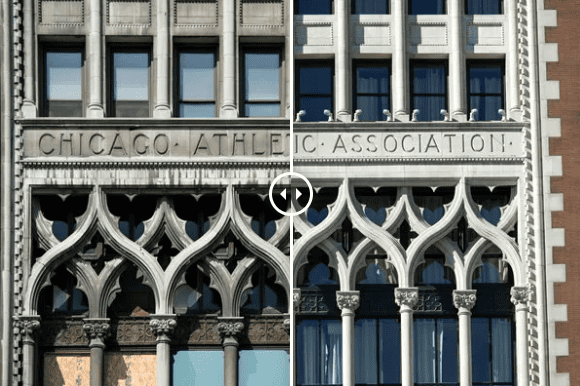
During the redevelopment of the Chicago Athletic Association Hotel, RestoreWorks performed restorative cleaning on the building’s ornate limestone and brick façade.
The process involved:
- Misting every section of limestone
- Carefully hand-scrubbing surfaces with soft brushes
- Removing more than a century of carbon buildup, dirt, and environmental contaminants
This gentle cleaning process restored the building’s original appearance while preserving the delicate stonework.
The project demonstrates how restorative cleaning can revitalize historic buildings without damaging their materials.
Case Study: Tribune Tower Limestone Restoration
The iconic Tribune Tower at 435 North Michigan Avenue is one of Chicago’s most recognizable historic buildings.
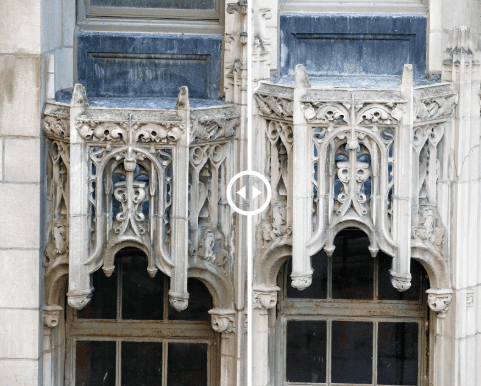
Originally completed in 1925, the neo-Gothic structure features intricate limestone detailing and architectural elements inspired by European cathedrals.
During its conversion into luxury residences, RestoreWorks performed specialized limestone cleaning using a controlled water soaking process. This method gradually lifted contaminants from the stone while protecting its surface integrity.
The cleaning helped restore the façade’s original color and detail while preserving the building’s historic character.
Why Mock-Ups Are Important for Historic Restoration Projects
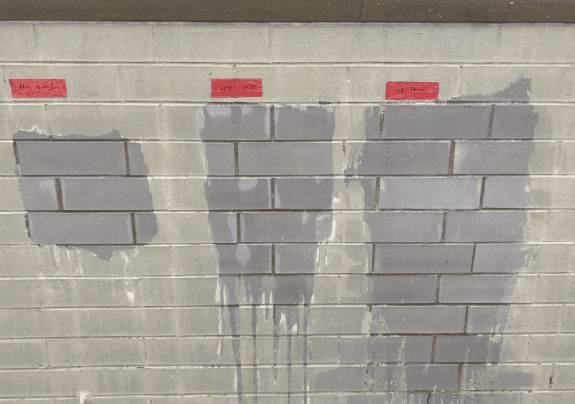
Historic restoration projects often begin with mock-ups before full-scale work begins.
A mock-up allows project teams to evaluate:
- Cleaning results
- Mortar color and texture
- Repair methods
- Material compatibility
Mock-ups help architects, engineers, and owners verify that restoration work will match the building’s historic appearance before full production begins.
They also ensure the selected repair method will perform properly over time.
How Chicago’s Climate Accelerates Masonry Deterioration
Chicago’s climate places unusual stress on masonry structures.
The city experiences:
- Severe freeze–thaw cycles
- Lakefront wind exposure
- Seasonal temperature swings
- Urban pollution accumulation
These conditions accelerate deterioration of mortar joints, sealants, and masonry surfaces.
Historic buildings, many constructed before modern moisture management systems, require proactive maintenance and restoration to prevent costly damage.
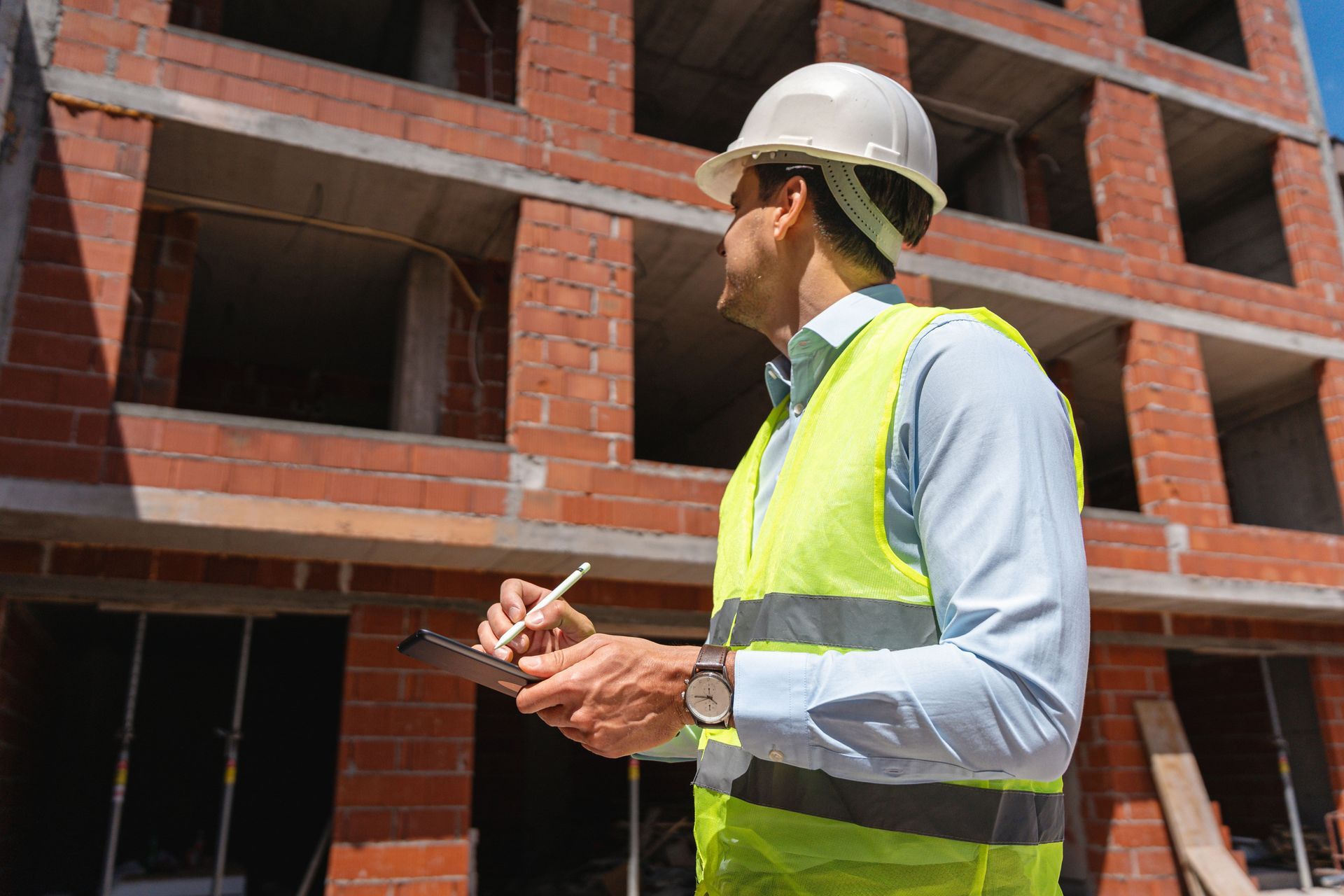
When Property Managers Should Plan Historic Masonry Restoration
Early detection and proactive repairs significantly reduce long-term restoration costs.
Property managers should schedule façade inspections when they observe:
- Cracking mortar joints
- Loose or displaced brick
- Water infiltration
- Rust staining near steel lintels
- Stone deterioration
- Failed sealant joints
Routine inspections help identify issues before they escalate into structural repairs.
FAQ: Historic Masonry Restoration
What is historic masonry restoration?
Historic masonry restoration repairs and stabilizes older brick, stone, or terra cotta buildings while preserving their original materials and architectural character. It typically involves tuckpointing, masonry repairs, restorative cleaning, flashing repairs, and sealant replacement designed specifically for historic construction methods.
How often do historic masonry buildings need restoration?
Most historic masonry buildings require inspection every 5 years and restoration work approximately every 20–30 years, depending on exposure and maintenance. Buildings in harsh climates like Chicago may require more frequent repairs due to freeze–thaw cycles and environmental exposure.
Can historic brick or stone be cleaned safely?
Yes, but cleaning must use controlled methods. Gentle techniques such as low-pressure water cleaning or specialized chemical cleaners remove contaminants while protecting the masonry surface. Abrasive cleaning methods can permanently damage historic materials.
Why is tuckpointing important for historic buildings?
Tuckpointing restores deteriorated mortar joints that protect masonry walls from moisture infiltration. Because historic mortar is typically softer than modern mortar, using compatible repair materials is essential to prevent brick or stone damage.
Preserving Chicago’s Architectural Legacy
Historic masonry restoration protects more than individual buildings. It preserves the architectural character that defines Chicago’s skyline.
From landmark towers to early industrial structures, many of the city’s most iconic buildings depend on specialized restoration techniques to remain safe and visually intact.
By combining careful analysis, compatible materials, and skilled craftsmanship, historic masonry restoration ensures these structures continue to serve future generations.
If you have questions or are interested in historic masonry restoration services, contact RestoreWorks to learn more.