Façade Restoration Planning in 2026: What Property and Facilities Managers Need to Know
Why Façade Restoration Planning Looks Different in 2026
Façade restoration has always required foresight, but 2026 raises the stakes. Aging building stock, tightening capital budgets, and increased scrutiny of exterior conditions mean reactive repairs are becoming riskier and more expensive.
In Chicago, freeze–thaw cycles, lakefront exposure, and historic masonry construction continue to accelerate façade deterioration. What’s changed is how little margin there is for delayed decisions. Buildings that wait for visible failure often face higher costs, emergency repairs, and scheduling bottlenecks, especially once formal inspections are involved.
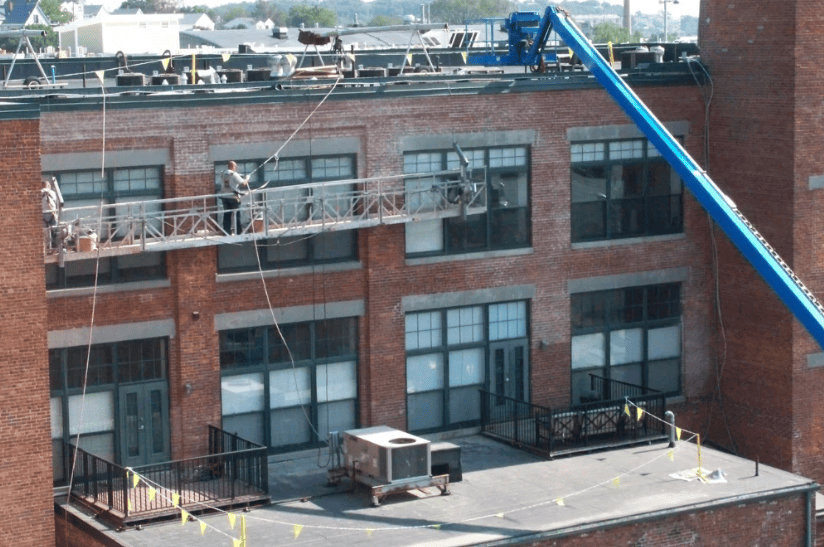
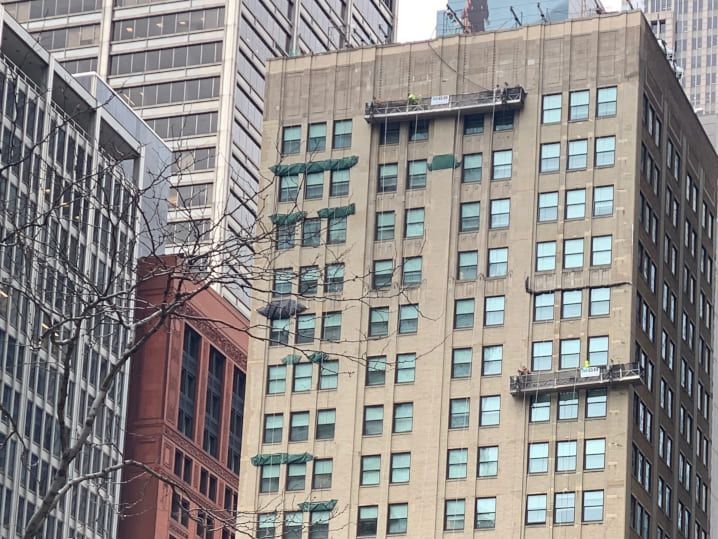
Chicago’s Façade Ordinance adds another layer of urgency. As outlined by FacadeOrdinance.com, buildings over 80 feet are subject to recurring inspection and reporting cycles administered by the City’s Department of Buildings. When deficiencies are identified during required examinations, owners may be forced into accelerated repair timelines that limit flexibility and drive up costs.
Planning ahead isn’t just about cost control. It’s about aligning façade restoration work with inspection cycles, protecting building occupants, managing liability exposure, and preserving long-term asset value, before conditions escalate into compliance-driven emergencies.
What’s Driving Façade Repair Demand Across Chicago
Several structural and operational factors are converging:
- Aging façades on mid-century and historic buildings reaching critical maintenance cycles
- Deferred repairs from pandemic-era budget freezes
- Chicago’s climate stressors, including freeze–thaw movement and moisture intrusion
- Increased attention to falling masonry risks, especially at parapets, cornices, and balconies
For many property and facilities managers, the issue isn’t whether façade work is needed, it’s how to prioritize it intelligently.
How Freeze–Thaw Cycles Affect Building Façade Restoration Timing
Freeze–thaw damage isn’t new, but its cumulative impact is often underestimated, particularly in Chicago’s older masonry building stock.
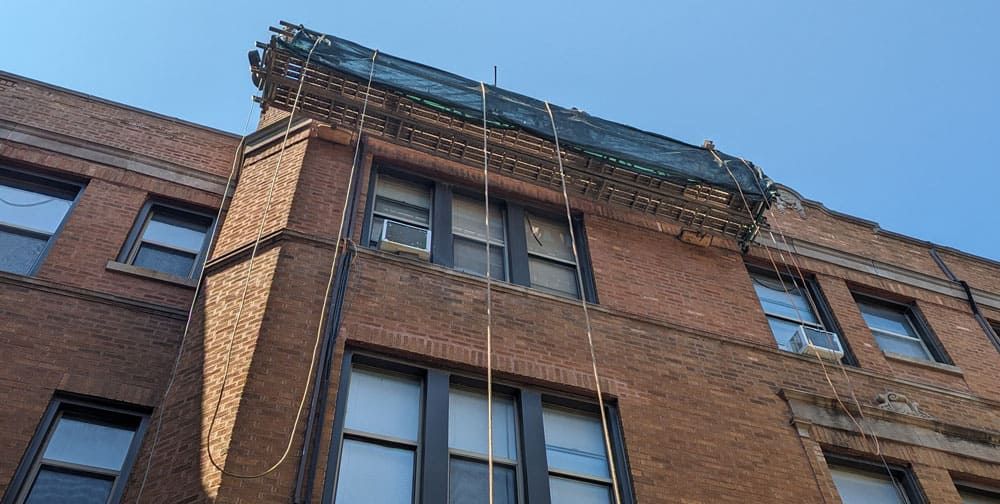
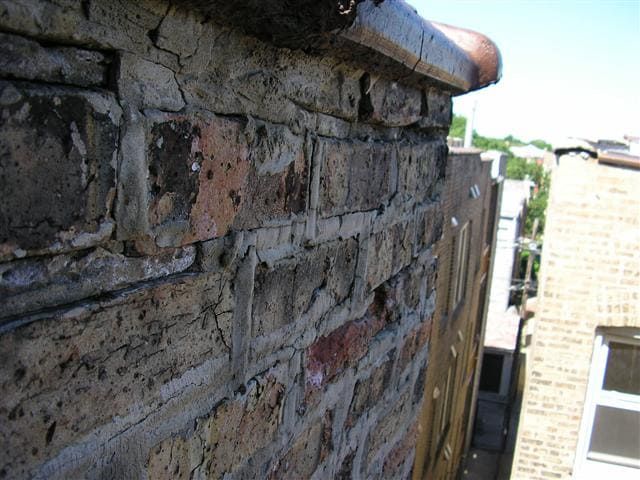
According to the International Concrete Repair Institute (ICRI), masonry walls are inherently porous and function as moisture reservoirs. During rain events, water is absorbed into mortar joints and masonry units and released slowly as vapor during dry conditions. When that retained moisture freezes, it expands, progressively weakening the masonry over repeated freeze–thaw cycles.
Over time, this leads to:
- Cracked mortar and brick faces
- Displaced stone or terra cotta units
- Corroding steel lintels that expand and fracture surrounding masonry
- Accelerated failure of sealants and flashings
ICRI also notes that certain façade elements deteriorate more rapidly than others. Parapets, chimneys, projecting elements, and components above rooflines are often exposed to two-sided wetting and remain unheated, increasing moisture saturation and the severity of freeze–thaw damage. These conditions not only accelerate material breakdown but also raise the risk of falling masonry.
In practice, buildings with unresolved moisture pathways deteriorate faster year over year. Addressing water entry points early, through targeted tuckpointing, sealant repairs, and flashing corrections, often reduces the scope, urgency, and long-term cost of future façade restoration.
Key Façade Restoration Scopes to Evaluate Before 2026 Budgets Lock In
Early planning allows teams to evaluate scope strategically rather than reactively. Typical façade restoration components include:
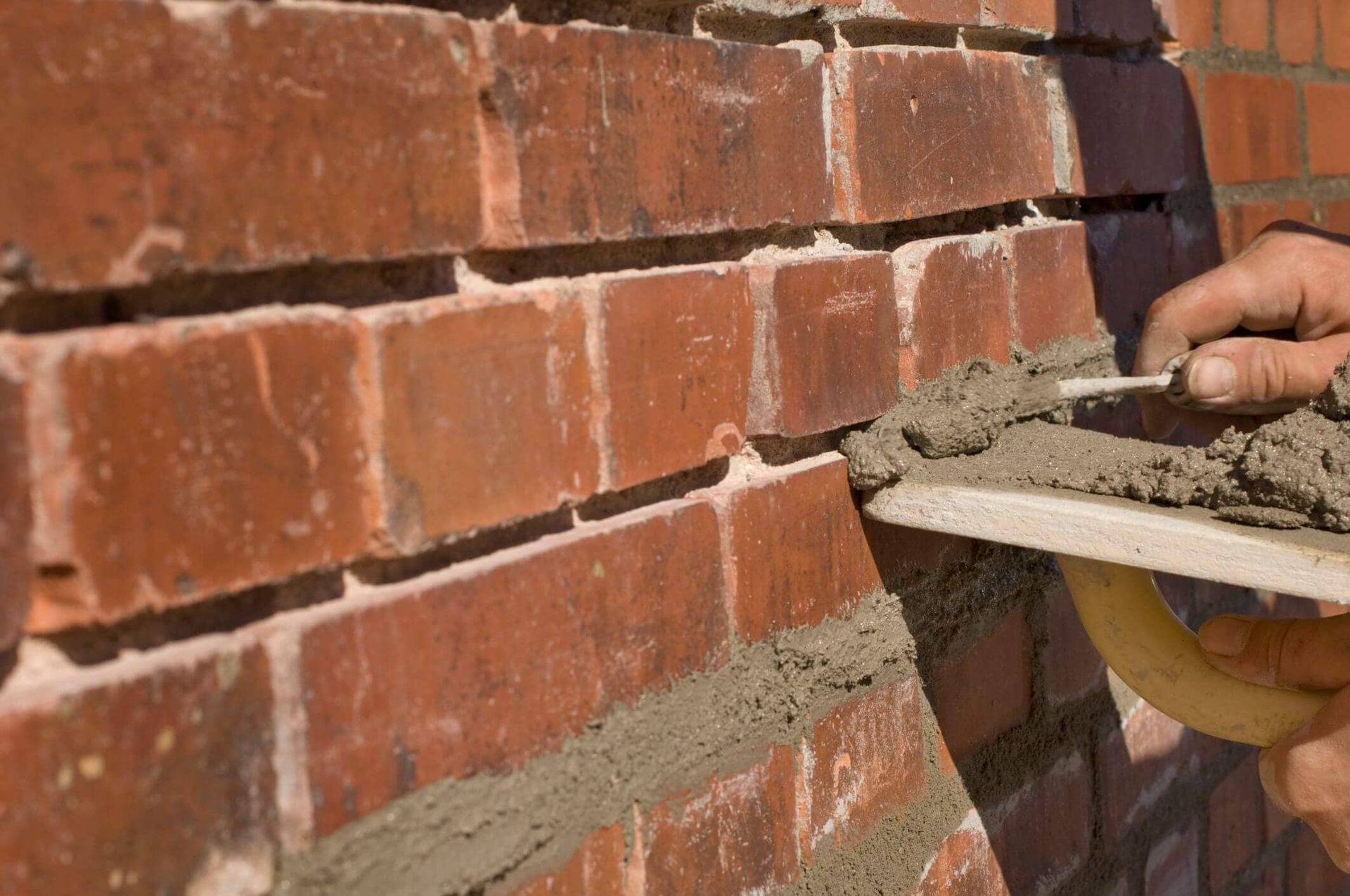
Masonry Restoration and Tuckpointing
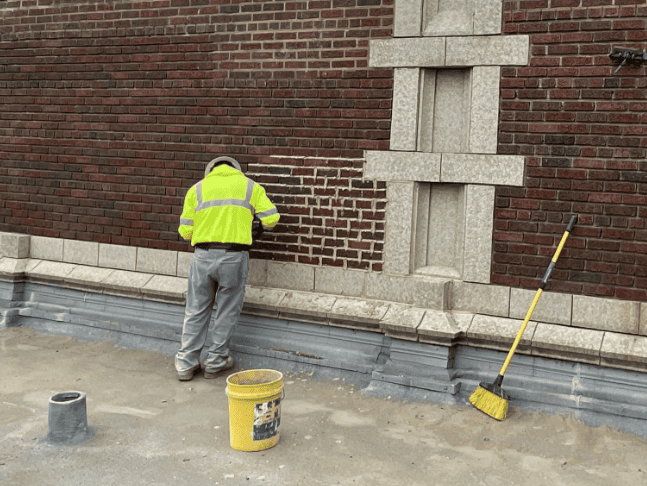
Deteriorated mortar joints allow water infiltration and reduce wall stability. Tuckpointing restores both performance and appearance when properly matched to the original masonry.
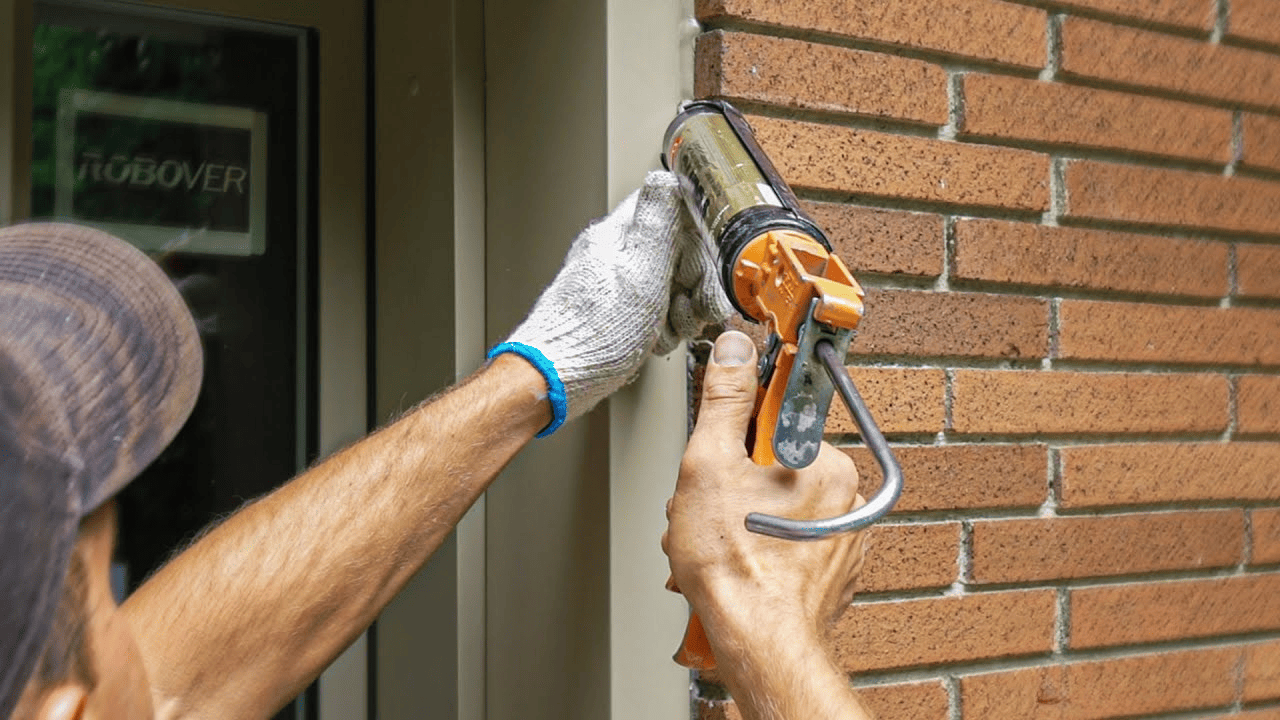
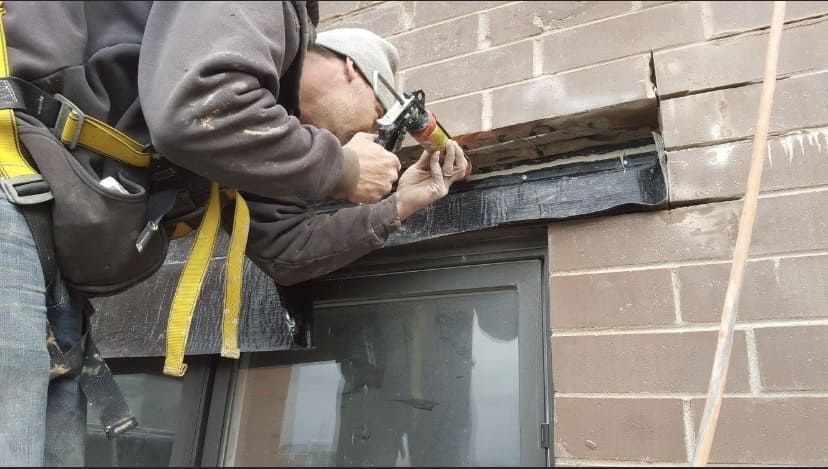
Caulking and Sealant Repairs
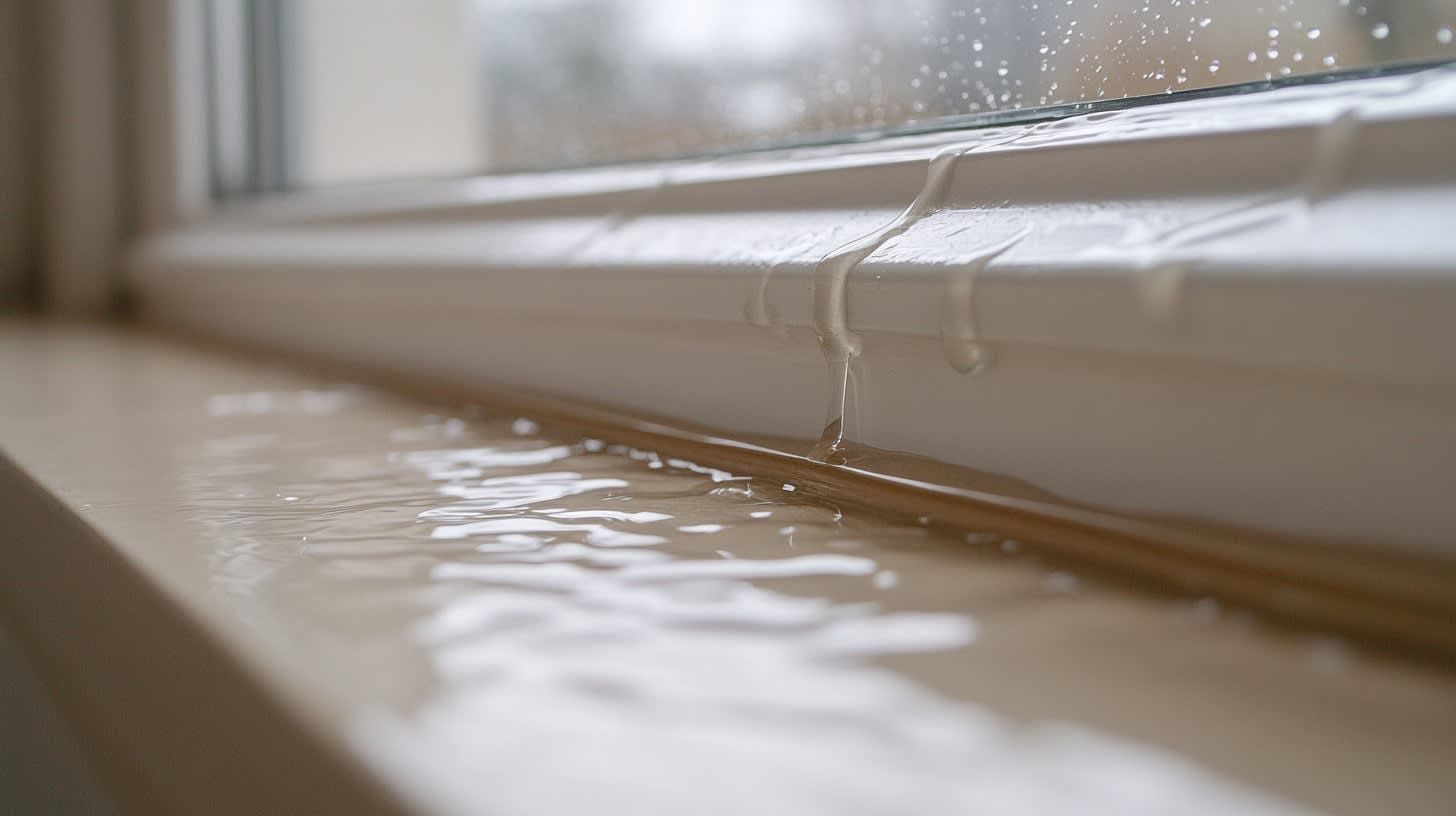
Failed sealants at expansion joints, window perimeters, and control joints are common water entry points. These repairs are often small in scope but high in impact.
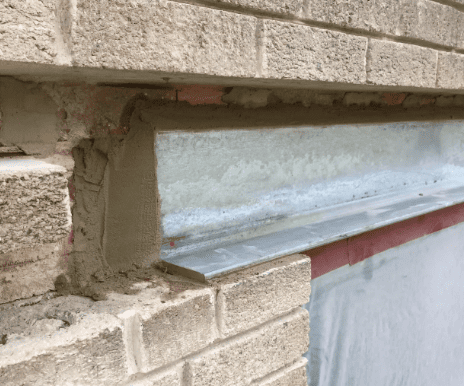
Lintel and Shelf Flashing Repairs
Corroded steel lintels and missing or failed flashing frequently cause cracking above windows. Addressing these issues early prevents progressive masonry displacement.
Concrete Façade and Balcony Repairs
Concrete spalling, exposed reinforcement, and failed coatings are common on balconies and façade projections. These conditions can escalate quickly if left untreated.
Mock-Ups for Sensitive or Historic Façades
Mock-ups allow teams to test repair methods, cleaning approaches, and material compatibility before full-scale work begins, especially important for landmark or architecturally significant buildings.
Why 2026 Is an Important Year for Building Façade Restoration Planning
Several practical realities make early planning essential:
- Contractor availability tightens during peak construction seasons
- Material lead times remain unpredictable for specialty masonry products
- Permit and review timelines can extend schedules on complex projects
- Emergency repairs often cost significantly more than planned work
Buildings that plan façade restoration a year ahead typically gain more control over sequencing, cost, and quality.
Real-World Chicago Insight: The Cost of Waiting
In many Chicago properties, façade issues first show up as minor cracking, efflorescence, or localized staining. By the time masonry loosens or steel corrosion becomes visible, repairs often extend well beyond the original area.
This delay becomes especially costly in Chicago because exterior conditions are not just a maintenance concern, they’re a compliance issue. As outlined by Cooperator News Chicagoland, the City of Chicago’s Façade Ordinance requires regular inspections, documentation, and prompt correction of unsafe conditions, particularly for high-rise buildings and exposed exterior elements.
When deterioration is identified during a required inspection, owners may be forced into accelerated repair timelines, emergency shoring, or temporary safety measures, often at a premium cost. We frequently see projects where early intervention, such as localized tuckpointing or flashing repair, could have addressed the issue proactively and avoided broader masonry replacement under regulatory pressure.
Planning ahead allows scope decisions to be driven by condition data and long-term performance, rather than ordinance-driven urgency, liability exposure, or last-minute scheduling constraints.
How to Prioritize Façade Repair Without Overcommitting Capital
Not every issue requires immediate full-scale restoration. Smart planning focuses on:
- Life-safety risks (loose masonry, spalling concrete)
- Water infiltration points that accelerate deterioration
- Structural elements like lintels, shelf angles, and balconies
- Aesthetic repairs that can be phased after performance issues
This phased approach helps property managers align façade restoration with capital planning cycles rather than emergency funding.
When to Start Façade Restoration Planning for 2026 Projects
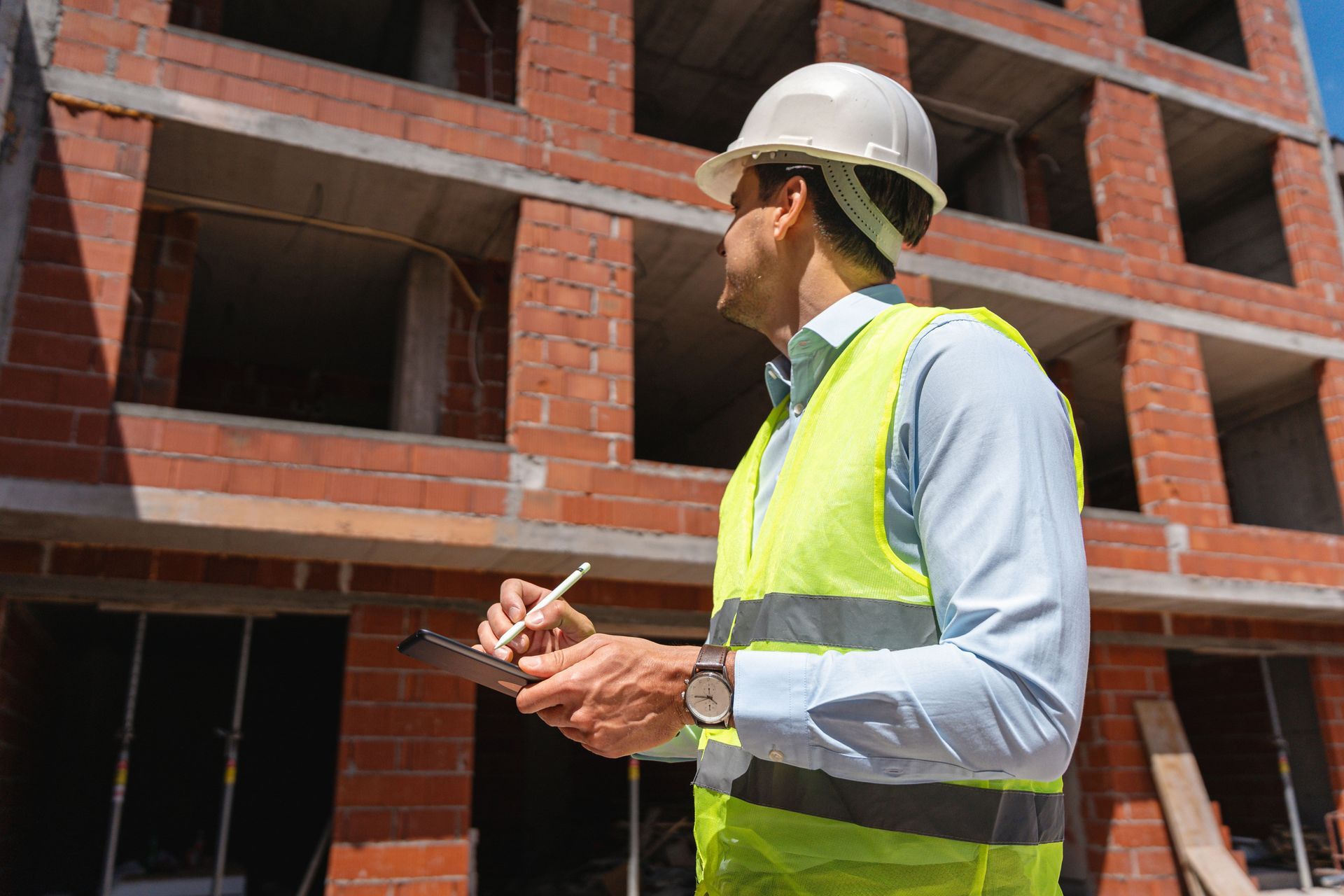
The most effective planning typically starts 9–15 months before construction:
- Initial condition assessment and documentation
- Budgetary pricing and scope refinement
- Mock-ups or testing (if required)
- Permit coordination and contractor scheduling
Starting early also allows teams to align restoration timing with tenant needs, seasonal constraints, and broader property improvements.
FAQ: Façade Restoration Planning
How often should a building façade be inspected in Chicago?
Most commercial and multi-family buildings should undergo a professional façade condition assessment every 5–7 years, or sooner if cracking, water intrusion, or movement is observed. Chicago’s climate accelerates deterioration, making regular reviews essential.
What’s the difference between façade repair and building façade restoration?
Façade repair typically addresses isolated issues, while building façade restoration involves a coordinated approach to restore performance, safety, and appearance across larger areas or systems.
Is winter a bad time for façade restoration work?
Certain repairs are temperature-sensitive, but planning and mock-ups can occur year-round. Early planning allows construction to be scheduled during optimal weather windows.
How do I know if lintel corrosion is causing façade damage?
Cracking or displacement above windows often indicates expanding steel lintels. A qualified masonry restoration contractor can confirm this through investigation and recommend appropriate repairs.
Do you have more questions about façade restoration? Contact RestoreWorks today.