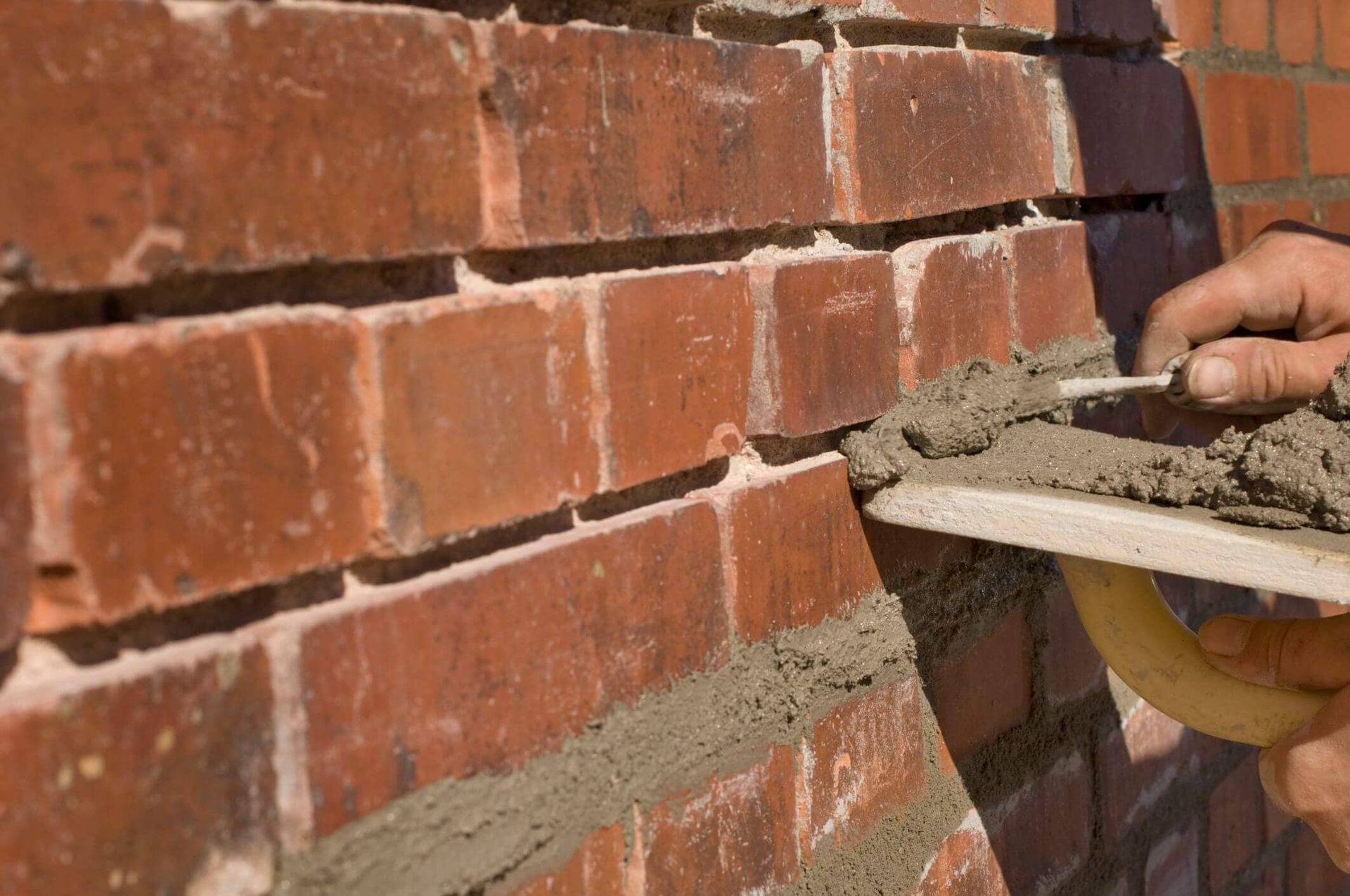
Shelf Angle Flashing Repair in Chicago Masonry
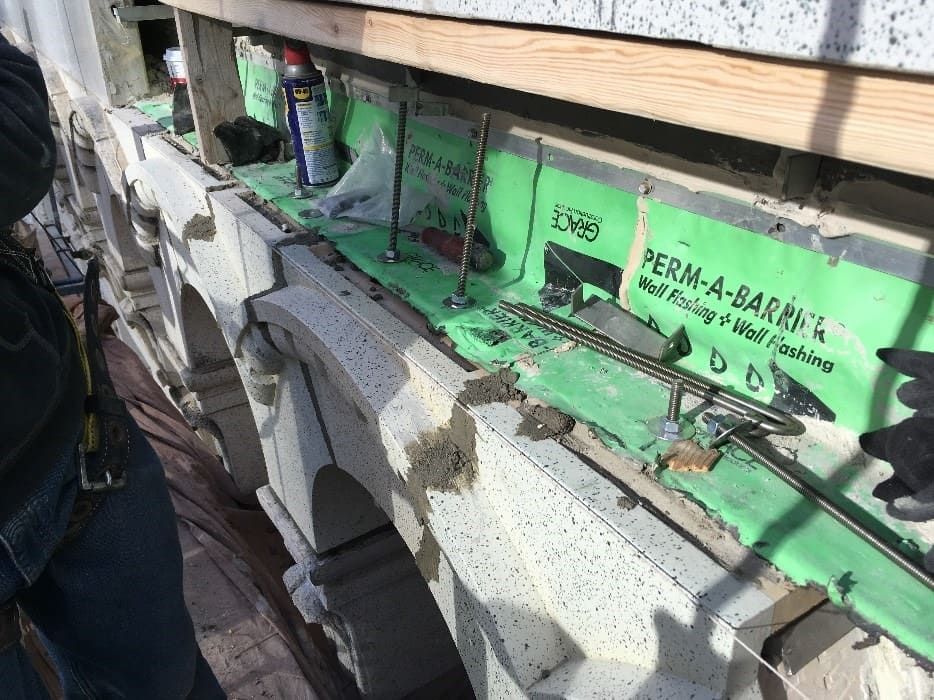
Shelf angle flashing is one of the most important (but least visible) components in a brick façade.
Most property managers notice brick cracking, rust staining, or movement above a window long before they think about what sits behind the masonry. In many cases, the real issue is not the brick itself. It is failed or missing shelf flashing at the shelf angle or lintel above the window.
In Chicago, where freeze–thaw cycles and wind-driven rain accelerate moisture intrusion, proper flashing is not optional. It is a structural safeguard.
What Is Shelf Angle Flashing?
A shelf angle is a horizontal steel support that carries the weight of brick veneer at each floor line. It transfers load back to the building’s structure.
Shelf flashing is the waterproofing layer installed directly above that steel angle. Its job is simple:
- Collect water that penetrates the brick veneer
- Redirect that water to exterior weep holes
- Prevent moisture from reaching structural components
Without functioning flashing, water accumulates behind the brick. Over time, that leads to corrosion, cracking, and displacement.
If you have ever searched for “lintel above window repair” or noticed cracking at a window head, shelf angle or lintel flashing is often part of the equation.
Why Shelf Flashing Fails in Chicago Buildings
Chicago buildings face unique environmental stress:
- Repeated freeze–thaw cycles
- Lakefront-driven rain exposure
- Aging masonry construction (many façades are 60–120+ years old)
- Corrosion-prone embedded steel
Environmental exposure alone does not cause failure. Detailing does.
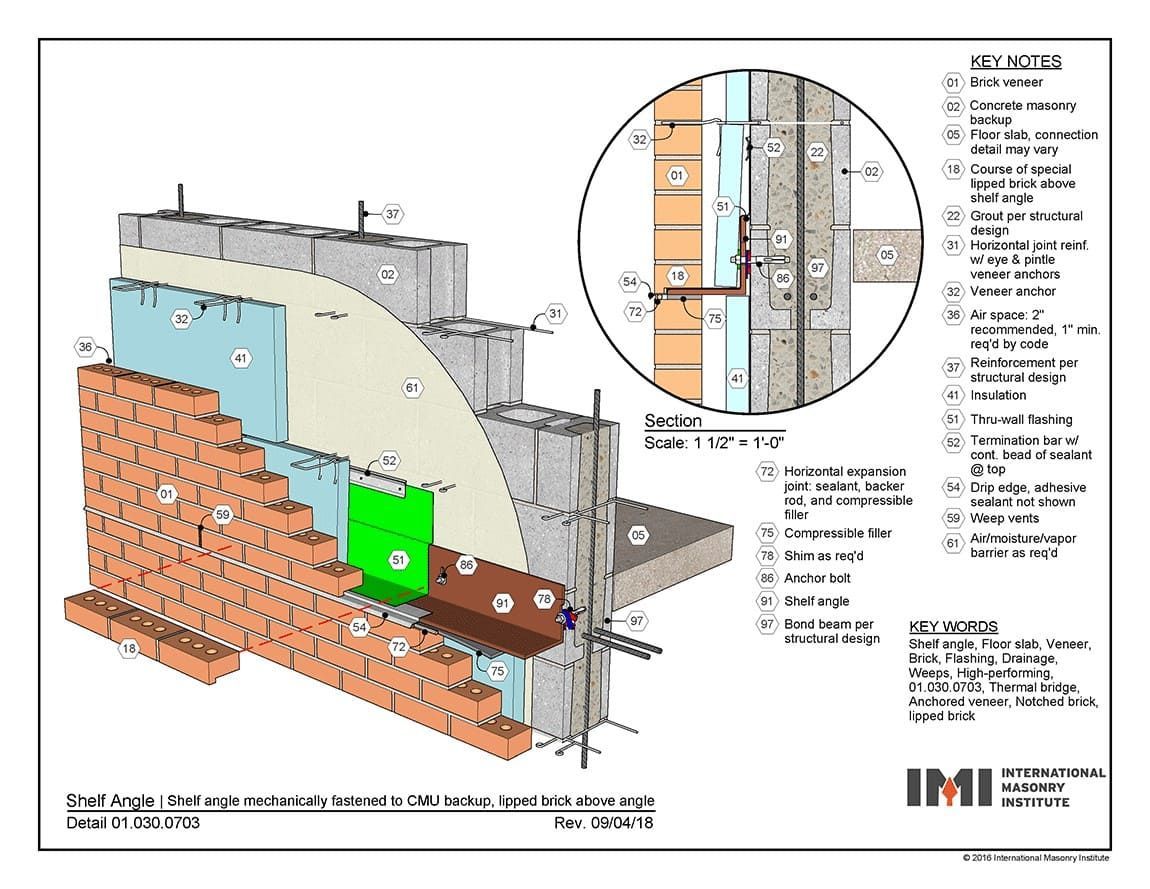
As shown in technical guidance from the International Masonry Institute, a typical shelf angle is mechanically fastened to the concrete masonry backup with anchor bolts at regular intervals. Shims are installed behind the angle to bring it to the correct bearing depth for the brick veneer.
Below the shelf angle, a horizontal expansion joint allows for vertical movement of the brick. Above it, a course of lipped brick tightens the visible joint. Because of that downturn, the through-wall flashing must bend and transition carefully as it passes through the wall assembly.
When properly installed, the flashing:
- Protects the steel shelf angle from moisture exposure
- Directs water to weep vents
- Includes end dams and proper laps
- Often incorporates a drip edge to prevent water from tracking back beneath the membrane
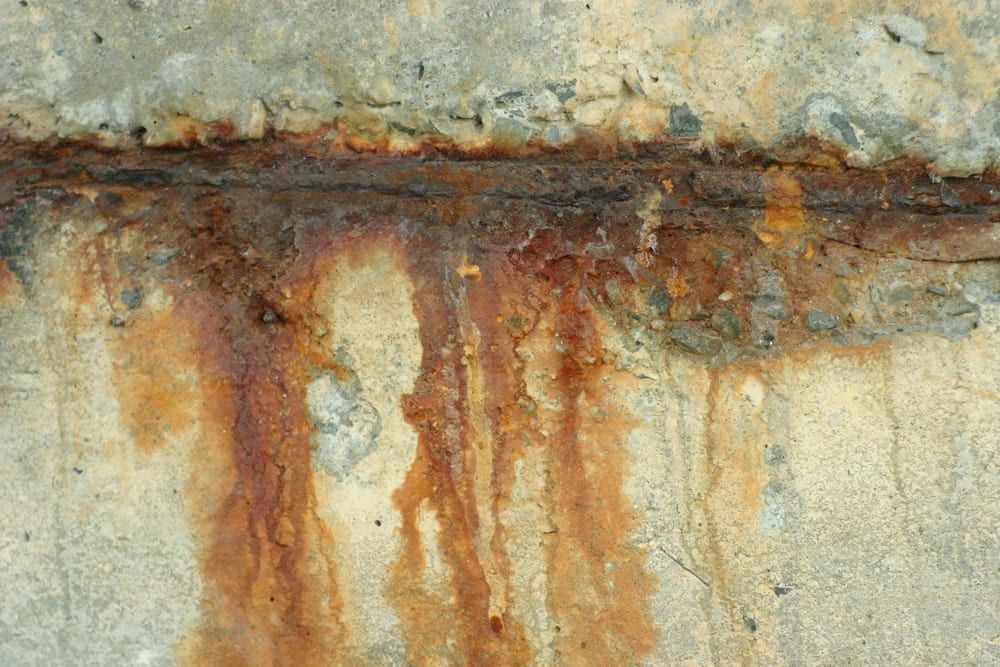
When any part of that sequence is missing or deteriorated (improper bends at the lipped brick, clogged weeps, failed terminations, or corrosion at anchor points) water bypasses the drainage plane and reaches the steel. Once corrosion begins, expansion follows. The brick veneer responds with cracking, displacement, and rust staining. The failure is rarely sudden. It is cumulative, and in Chicago’s climate, it accelerates quickly.
The diagram below illustrates how the shelf angle, flashing, expansion joint, and lipped brick interact within a typical masonry veneer assembly. When any part of this sequence is compromised, water management fails.
How Shelf Angle Flashing Protects the Lintel Above a Window
The “lintel above window” detail is one of the most common water entry points in a façade.
A lintel supports brick above an opening. Like shelf angles, lintels are typically steel. If flashing above that lintel is missing or compromised:
- Water penetrates mortar joints.
- Moisture reaches the steel.
- Steel corrodes and expands.
- Brick cracks or bows outward.
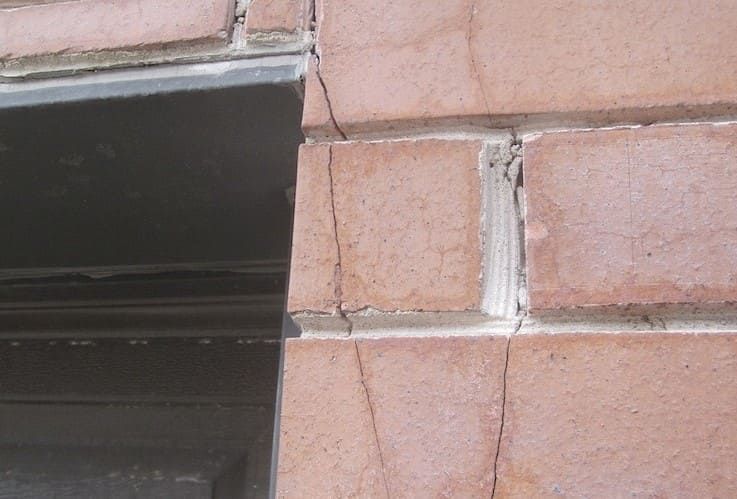
This is why you often see horizontal cracking or rust staining directly above windows.
Repairing visible brick damage without addressing flashing only treats the symptom. The corrosion process continues behind the wall.
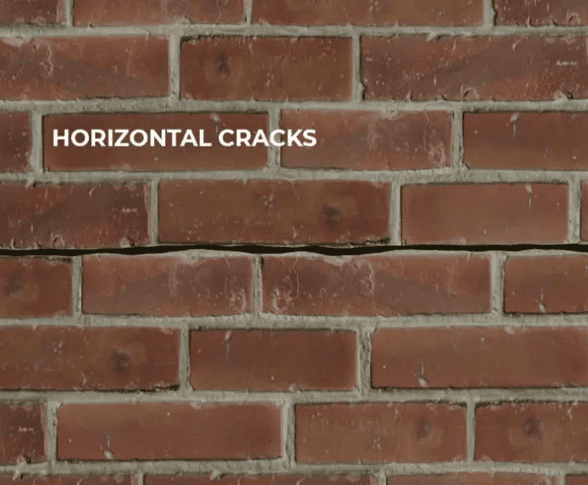
Property managers and engineers should look for:
- Horizontal cracking at floor lines
- Step cracking near window heads
- Rust staining on brick veneer
- Bulging brick above shelf angles
- Mortar joint deterioration localized at support levels
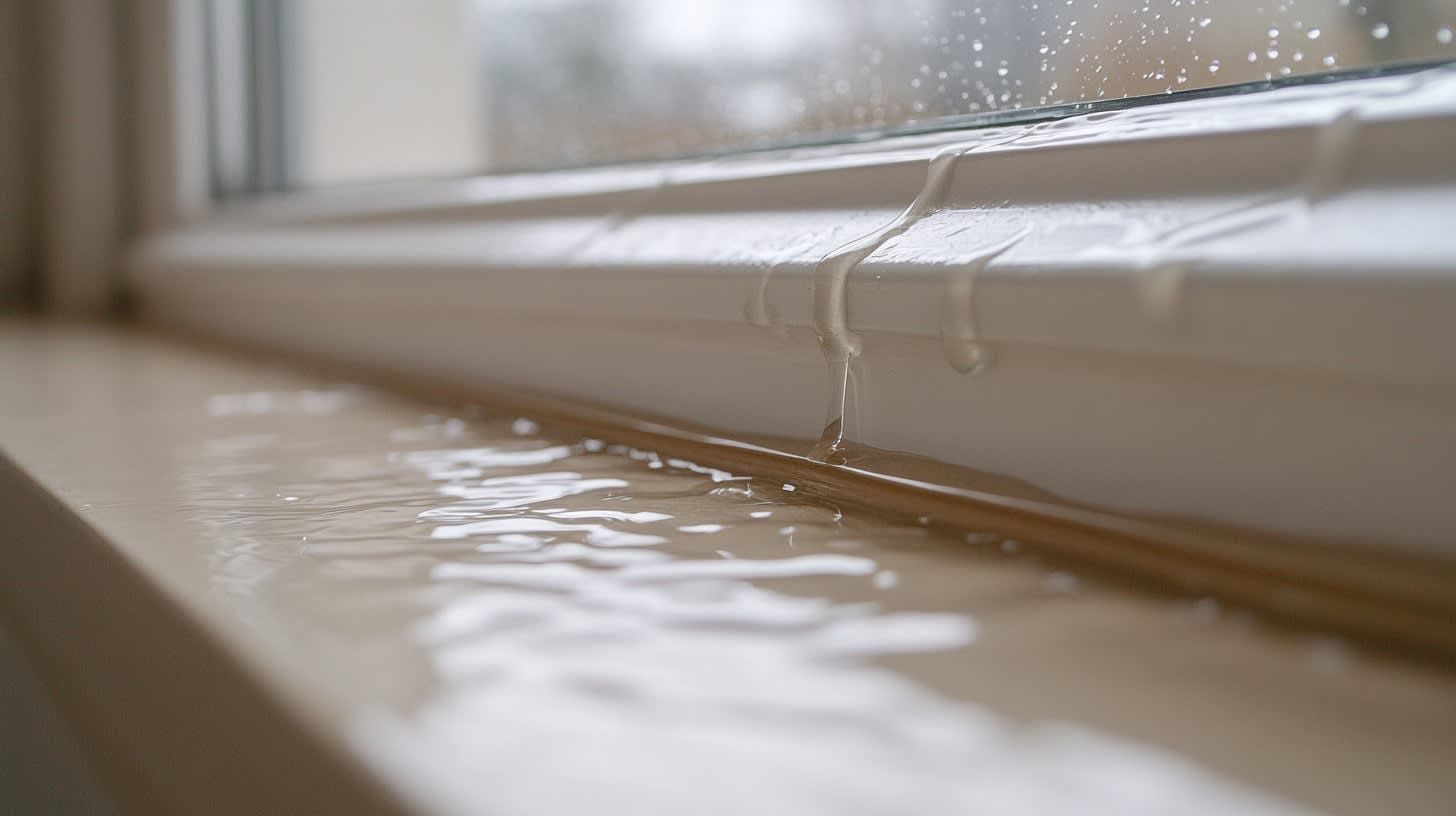
- Interior moisture infiltration near window perimeters
These signs often appear before significant structural movement. Early intervention reduces scope and cost.
What Proper Shelf Flashing Repair Involves
Shelf flashing repair is not cosmetic work. It is sequenced, structural restoration.
A typical repair scope may include:
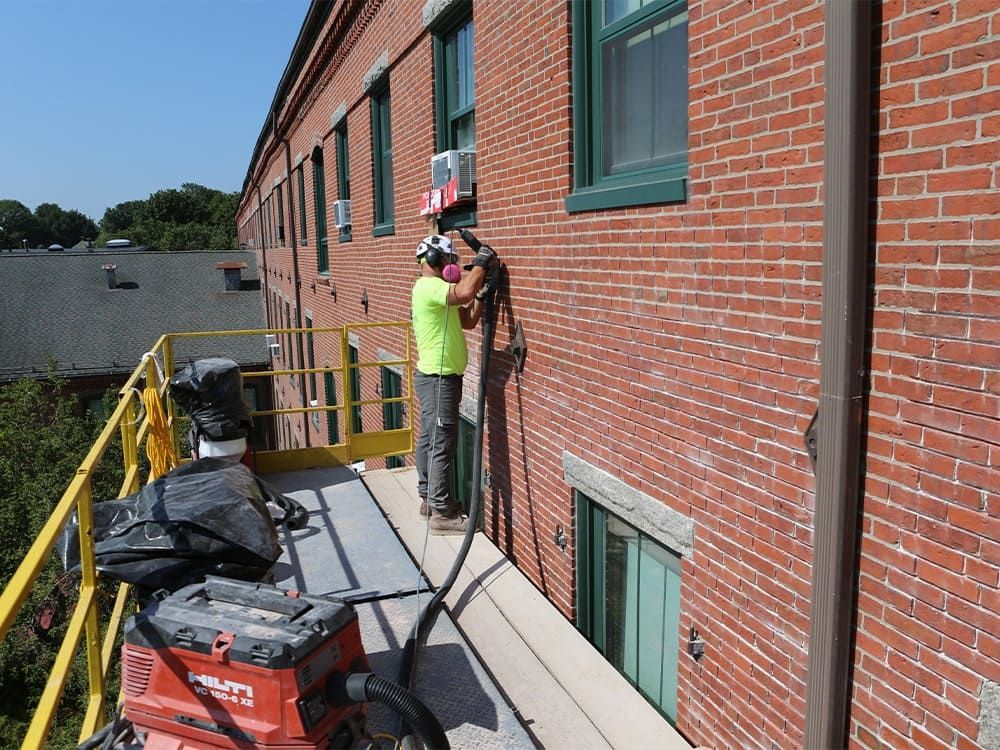
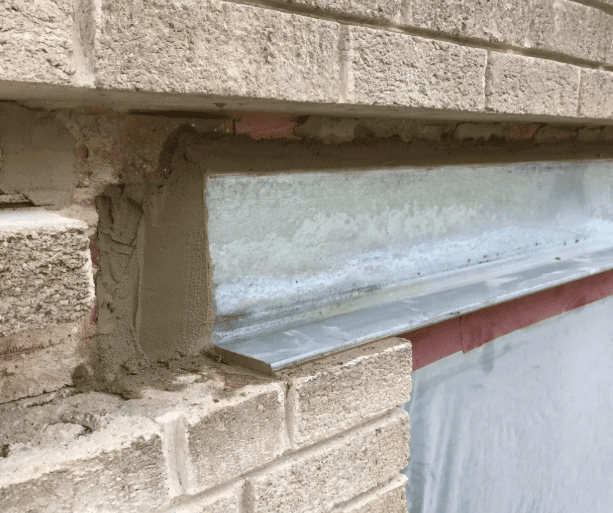
- Selective brick removal at the shelf angle
- Steel shelf angle inspection for corrosion loss
- Steel cleaning or replacement if necessary
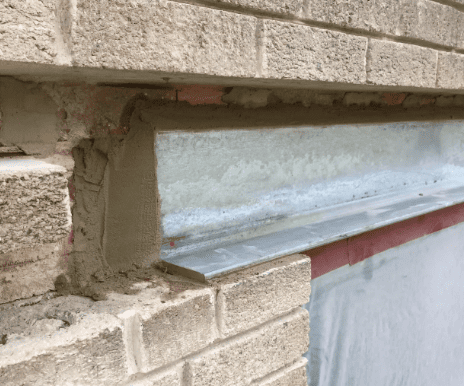
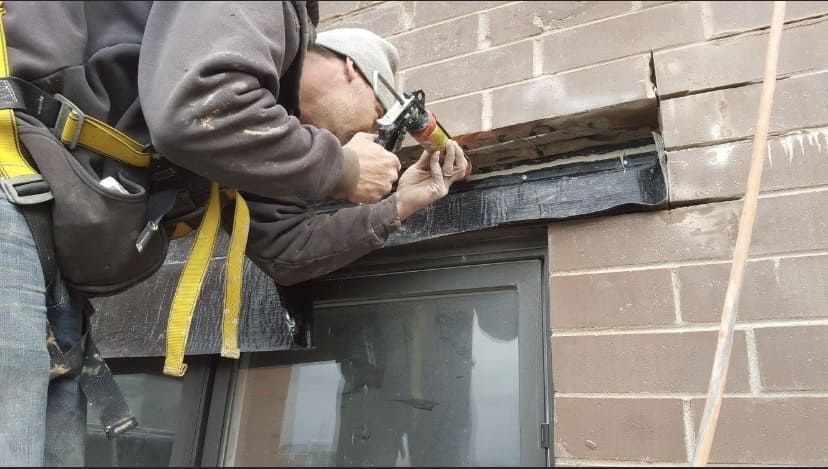
- Installation of new through-wall flashing with end dams
- Weep system integration
- Tuckpointing and brick replacement
- Sealant joint restoration where required
This work often overlaps with:
- Masonry restoration
- Tuckpointing
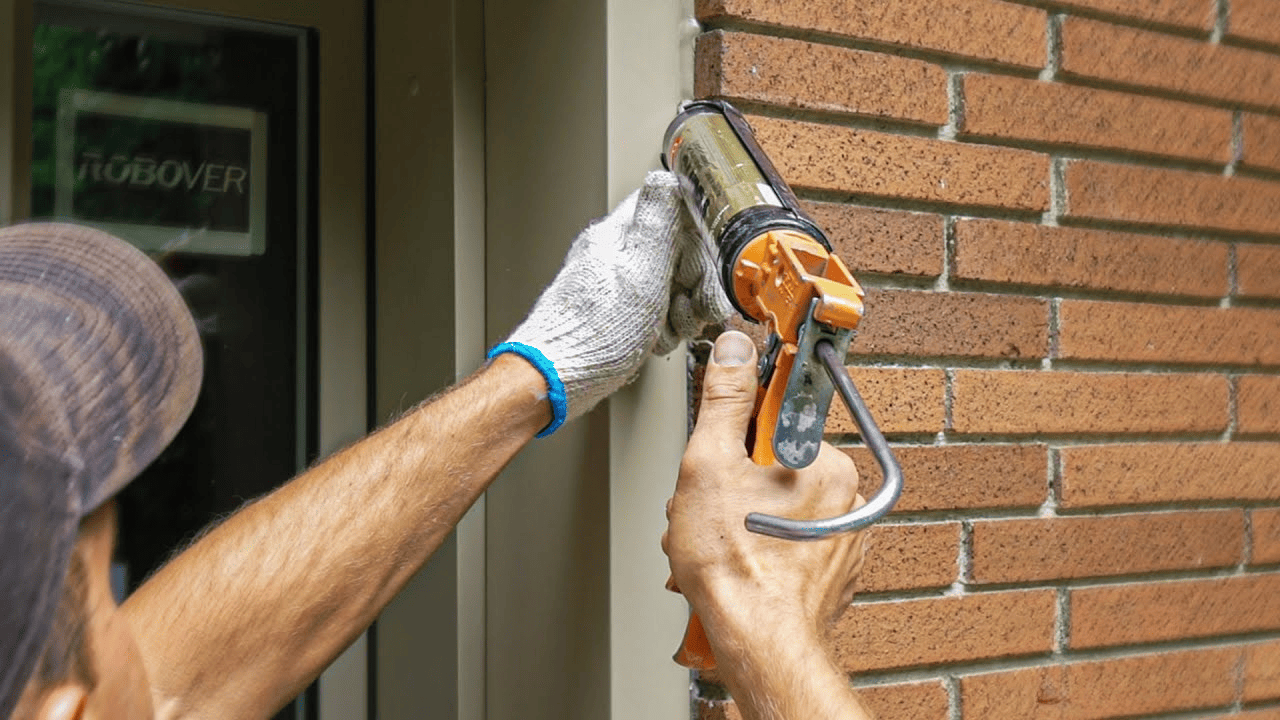
- Caulking and sealant repair
- Lintel and shelf flashing repair
Mock-ups are frequently performed on larger projects to confirm detailing and integration with existing façade systems.
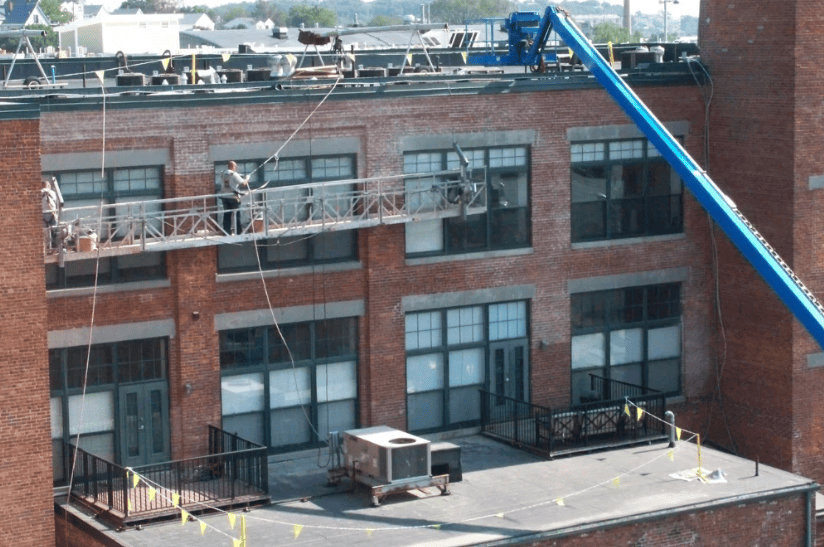
Because shelf angles support continuous runs of brick, improper sequencing can create recurring problems. Installing flashing without addressing corroded steel, or replacing brick without integrating weeps and movement joints, often leads to repeat failures within a few seasons. A thorough assessment determines whether selective repair is appropriate or whether shelf angle replacement, coordinated tuckpointing, and sealant renewal should occur together as part of a broader masonry restoration program.
Why Temporary Patching Doesn’t Work
Applying surface sealant to cracks above a window does not stop water from reaching the shelf angle.
As the Concrete Masonry & Hardscapes Association explains in its guidance on moisture management, water enters building assemblies in multiple forms, bulk water from rain and snow, capillary moisture moving through porous masonry, and vapor transported by air movement. It is impossible to prevent all moisture from entering a wall system. The goal is to manage it so it drains and dries properly.
Flashing, weep systems, weather-resistant barriers, and drainage planes are designed to work together. When flashing at a lintel or shelf angle fails, the wall loses its ability to intercept and redirect water before it reaches embedded steel.
Surface sealing can make the problem worse. Over-sealing masonry reduces drying potential and can trap moisture within the wall cavity. That accelerates corrosion at the steel shelf angle and increases freeze–thaw stress in the surrounding brick.
Moisture management is about controlled drainage, not surface waterproofing. Effective restoration requires correcting the flashing detail and restoring the drainage path, not simply concealing visible cracking.
Chicago-Specific Considerations
Freeze–Thaw Cycles
When trapped water freezes, it expands approximately 9% in volume. That expansion exerts tensile stress on masonry, which is inherently weak in tension.
Over repeated seasons, this leads to cracking and displacement at support lines.
Lakefront Exposure
Buildings exposed to wind-driven rain require particularly well-detailed flashing systems. Inadequate end dams or improper laps allow moisture to bypass the drainage system entirely.
Façade Ordinance Inspections
When deficiencies are identified during inspection cycles, shelf angle flashing repair may become mandatory. Planning ahead allows repairs to align with capital improvement budgets instead of emergency mobilizations.
How Shelf Flashing Fits into a Broader Masonry Restoration Strategy
Shelf flashing repair is rarely a standalone service.
It typically integrates with:
- Tuckpointing programs
- Lintel replacement
- Sealant joint replacement
- Restorative cleaning after steel staining
- Concrete façade repair when shelf angles bear into structural slabs
A comprehensive assessment determines whether flashing repair should occur before, during, or after broader masonry restoration work.
Sequencing matters. Improper sequencing increases labor duplication and cost.
Frequently Asked Questions About Shelf Angle Flashing
What is shelf flashing in a brick wall?
Shelf flashing is a waterproof membrane installed above a steel shelf angle or lintel. It collects water that penetrates brick veneer and directs it outward through weep holes, preventing corrosion and hidden moisture damage.
Why is there cracking above my window lintel?
Cracking above a window often indicates steel lintel corrosion. When flashing fails, water reaches the steel. As it rusts and expands, it pushes the brick outward, causing horizontal or step cracking.
How much does shelf angle flashing repair cost in Chicago?
Costs vary depending on access, brick type, steel condition, and façade height. Selective repairs are significantly less expensive than full façade reconstruction. Early identification during routine inspection reduces overall project scope.
Is shelf flashing required by building code?
Modern codes require proper flashing and drainage in masonry veneer systems. While older buildings may not have originally included adequate flashing, repairs must comply with current standards during restoration work.
Do you have more questions about shelf angle flashing? Contact RestoreWorks today.