Spring Masonry Cleaning After Winter: Why Washdowns Protect the Envelope

Winter leaves more behind than visible dirt. In Chicago, freeze–thaw cycles, deicing salts, and wind-driven moisture work their way into brick, mortar, and concrete. Spring masonry cleaning is not cosmetic, it’s a preventive step that helps protect the building envelope before small problems accelerate.
For property managers, engineers, and owners, timing matters. A properly planned post-winter washdown supports inspections, preserves materials, and reduces downstream repair scope.
Why Winter Residue Is a Risk to Masonry Performance
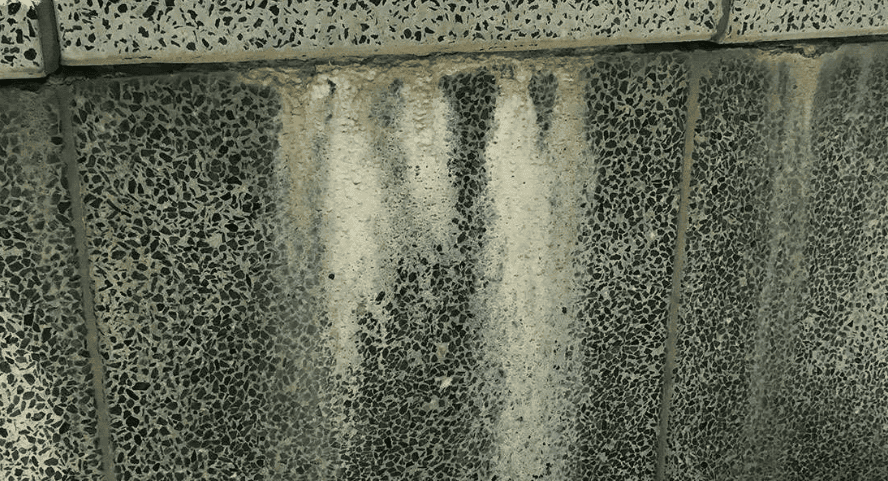
After snowmelt, façades often hold chlorides, sulfates, soot, and biological growth. These contaminants retain moisture at the surface and in mortar joints, increasing stress during temperature swings.
That retained moisture is not passive. PROSOCO notes that biological growth actively accelerates deterioration by trapping water against masonry and producing acidic byproducts that lower surface pH, which are conditions that are especially harmful to limestone, brick, and mortar.
Over time, that moisture contributes to:
- Efflorescence and sub-florescence
- Accelerated mortar deterioration
- Surface scaling on concrete
- Early corrosion at embedded steel near openings
Spring cleaning removes these materials before they migrate deeper into the wall.
What “Spring Masonry Cleaning” Actually Means
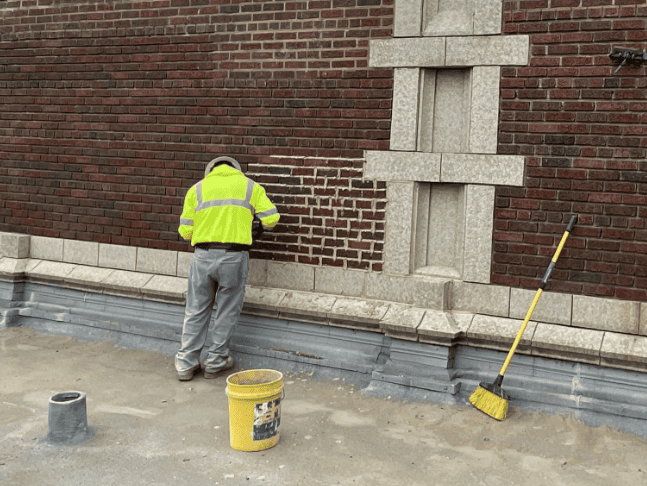
Spring masonry cleaning, sometimes referred to as a post-winter washdown, is a controlled process designed to clean without damaging the substrate.
Masonry Magazine emphasizes starting with the mildest effective cleaning method and increasing intensity only when conditions demand it, an approach that helps prevent surface erosion, color loss, and premature material wear.
A proper washdown typically includes:
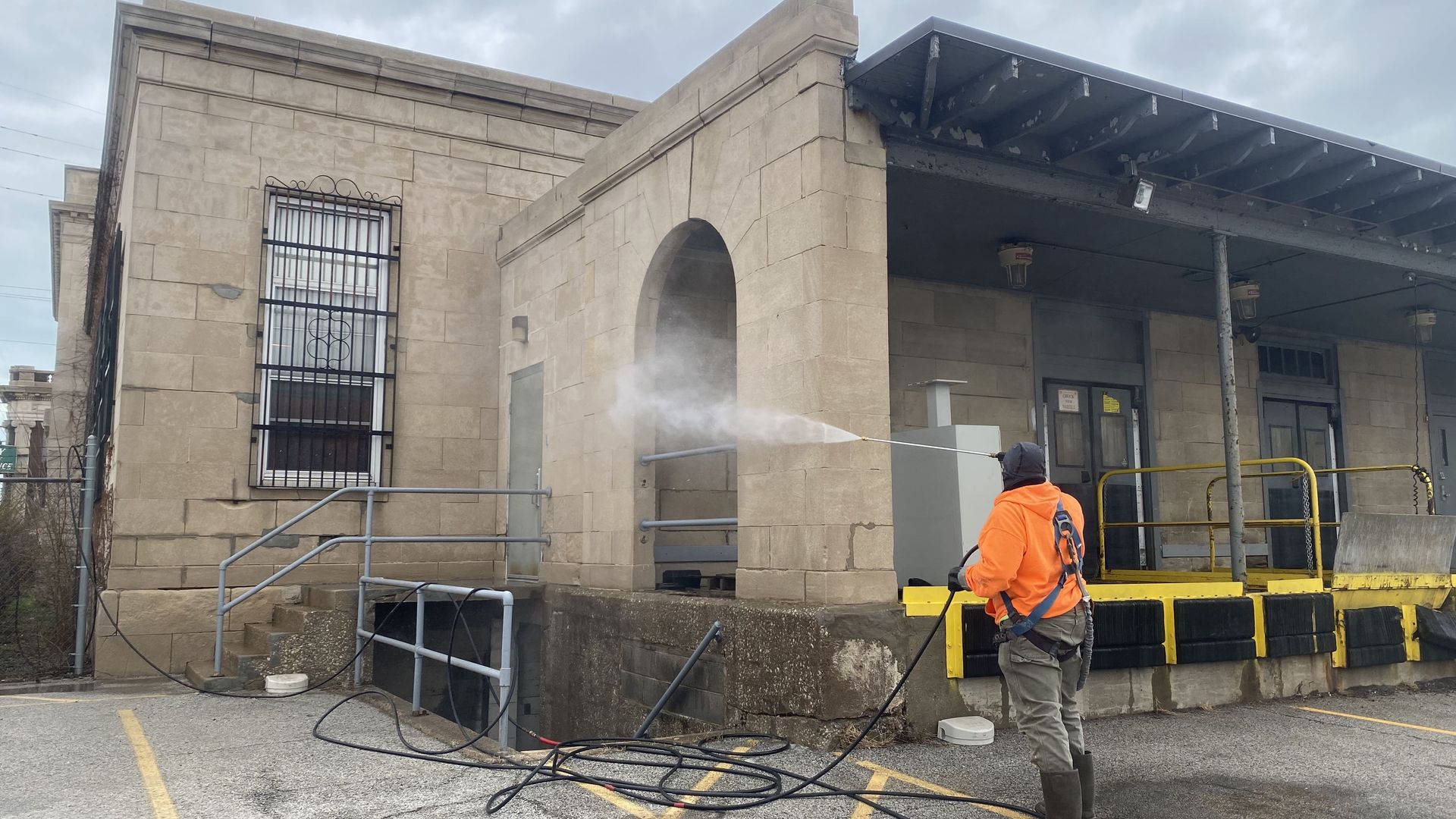
- Low-pressure water rinsing
- Non-acidic or masonry-appropriate detergents when needed
- Targeted spot cleaning at heavy salt exposure zones
- Final rinsing to fully remove residues
The objective is not aggressive brightening. It is to remove contaminants, restore normal drying behavior, and avoid irreversible damage caused by excessive pressure or overly concentrated cleaners.
How Cleaning Supports Better Inspections and Repair Decisions
Dirty façades hide problems. Once winter residue is removed, conditions become easier to evaluate accurately.
Cleaning helps reveal:
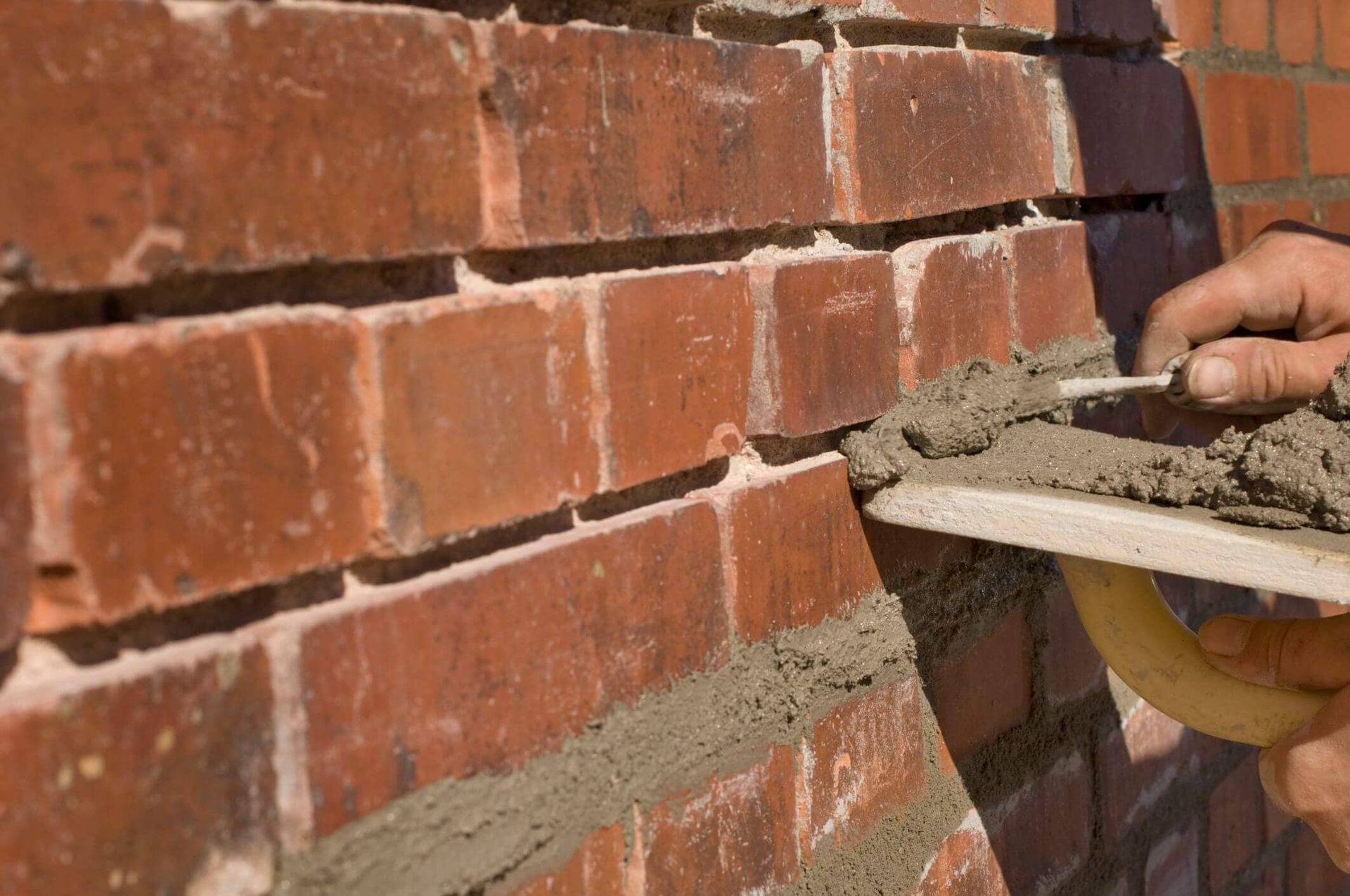
- Open or failing mortar joints
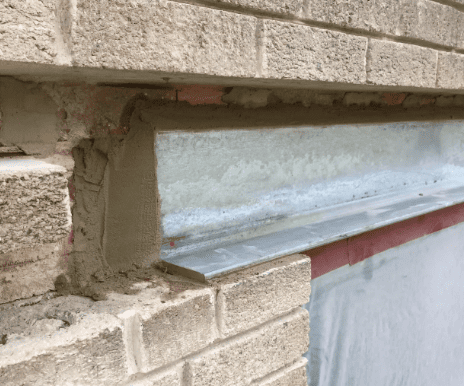
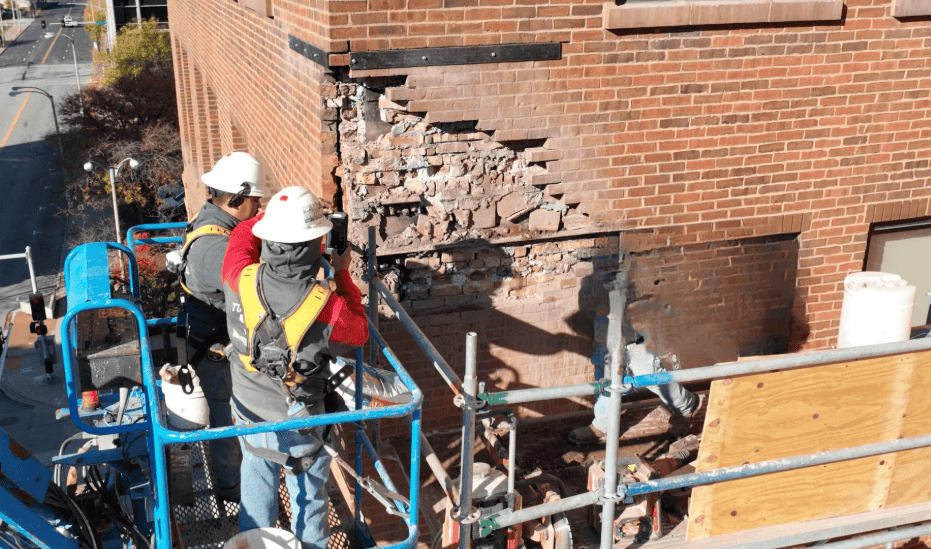
- Hairline cracking at shelf angles and lintels
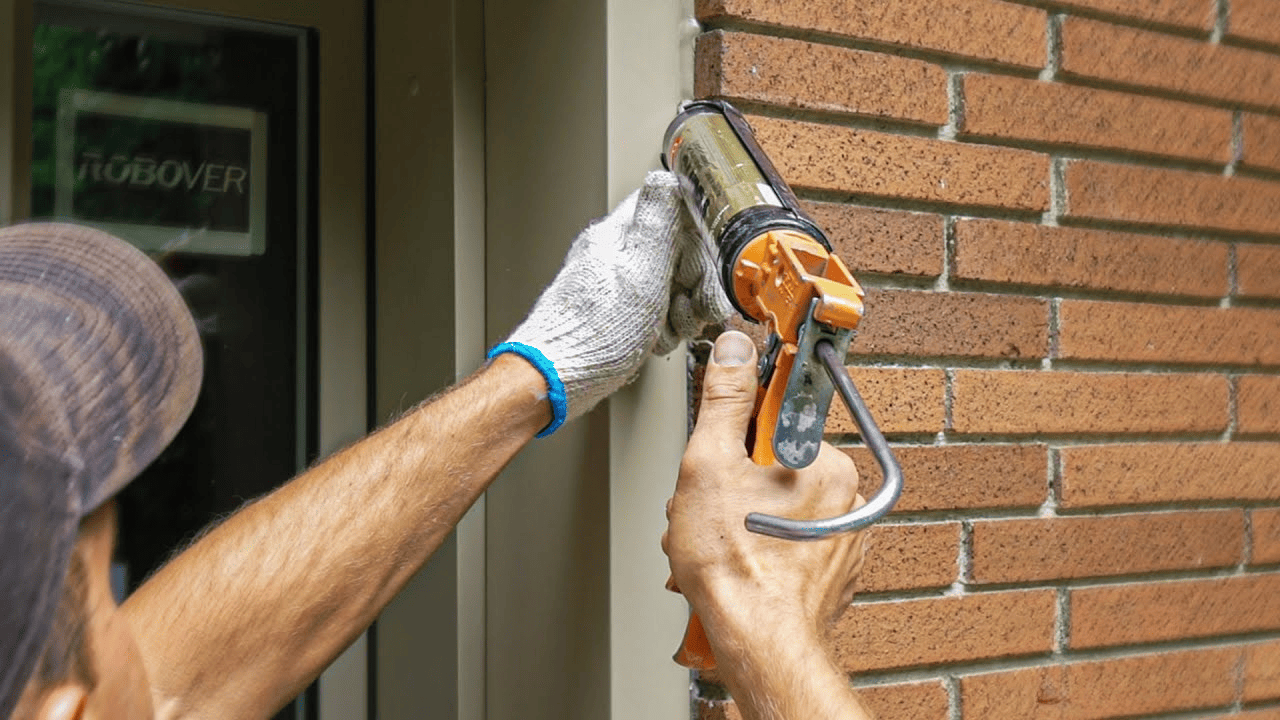
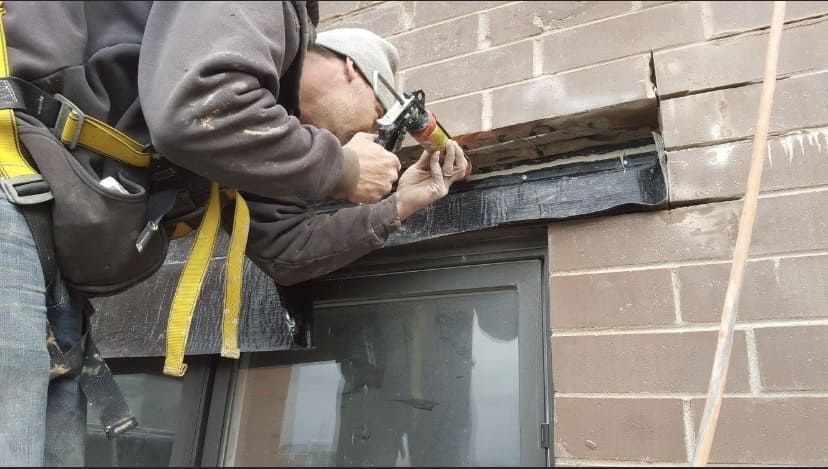
- Sealant failures at windows and transitions
- Early spalls or delamination in concrete
This sequencing, clean first, then inspect, leads to tighter scopes and fewer surprises during masonry restoration or tuckpointing projects.
Chicago-Specific Conditions That Make Spring Cleaning Important
Chicago buildings face a unique mix of exposure factors. These should influence both timing and method.
Key local considerations include:
- Freeze–thaw frequency: Repeated cycling amplifies moisture-related stress.
- Deicing salts: Street-level masonry and parking structures are especially vulnerable.
- Lakefront wind: Wind-driven rain increases salt penetration and drying inconsistency.
- Historic construction: Older brick and lime-based mortars require gentler methods.
A one-size-fits-all cleaning approach doesn’t work here.
Where Cleaning Fits Into a Smart Spring Maintenance Plan
Spring masonry cleaning is most effective when coordinated with other envelope services.
The International Masonry Institute emphasizes that mortar conditions and repointing scope should be determined only after joints are fully visible, making cleaning an important first step in accurate evaluation and planning.
Common, effective sequencing includes:
- Restorative cleaning + visual inspection to establish true priorities
- Targeted tuckpointing after joint deterioration is clearly exposed
- Lintel and shelf flashing repairs once corrosion indicators are visible
- Sealant replacement after clean, dry substrates are confirmed
This sequencing reduces rework, avoids unnecessary replacement, and improves long-term envelope performance.

Real-World Insight From Chicago Buildings
On mid-rise residential and commercial properties, we often see salt accumulation masking early mortar failure at parapets and balcony edges. After spring cleaning, joints that looked intact frequently show separation or loss once residue is removed.
Catching those conditions early allows limited tuckpointing or sealant repairs instead of larger façade interventions later in the season.
Why Method Selection Matters More Than Speed
Aggressive cleaning can do more harm than good. Improper pressure, chemicals, or dwell times can etch brick faces, weaken mortar, or drive moisture deeper into the wall.
Preservation guidance shared by the Chicago Bungalow Association reinforces that masonry should be cleaned only when it serves to slow deterioration, and that the weakest effective method should always be used. Stronger cleaners or higher pressure do not improve outcomes and often accelerate long-term damage.
A qualified masonry contractor evaluates:
- Masonry unit type and age
- Mortar composition
- Exposure severity
- Adjacent materials (glass, metal, sealants)
Spring cleaning should reduce risk, not introduce new failure points.
FAQ: Spring Masonry Cleaning
Is spring masonry cleaning necessary every year in Chicago?
Not always, but many buildings benefit annually due to salt exposure and freeze–thaw cycling. High-traffic areas, balconies, and street-level façades often warrant routine spring washdowns to limit moisture retention and material breakdown.
Does masonry cleaning damage brick or mortar?
When done correctly, no. Low-pressure methods and masonry-appropriate cleaners are selected based on the substrate. Damage typically results from improper pressure, harsh chemicals, or unqualified contractors.
When is the best time to schedule spring masonry cleaning?
Late winter through early spring is ideal, after sustained thawing but before heavy rain cycles. Cleaning early supports better inspections and allows repairs to be planned before peak construction season.
Should cleaning happen before or after tuckpointing?
Cleaning should come first. Removing residue exposes true joint conditions, allowing tuckpointing scopes to be accurate and preventing newly placed mortar from being contaminated.
Have more questions about restorative cleaning for masonry? Contact RestoreWorks today.