How to Prioritize Masonry Repairs Before Winter
When several masonry problems show up on the same building, deciding what needs to be repaired first is not always obvious. A cracked mortar joint, rust-stained lintel, failed sealant joint, and spalled section of concrete may all need attention, but they do not necessarily carry the same level of risk.
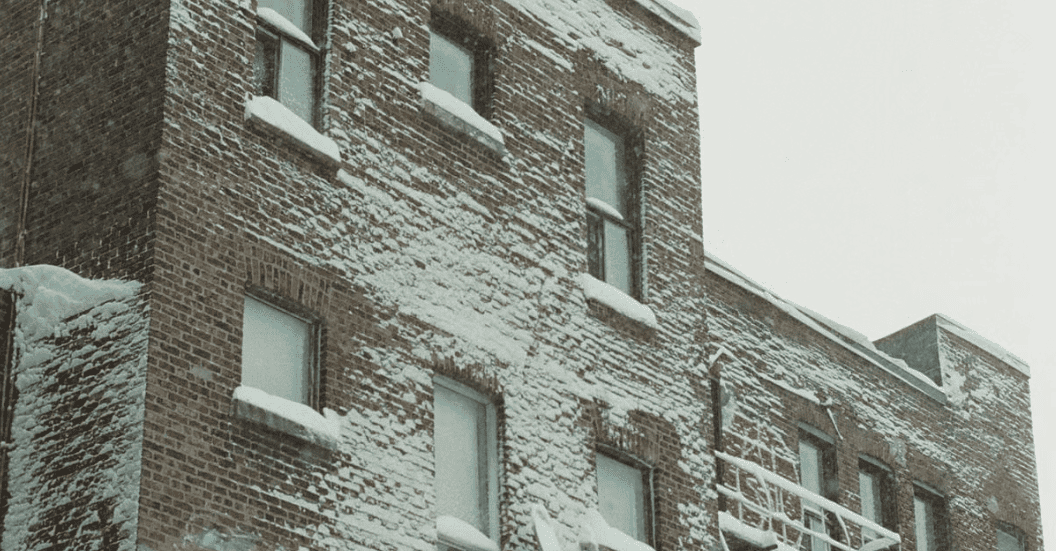
That distinction becomes more important heading into a Chicago winter. Once moisture gets into damaged masonry, repeated freezing and thawing can accelerate deterioration that was already underway.
For property managers, building owners, engineers, and architects planning masonry repair in Chicago, the goal should not simply be to complete as much work as possible before temperatures drop. The goal is to identify the conditions that create the greatest safety, water-infiltration, and deterioration risks and address those first.
What Masonry Repairs Should Be Prioritized Before Winter?
A practical way to prioritize masonry repairs is to place deficiencies into four categories:
- Conditions that present a safety risk
- Openings that allow water into the building envelope
- Deterioration that winter weather is likely to accelerate
- Cosmetic or lower-priority maintenance
This keeps the repair plan focused on consequences instead of appearance.
A small opening at a flashing termination may create more immediate problems than a much larger area of harmless staining. Likewise, displaced masonry above a pedestrian area should take priority over routine restorative cleaning.
Priority 1: Loose, Displaced, or Potentially Unsafe Materials
Anything that could detach from the façade or indicate movement should move to the top of the list.
Conditions to watch for include:
- Bulging or displaced brick
- Loose stone or terra cotta
- Spalling concrete above occupied or pedestrian areas
- Cracked or unstable parapet walls
- Significant cracking around window and door openings
- Deteriorated masonry associated with corroded steel
- Pieces of masonry that have already detached
These conditions may require evaluation by a structural engineer or architect before permanent repairs begin.
The important point is simple: life-safety concerns come before routine maintenance.
Which Water-Infiltration Problems Should Be Repaired Before Winter?
After immediate safety concerns, the next priority is stopping water from entering the wall system.
Water can enter through surprisingly small deficiencies. Once inside, it can contribute to deterioration of mortar, brick, concrete, embedded steel, lintels, and interior finishes.
Common entry points include:
- Open or deteriorated mortar joints
- Failed caulking around windows and doors
- Open expansion or control joints
- Cracked masonry units
- Deteriorated coping joints
- Failed flashing
- Open joints around sills
- Deficiencies around lintels and shelf angles
This is why simply repairing the most visible crack is not always enough.
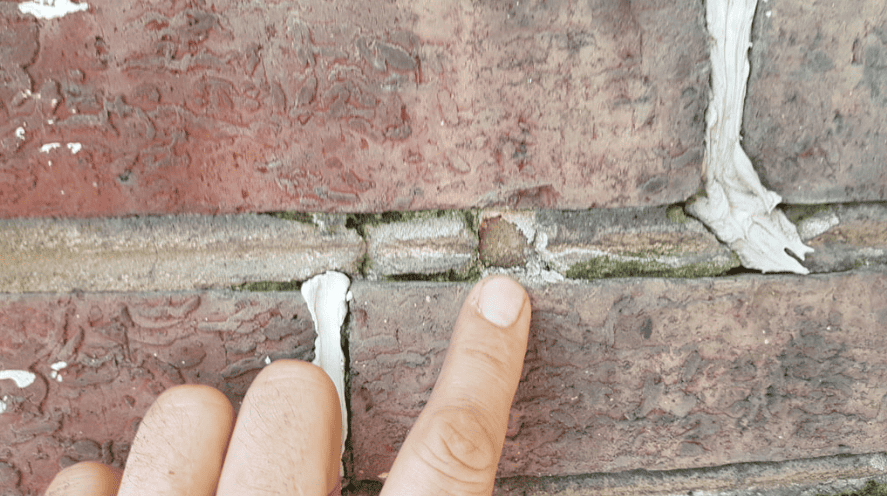
Failed Mortar Joints
When mortar has cracked, eroded, or fallen out, water has a direct path deeper into the wall.
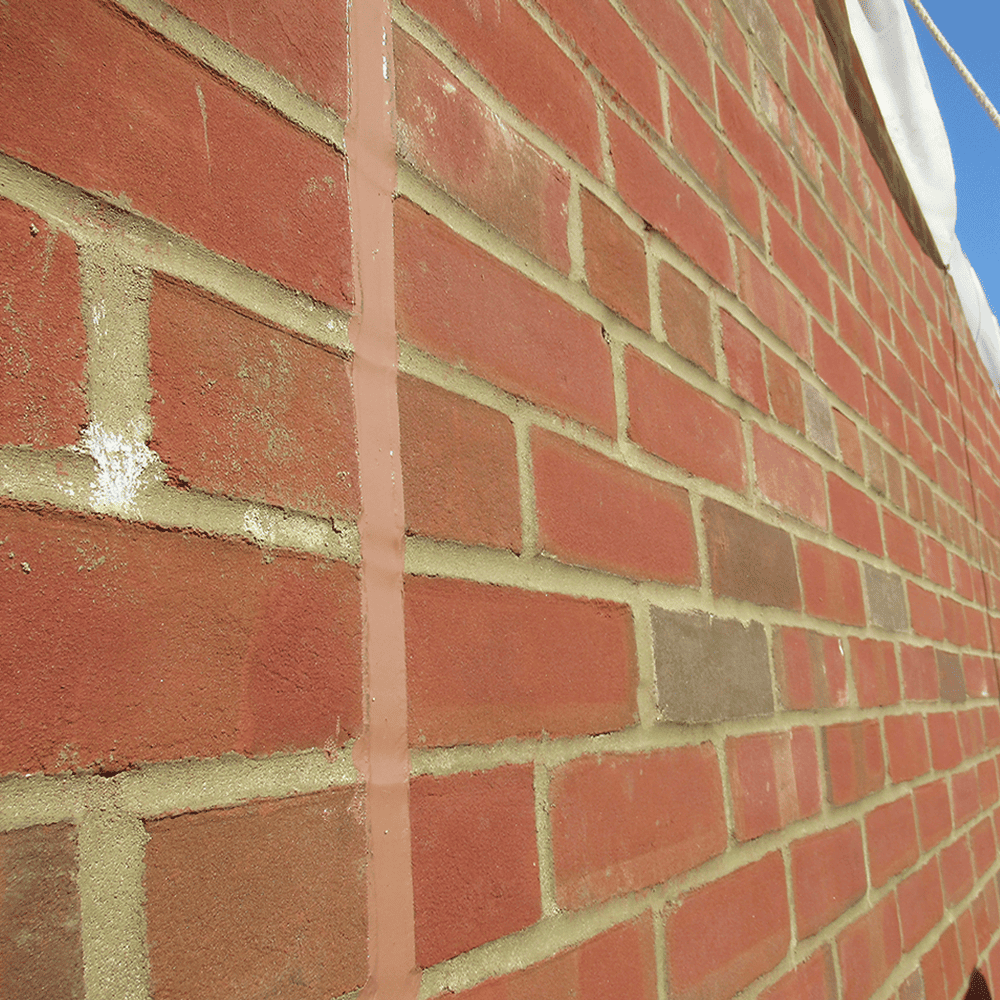
Tuckpointing, or removing deteriorated mortar and installing properly matched replacement mortar, can restore the integrity of those joints. The repair should address deteriorated material to an appropriate depth rather than covering the surface with a thin layer of new mortar.
For historic masonry, mortar compatibility matters as much as appearance. Replacement mortar should be selected based on the existing masonry, exposure, building age, and performance requirements.
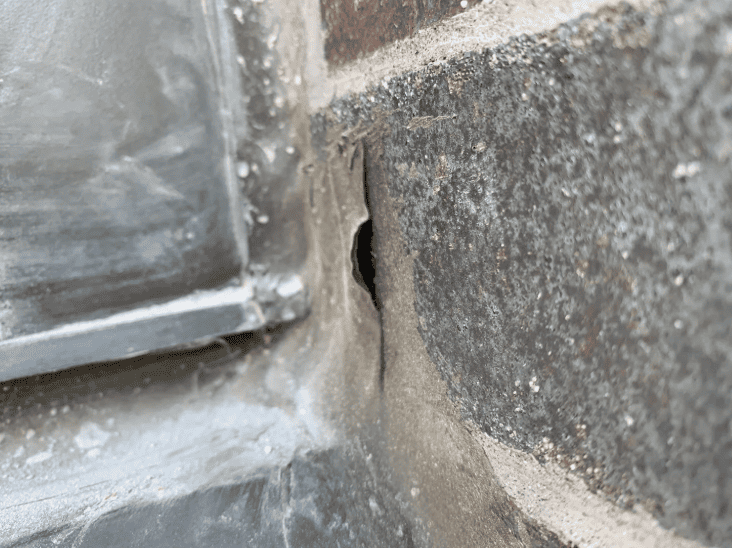
Failed Sealant Joints
Sealants serve a different purpose than mortar. They accommodate movement and help maintain weather-tight transitions around windows, doors, control joints, expansion joints, flashing, and other building components.
Cracked, separated, or missing sealant should be evaluated before winter because these failures can become direct water-entry points.
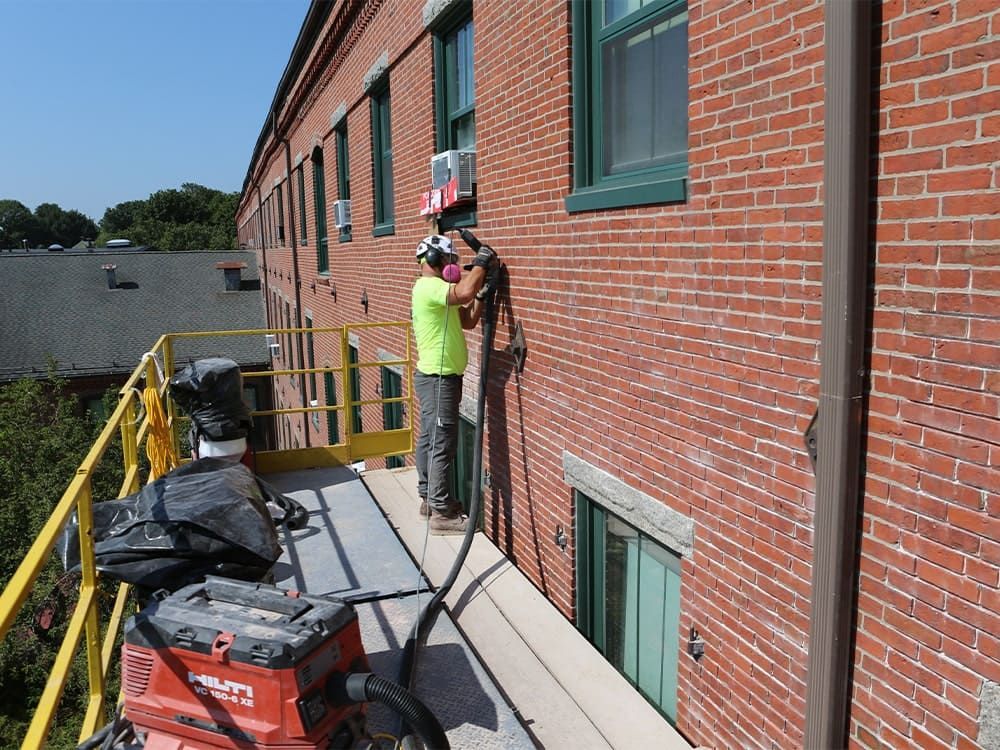
On commercial and multi-family buildings with hundreds of window openings, even localized failures can add up quickly. RestoreWorks has completed large-scale sealant restoration projects on Chicago-area buildings where extensive window-perimeter sealant replacement was required to improve the building envelope.
Why Lintels and Flashing Deserve Special Attention
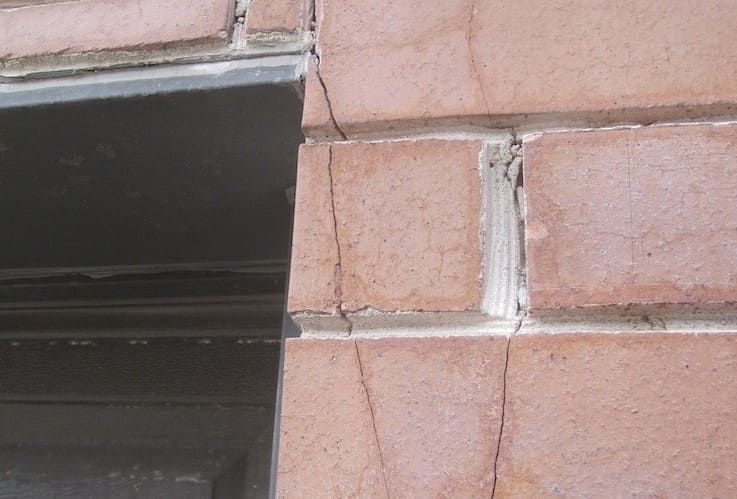
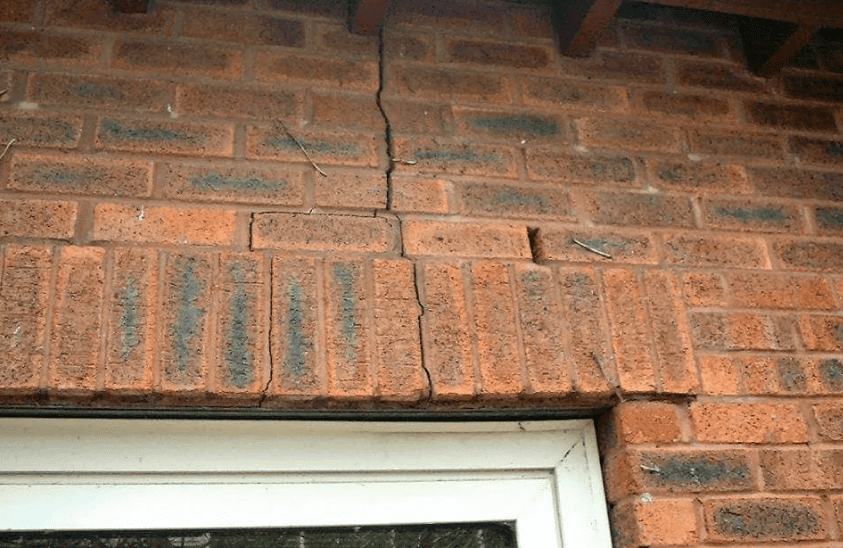
Cracking above windows and doors should not automatically be treated as a tuckpointing problem.
Many Chicago masonry buildings rely on steel lintels to support brick above wall openings. When moisture reaches the steel and corrosion develops, the expanding steel can place pressure on the surrounding masonry.
Warning signs may include:
- Stair-step or horizontal cracking near openings
- Cracks near the upper corners of windows
- Rust staining
- Displaced brick
- Open mortar joints
- Recurring leakage around window heads
Repairing only the mortar without addressing the underlying steel or water-management problem may leave the cause untouched.
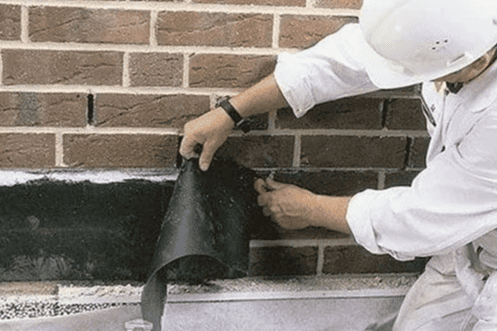
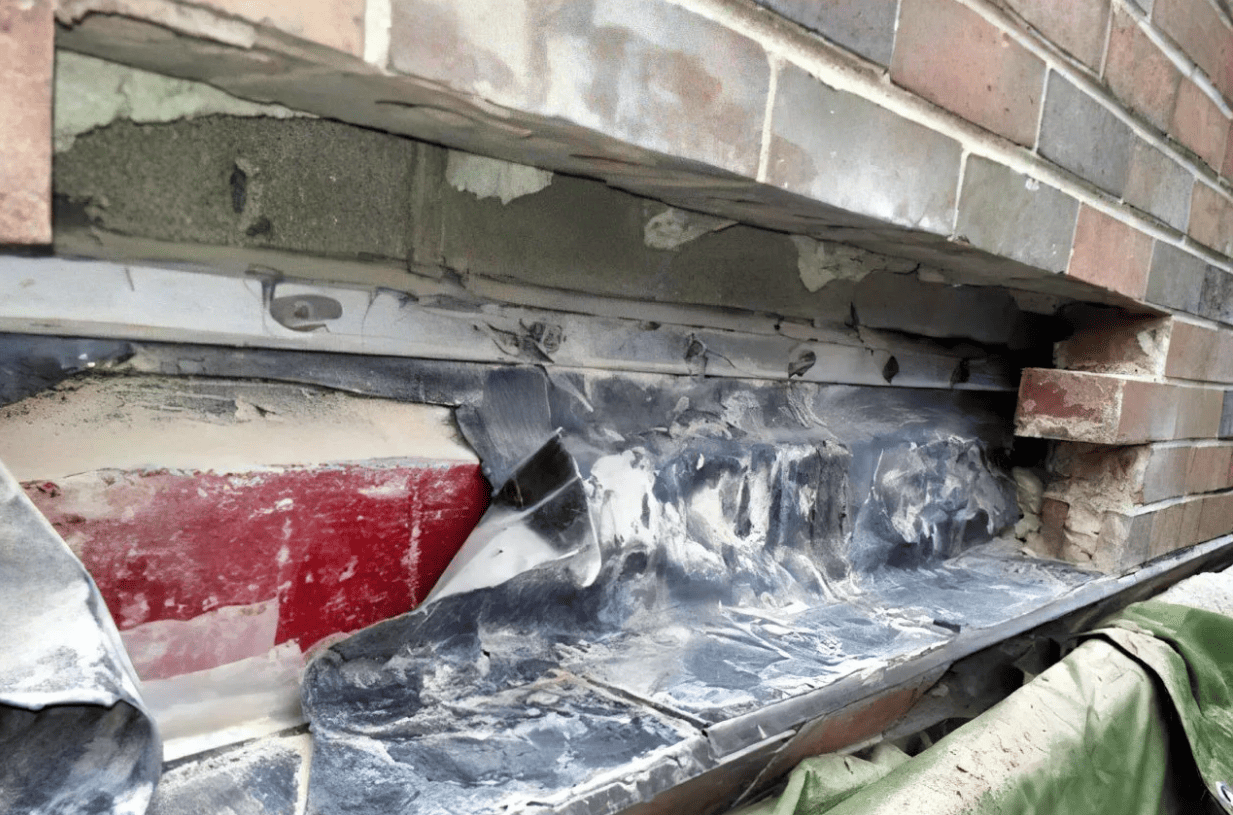
A complete lintel repair can require removing masonry, evaluating or replacing the steel, installing flashing with end dams and weeps, rebuilding the masonry, and completing related tuckpointing.
Which Masonry Problems Can Get Worse During Winter?
Not every defect becomes an emergency once temperatures drop. But several conditions are more vulnerable when moisture is already present.
Cracked or Spalled Brick and Stone
Cracks and deteriorated faces can expose masonry to additional moisture. If water repeatedly enters damaged material and freezes, existing deterioration can continue to expand.
That does not mean every cracked brick requires immediate replacement. Location, depth, movement, exposure, and the condition of the surrounding wall all matter.
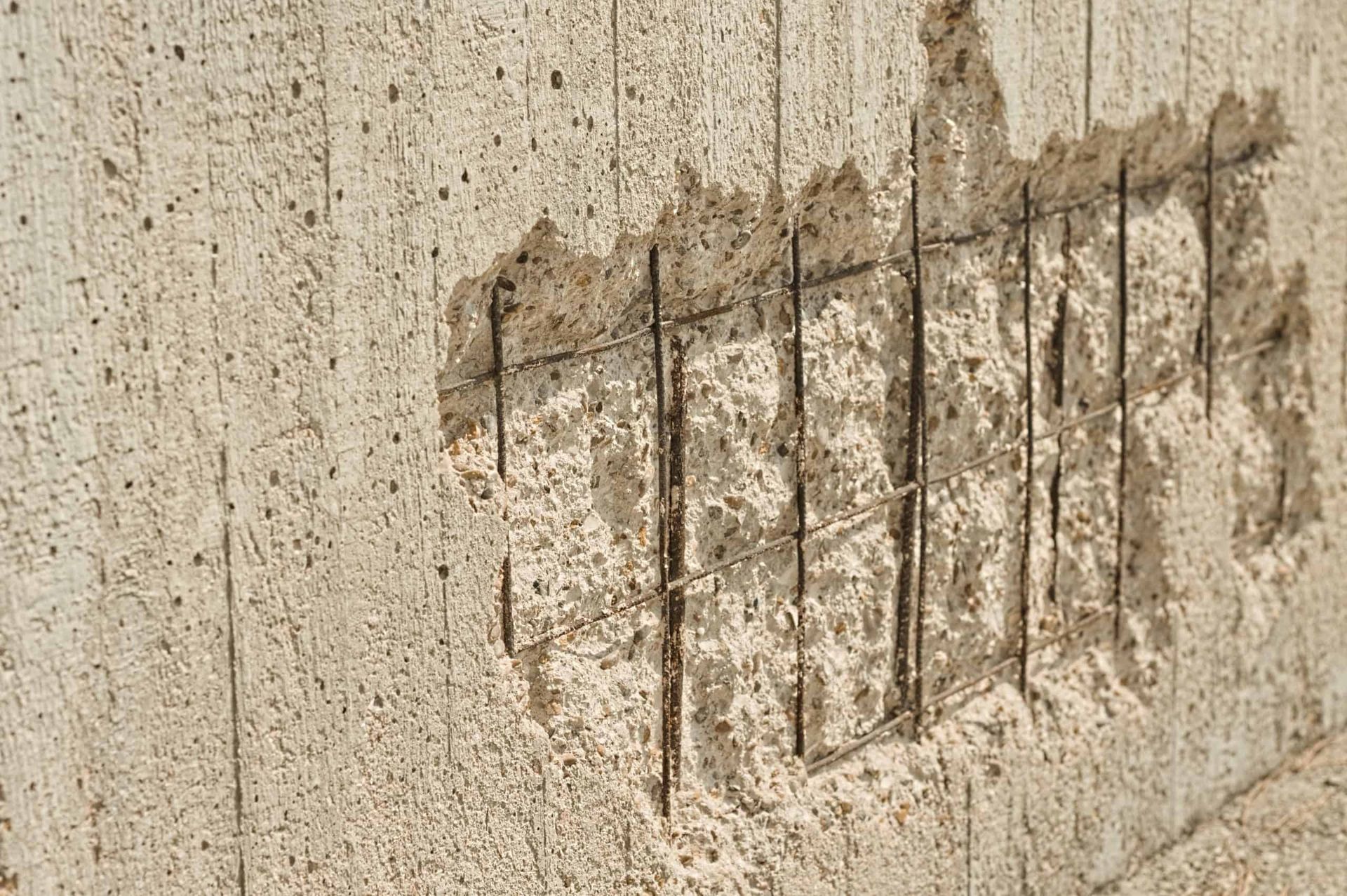
Spalling Concrete
Concrete deterioration deserves particular attention when reinforcing steel is exposed or corrosion is contributing to the failure.
A typical concrete façade repair may involve removing unsound material, exposing the reinforcing steel, cleaning and treating the steel, installing supplemental anchors or patch pins when required, replacing the concrete, and finishing the repaired surface.
Loose concrete above sidewalks, entrances, balconies, or occupied areas should be evaluated quickly rather than treated as a spring maintenance item.
Rusting Lintels and Embedded Steel
Rust staining is sometimes dismissed as an appearance issue. Around lintels, shelf angles, reinforcing steel, or other embedded metals, it can indicate something more significant.
The question is not simply whether rust is visible. The important questions are where the moisture is coming from, how much steel deterioration has occurred, and whether surrounding masonry has begun to move.
Should Every Masonry Repair Be Completed Before Winter?
No.
Trying to force every project onto the fall schedule can be unnecessary and expensive. Some repairs can be planned for warmer conditions as long as they do not present an immediate safety or water-infiltration concern.
Lower-priority work may include:
- Cosmetic staining
- Routine façade cleaning
- Minor aesthetic inconsistencies
- Stable conditions that are already documented and monitored
- Larger restoration programs that can safely be phased into spring
This is where a professional building-envelope assessment becomes useful. Instead of treating every deficiency equally, the team can separate immediate work from maintenance that can be budgeted for the next construction season.
Is 40°F Too Cold for Masonry Repair?
Forty degrees should be treated as a planning threshold, not a universal cutoff.
As temperatures drop, masonry work may require additional cold-weather procedures to protect materials and allow repairs to cure properly. Depending on conditions, that can include heated materials, temporary enclosures, insulating blankets, wind protection, or supplemental heat.
That means winter does not automatically stop masonry restoration work. It changes how the project needs to be planned.
Emergency stabilization may continue regardless of season. Other repairs may remain practical with temporary heat and enclosure. Work that can safely wait may be more economical to schedule when conditions improve.
How Should a Chicago Building Team Decide What Gets Repaired First?
When reviewing a façade before winter, start with three questions:
1. Could this condition create a safety problem?
Look first for loose, bulging, displaced, or severely deteriorated materials.
If the answer is yes or unclear, the condition may require immediate professional evaluation.
2. Is water entering through this area?
Check mortar joints, sealants, flashing, copings, lintels, sills, cracks, and transitions between materials.
If the building already has interior leakage, efflorescence, staining, corrosion, or recurring moisture problems, identifying the source should take priority over cosmetic repairs.
3. Will another winter make the repair significantly more difficult or expensive?
Look at the progression of the condition rather than only its current appearance.
A stable stain and an actively deteriorating lintel may both be visible from the ground, but the potential consequences are very different.
A useful priority order is:
Safety → Water management → Active deterioration → Preventive maintenance → Appearance
That framework also helps owners allocate limited maintenance budgets instead of spreading money evenly across unrelated deficiencies.
Why the Visible Damage May Not Be the Entire Problem
Good masonry restoration starts with identifying the cause of deterioration.
A RestoreWorks building-envelope project at the University of Illinois Chicago is a good example. The work involved more than replacing damaged brick. The scope included face-brick removal, assessment and repair of exposed structural steel, lintel replacement, structural concrete repair, corrosion-resistant coatings, new flashing with drip edges, weeps and end dams, brick replacement, tuckpointing, and cleaning.
That sequence illustrates an important point: what appears to be a mortar or brick problem from the outside may actually involve drainage, flashing, steel corrosion, or other components behind the façade.
Repairing the symptom without understanding the wall assembly can lead to the same problem returning.
What Should Be Included in a Pre-Winter Masonry Inspection?
A useful fall review should look beyond obvious cracks.
Check:
- Parapets and coping
- Brick and stone units
- Mortar joints
- Window and door openings
- Sealant joints
- Lintels and shelf angles
- Flashing and weep locations
- Concrete balconies and façade elements
- Areas below rooflines
- Previous repair locations
- Known leak locations
- Areas above sidewalks, entrances, and occupied spaces
Photographs from previous inspections are especially useful. Comparing the same area over time can help determine whether deterioration is stable or progressing.
For larger commercial and multi-family buildings, this information can also help the owner, architect, engineer, and masonry contractor establish repair phases and budget priorities before bidding begins.
Planning Masonry Restoration Before Chicago Winter
The best pre-winter repair plan is not the one with the longest scope.
It is the one that addresses the most consequential problems first.
Loose or unstable façade materials require immediate attention. Active water-entry points should follow closely behind. Deteriorating lintels, flashing, mortar, concrete, and sealants should then be evaluated based on how quickly another winter could worsen the condition.
Everything else can be incorporated into a planned maintenance or larger masonry restoration program.
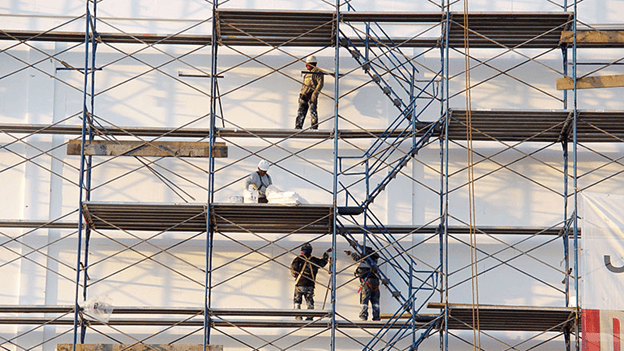
For property managers and building owners planning masonry repair in Chicago, starting that assessment early also leaves more options. There is more time to investigate concealed conditions, coordinate with the project's architect or structural engineer, obtain permits when required, mobilize access equipment, and complete weather-sensitive work before cold-weather procedures become necessary.
Frequently Asked Questions
What masonry repairs should be done before winter in Chicago?
Prioritize loose or unstable façade materials first, followed by active water-entry points such as failed mortar joints, sealants, flashing, lintels, and cracked masonry. Repairs that prevent moisture penetration or address active deterioration generally deserve attention before cosmetic cleaning or lower-priority maintenance that can safely wait until spring.
Can tuckpointing be done in cold weather?
Yes, tuckpointing can sometimes continue in cold weather, but additional precautions may be required as temperatures drop. Contractors may need heated materials, temporary enclosures, insulating blankets, wind protection, or supplemental heat to maintain proper curing conditions and protect newly installed mortar.
How do you know if masonry damage is urgent?
Masonry damage should be evaluated quickly when brick, stone, terra cotta, or concrete is loose, bulging, displaced, falling, or located above occupied areas. Significant cracking, active leaks, rusting steel, deteriorated parapets, or rapidly changing conditions can also indicate problems that should be investigated before routine maintenance work.
Should sealant repairs be done before winter?
Failed sealant should generally be addressed before winter when it is allowing water into the building envelope. Open joints around windows, doors, expansion joints, control joints, and flashing can expose surrounding materials to moisture. Product requirements, substrate conditions, and temperature limitations should be considered when scheduling the repair.
Planning Masonry Repairs Before Winter?
RestoreWorks provides commercial masonry restoration services throughout Chicago and Northwest Indiana. If your building has deteriorated mortar joints, cracked masonry, failing sealants, or other signs of deterioration, our team can help identify and address the areas that need attention.
Contact RestoreWorks to discuss your building's masonry repair needs.