Signs of Lintel Failure During Freezing Conditions
Why Freezing Conditions Make Lintel Failure More Common in Chicago
Steel lintels carry the masonry above windows, doors, and other openings. When temperatures drop, moisture trapped behind brick freezes, expands, and puts pressure on both the steel and surrounding masonry. Over time, this cycle leads to movement, cracking, and structural stress.
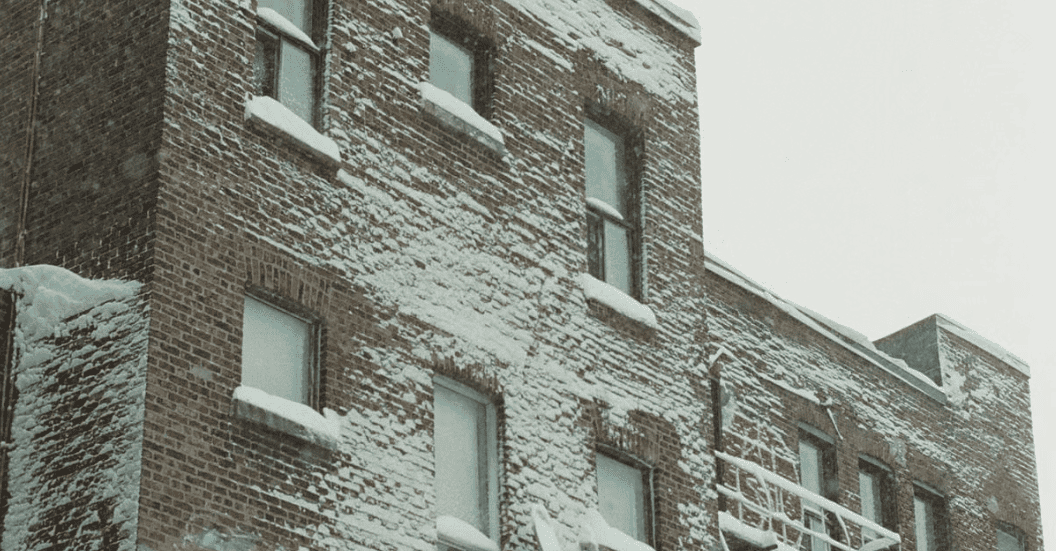
Chicago sees repeated freeze–thaw swings each winter, especially near the lake. Those daily fluctuations accelerate corrosion and can turn a small issue into a failure within a single season. Property managers often notice these problems after a thaw, when leaks or visible displacement suddenly appear.
What Does Lintel Failure Look Like in Freezing Weather?
Below are the signs most commonly observed during winter and early spring inspections.
1. Upward Brick Movement Above a Window or Door
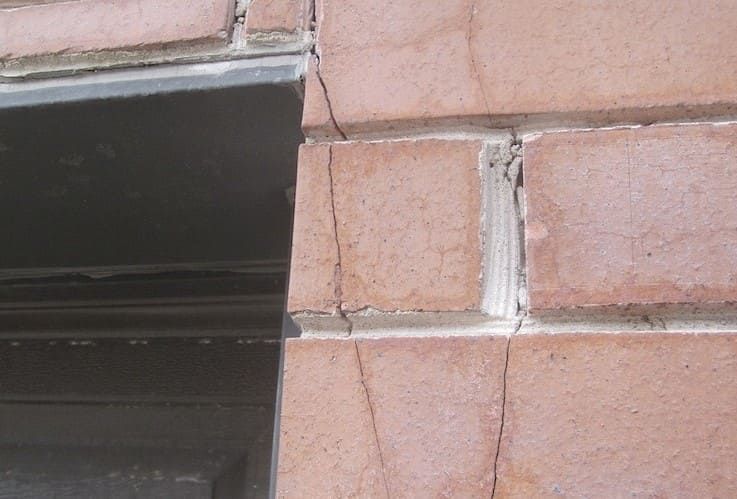
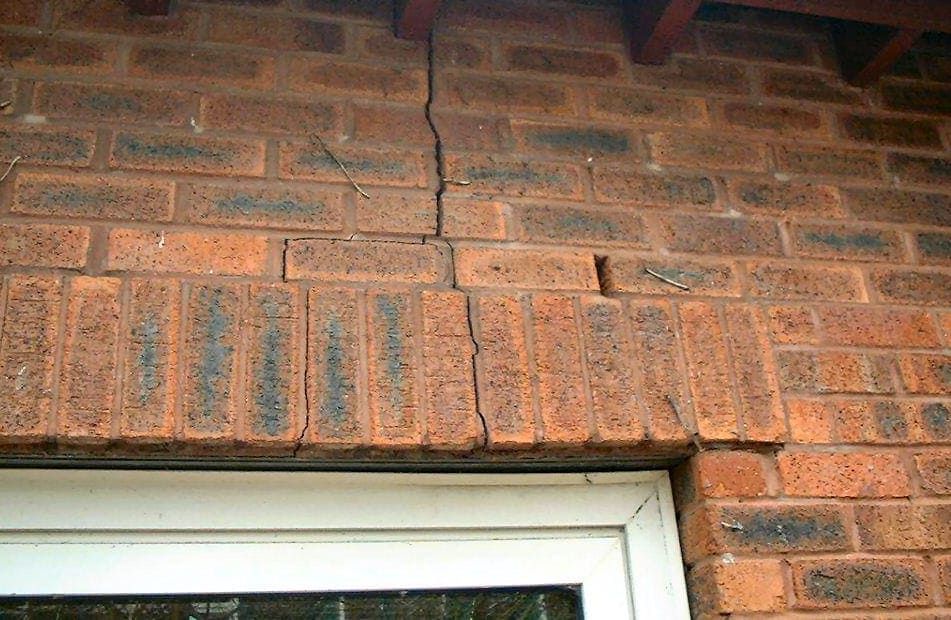
When a steel lintel rusts, it expands. Rust occupies far more volume than the original steel, especially once corrosion progresses into delaminated layers, a phenomenon known as rust jacking. According to GRLA Architects’ Building Envelope Science Division, rust jacking is one of the primary forces that pushes masonry upward and out of alignment as steel oxidizes and layers peel away inside the wall system.
Common winter indicators:
- A visible “smile” or arching pattern above the opening
- Brick courses shifting upward by ⅛ inch or more
- Cracks that widen during freeze–thaw cycles
GRLA Architects also notes that quick cosmetic fixes, such as caulking over cracks, can trap moisture inside the wall. In freezing conditions, that trapped moisture expands, accelerating both corrosion and masonry displacement. That’s why these winter patterns often worsen rapidly once freeze–thaw cycling begins.
This movement is frequently mistaken for minor cosmetic cracking, but in cold weather it’s a strong indicator of active pressure from rust-jacking lintels behind the masonry.
2. Horizontal Cracking Across Multiple Brick Courses
A single crack might come from settlement. A long, continuous crack across several courses typically points to a structural support issue. In freezing conditions, the crack can widen as trapped moisture freezes repeatedly.

3. Step Cracking Near the Corners of Openings
Freeze–thaw pressure pushes the load to the weakest points, which are the corners of the opening.
Look for:
- Stair-step cracking
- Mortar separation
- New gaps forming near window heads
These openings often become water entry points during warm spells.

4. Rust Staining or Flaking Steel
If steel is exposed or the lintel is not properly flashed, water seeps in and sits on the metal.
During winter, that water:
- Freezes
- Expands
- Accelerates corrosion
Rust streaks on the face of the wall or beneath the window sill are early warning signs of failure.

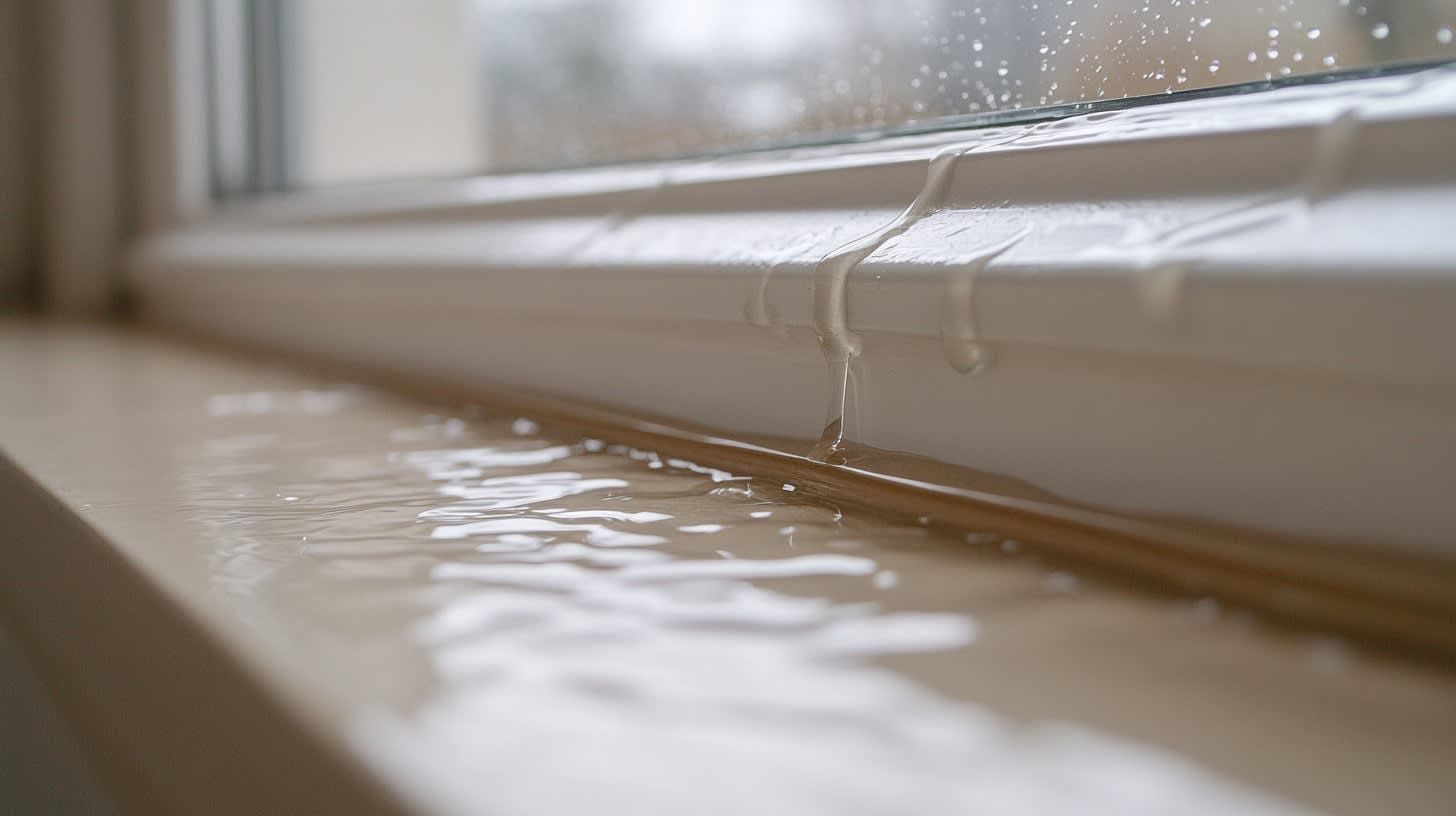
5. Cracks That Leak After a Thaw
One of the strongest indicators of lintel issues in winter is water activity that shows up only after temperatures rise above freezing. That thaw brings meltwater into cracks created by expansion pressure.
Why Lintel Problems Escalate Faster in Chicago Winters
Freezing conditions alone cause damage. But Chicago adds more:
Lake-Driven Temperature Swings
Areas near Lake Michigan experience rapid temperature jumps, freezing at night and thawing by morning. That repeated movement stresses steel and masonry faster than in stable cold climates.
Research from Northwestern University’s Underground Climate Change study shows that Chicago’s built environment undergoes measurable expansion and contraction as temperatures fluctuate, both above and below ground. Their findings demonstrate that materials in dense urban areas deform in response to thermal changes, placing ongoing stress on building systems that were never designed for such constant variation.
That same principle applies at the façade level: when steel lintels cycle through freezing and thawing conditions, they expand, contract, trap moisture, and deteriorate more rapidly. Near the lakefront, these temperature swings happen more frequently and with greater intensity, making rust jacking and lintel movement appear earlier and more dramatically than in inland suburbs.
Wind-Driven Moisture
Wind pushes snow and sleet into small gaps around window heads. Once that moisture gets behind the brick, it freezes, expands, and increases the pressure on the lintel.
Research from the Technical University of Denmark’s DTU Library shows that wind-driven rain loads cause significantly higher moisture accumulation at wall edges and openings compared to the center of the façade. Their hygrothermal modeling demonstrated that these areas absorb the most water during storms and are also the slowest to dry, especially in cold, humid climates.
For a lintel, this creates a perfect stress point in winter. When wind forces moisture into these small gaps:
- Water saturates the mortar and brick above the lintel
- Cold temperatures freeze the moisture trapped behind the façade
- Ice expansion pushes outward and upward on the masonry
- Corrosion accelerates as the steel is repeatedly exposed to water
This is why many winter lintel failures begin near corners, window heads, and elevations exposed to Chicago’s prevailing winds. Even a narrow opening can pull in enough wind-driven moisture to create a freeze–thaw cycle that stresses the lintel far beyond its design capacity.
Age of Building Stock
Older Chicago buildings, especially in neighborhoods with historic masonry, often have:
- Original lintels with no galvanization
- Deteriorated mortar joints
- Outdated flashing systems
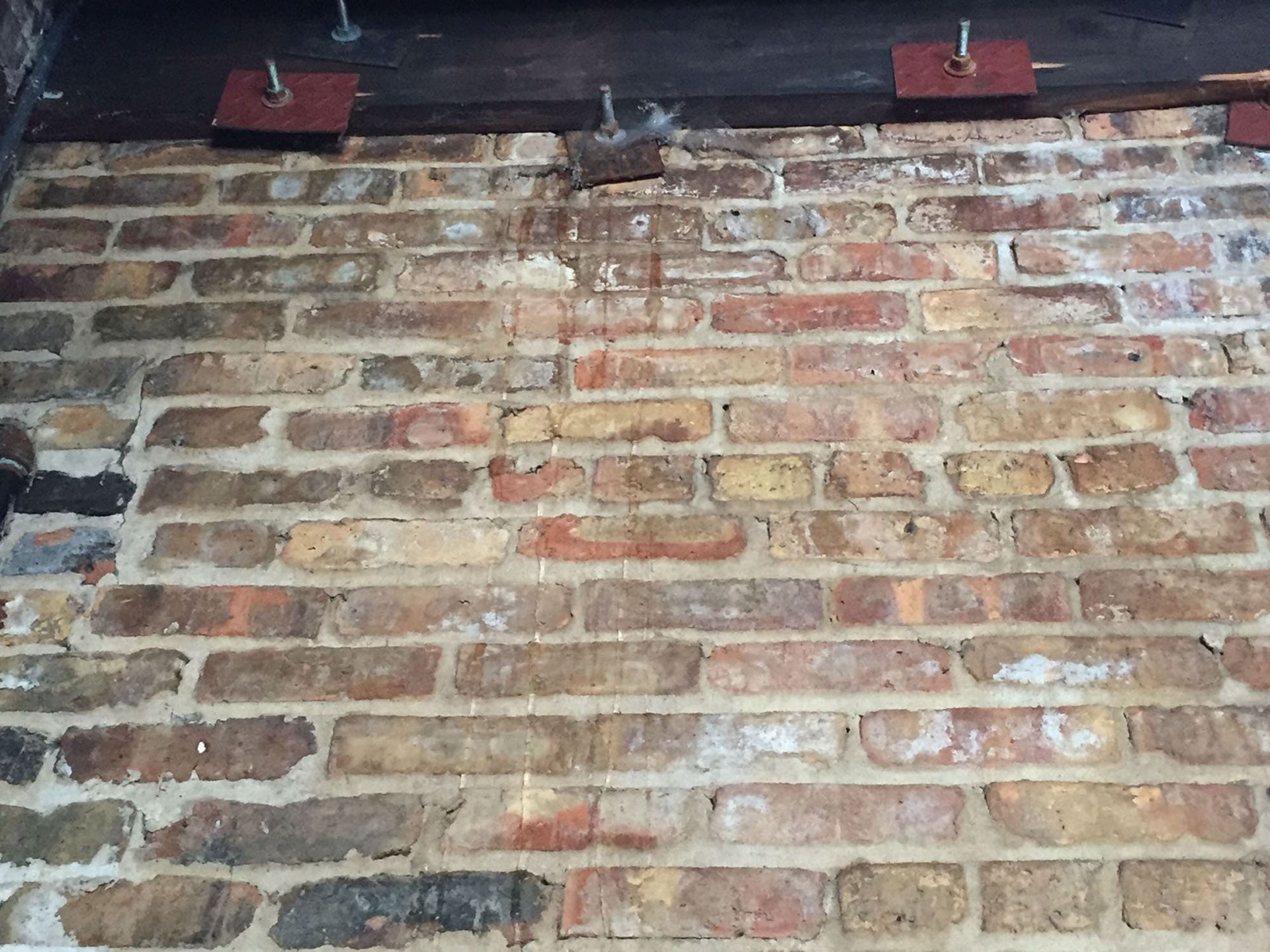
These conditions make winter damage more severe. According to Preservation Chicago, many of the city’s historic masonry and terra cotta buildings are at elevated risk due to long-term deferred maintenance and disinvestment. That reality makes winter-related deterioration, including steel lintel corrosion, more common in older structures across neighborhoods where upkeep has historically lagged.

When a Structural Engineer Should Be Called Immediately
Certain indicators suggest the lintel may no longer be safe:
- Displacement greater than ⅛ inch
- Cracks running horizontally through several courses
- Active sagging over openings
- Gaps forming around window heads
- Severe rust expansion or buckling steel
Steel lintels are engineered members with defined load limits, deflection tolerances, and bearing requirements. Building Design’s CPD article “Specifying Steel Lintels” by Mark Farmer reinforces that lintels are designed to perform within strict structural parameters based on loading, span, end bearing, and installation conditions. When field conditions show excessive movement, corrosion, or deformation, the lintel’s original performance assumptions are no longer reliable.
At that point, a structural engineer should evaluate the opening. An engineer can determine:
- Whether the lintel still meets safe load capacity
- If deflection or displacement suggests structural distress
- Whether temporary shoring is needed
- Whether the lintel must be replaced (and how to do so safely)
- Whether adjacent masonry has become unstable due to load redistribution
In emergency situations, many Chicago property managers rely on engineering firms familiar with masonry behavior in freeze–thaw environments to assess safety before any restoration work begins.
Real-World Example: How Water Infiltration Revealed Hidden Lintel Failure
A recent project at Porter County’s 911 Central Communications Center in Valparaiso shows how quickly water issues can expose underlying lintel deterioration, especially in older masonry buildings. This project required targeted masonry restoration to address deteriorated lintels, failed flashing, and long-term water infiltration issues.
During our initial assessment, several window openings showed clear signs of systemic failure:
- A previous flashing repair had failed, with loose fasteners and missing components.
- Steel lintels behind the brick were corroding and weakened.
- Perimeter sealants at the window frames were cracked and detaching.
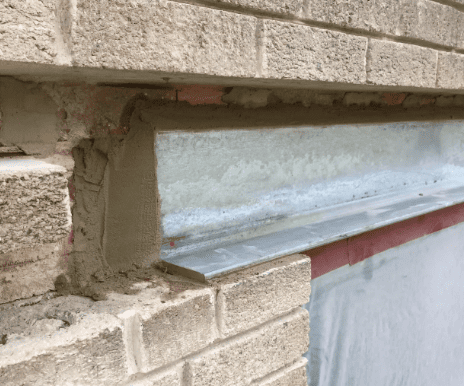
Once brick was removed, the extent of lintel corrosion became obvious. Water had been entering above the openings for years, and winter freeze–thaw cycles accelerated the damage. Moisture was sitting on the unprotected steel, causing rust expansion and pushing masonry out of place, exactly the type of failure pattern we see across Chicago and Northwest Indiana during cold weather.
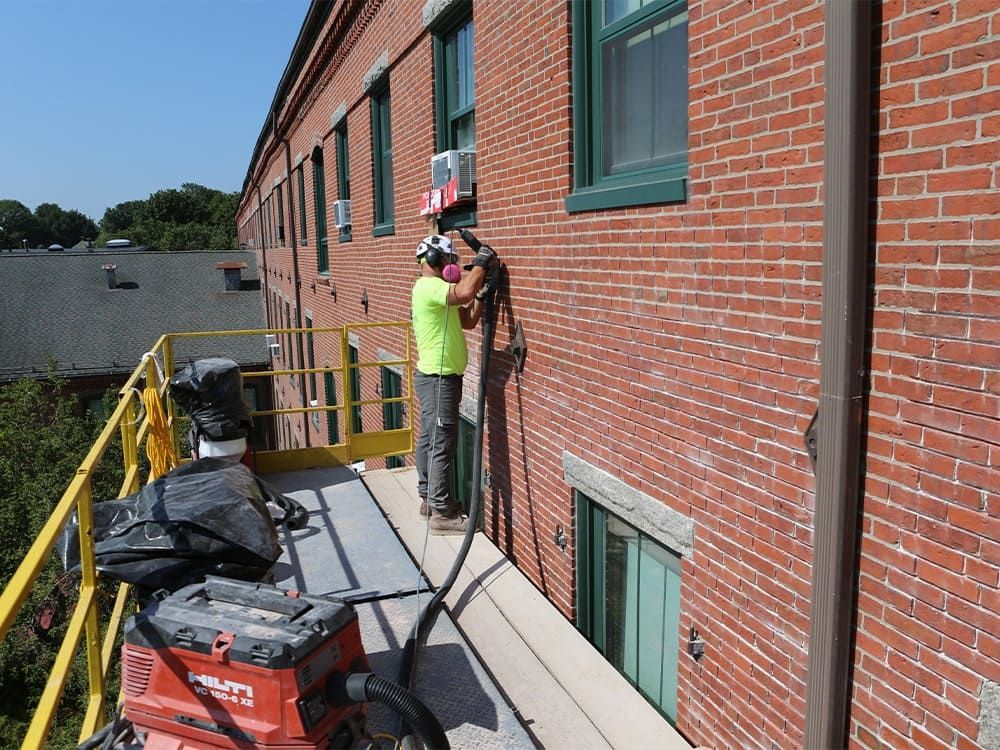
Our restoration team rebuilt 39 openings by:
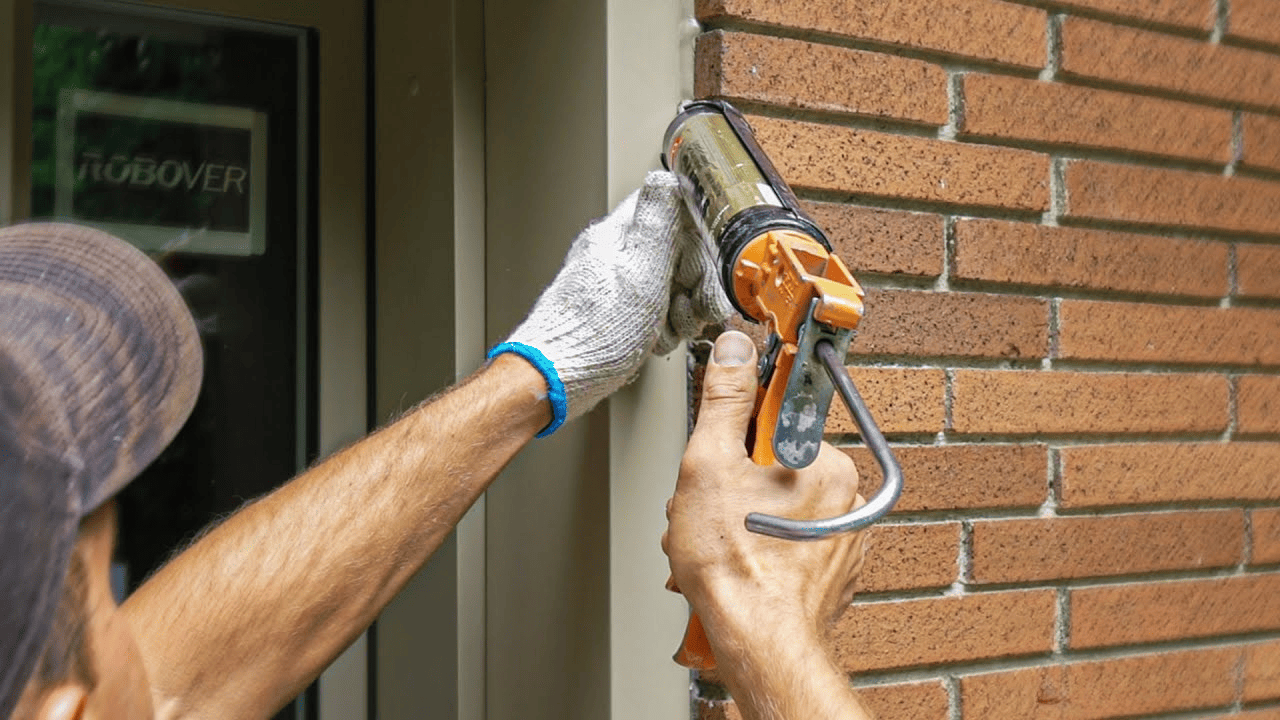
- Exposing, cleaning, and priming the existing steel lintels
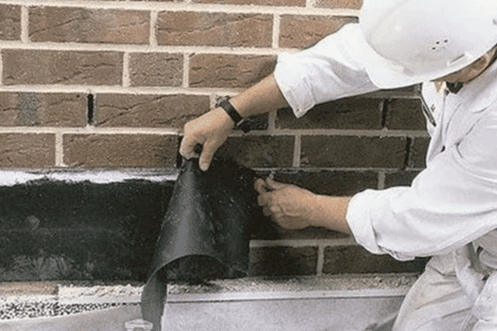
- Installing a complete flashing system with drip edges, end dams, and proper terminations
- Resetting brick and repointing joints to match the original façade
- Replacing over 600 linear feet of failing sealant
The result restored proper drainage, stopped recurring leaks, and protected the structural components behind the façade.

How to Reduce Lintel Damage During Winter
Perform Preventive Inspections Before the First Freeze
Look for early warning signs in fall: hairline cracks, minor rust, or mortar deterioration.
Ensure Proper Flashing and Drainage
A lintel should always be installed with:
- End dams
- Weep holes
- Through-wall flashing
This allows moisture to exit instead of sitting on the steel.
Do Not Ignore Small Movement
Even minor displacement can become a full failure by February. Early intervention is always more cost-effective.

FAQ: Lintel Failure During Freezing Conditions
What are the first signs of lintel failure in winter?
Early signs include upward brick movement, horizontal cracks, rust staining, and gaps near window heads. During a thaw, you may also see water leaks through new cracks. These symptoms indicate pressure from a corroding or overloaded lintel.
Can a lintel fail suddenly during freezing weather?
Yes. Freeze–thaw cycles can rapidly accelerate corrosion and expansion. A lintel that was stable in fall can shift or crack masonry significantly after just a few hard freezes.
Does every horizontal crack above a window mean the lintel failed?
Not always. Some cracks come from settlement or shrinkage. But a long, continuous crack across multiple brick courses, especially combined with movement, usually points to structural lintel issues.
Is it safe to delay lintel repairs until spring?
If movement is minor and stable, lintel repairs can often wait. But if you see displacement, buckling steel, or active leaks, delaying repairs increases the risk of a localized failure and more costly reconstruction.
Do all lintels rust in Chicago’s climate?
Steel lintels are prone to corrosion, but proper flashing, drainage, and maintenance significantly slow deterioration. Galvanized lintels or stainless steel options provide additional protection.
Have more questions about lintel repairs? Contact RestoreWorks today.