
Restoring Iconic Navy Pier
Peter Merlo
Overview
- Water leaks and water damage were threatening structural integrity at Navy Pier.
- Maintenance needed to be done while minimizing disruption to events and operations.
- Expert masonry repair was needed to maintain the iconic look of existing materials and colors.
Water Infiltration Was Threatening Structural Integrity
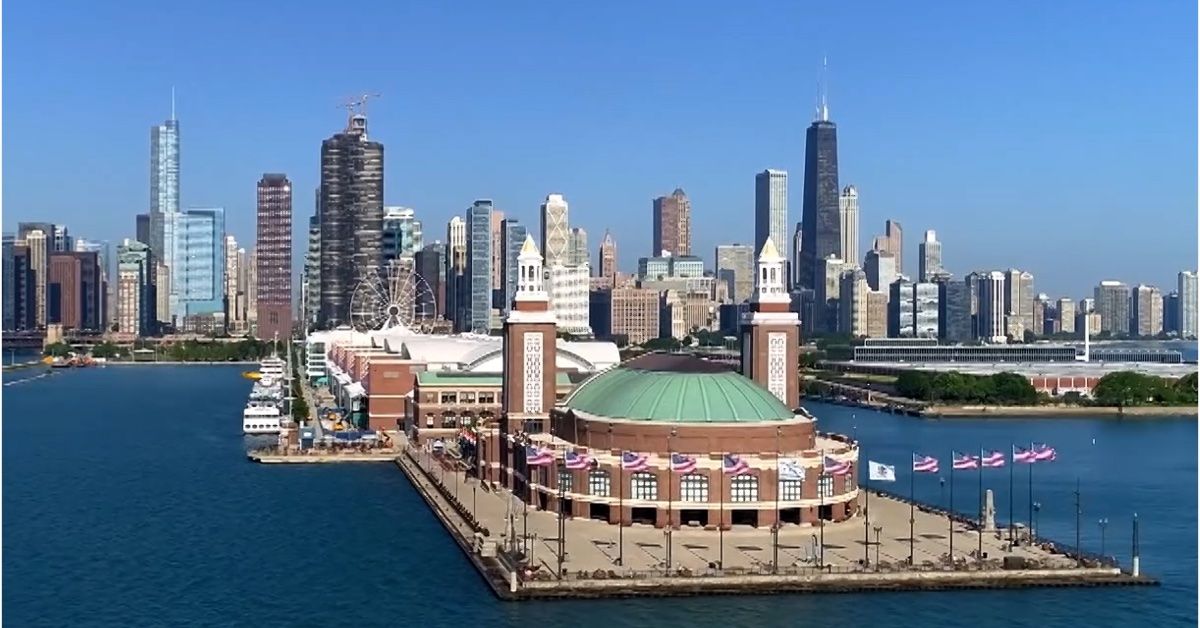
Navy Pier, an iconic symbol of magnificence to Chicago, was experiencing water leaks that threatened the structural integrity of numerous buildings. Management and the building envelope engineer needed to identify the source of leaks and fortify buildings against further water intrusion.
Restoring Iconic Navy Pier Required Precise Expertise and Project Management
The Navy Pier restoration project presented many problems:
- Maintain the historic and iconic look for existing masonry materials and colors.
- Perform the repair and restoration work with minimal disruption to events and operations.
- Work on multiple projects from one end of the pier to the other - including work at the Headhouse, Family Pavilion, Crystal Garden, Festival Hall, Terminal Building, and Ballroom.
A Job Well Done - Navy Pier Restoration Highlights
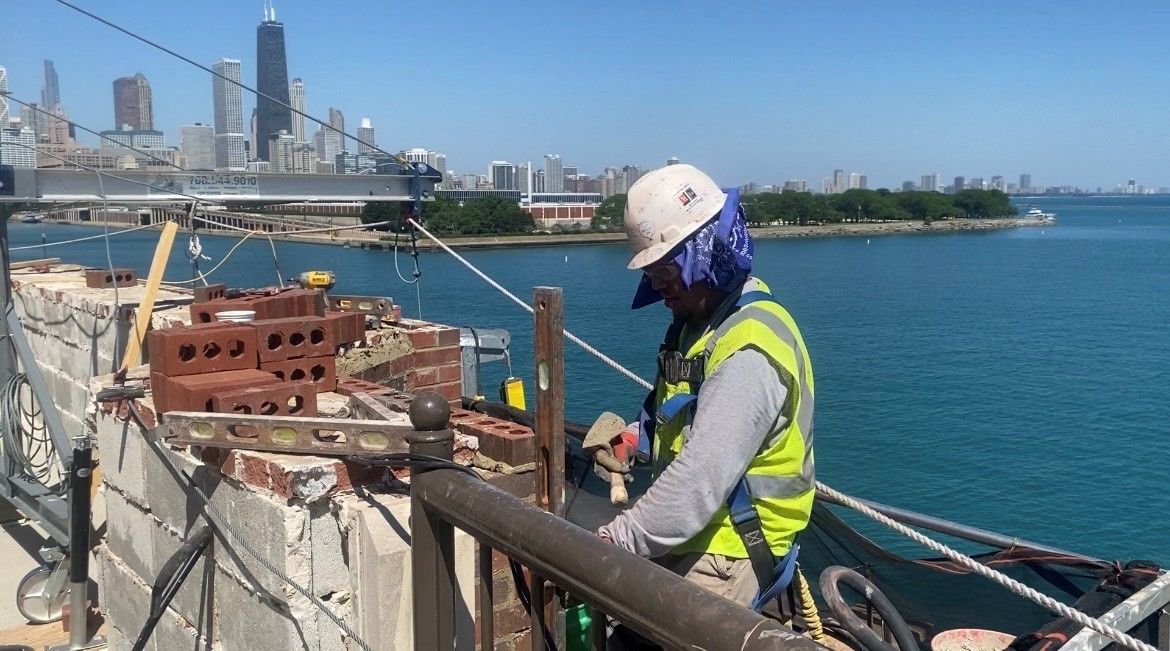
- Ballroom Parapets Reimagined: The east end ballroom brick parapets were precisely rebuilt, infusing new life into the iconic space.
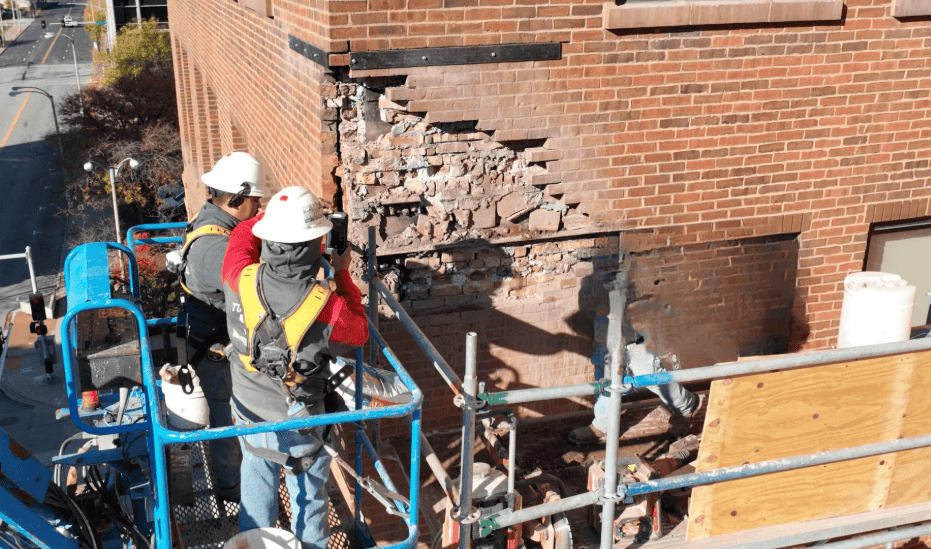
- Brick by Brick: The restoration included the careful replacement of cracked and spalled bricks, ensuring structural integrity and aesthetic consistency.
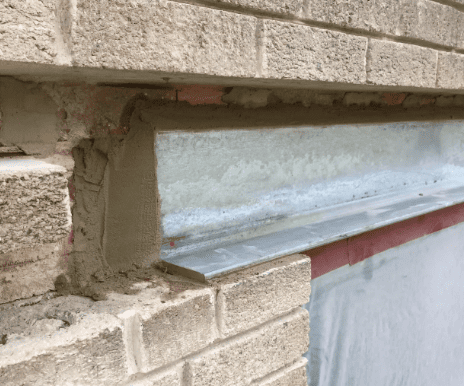
- Guarding Against Weather Infiltration: The installation of thru-wall flashing emerged as a key preventative measure against future water leaks, protecting the masonry, underlying structural steel, and building interior from potential threats.
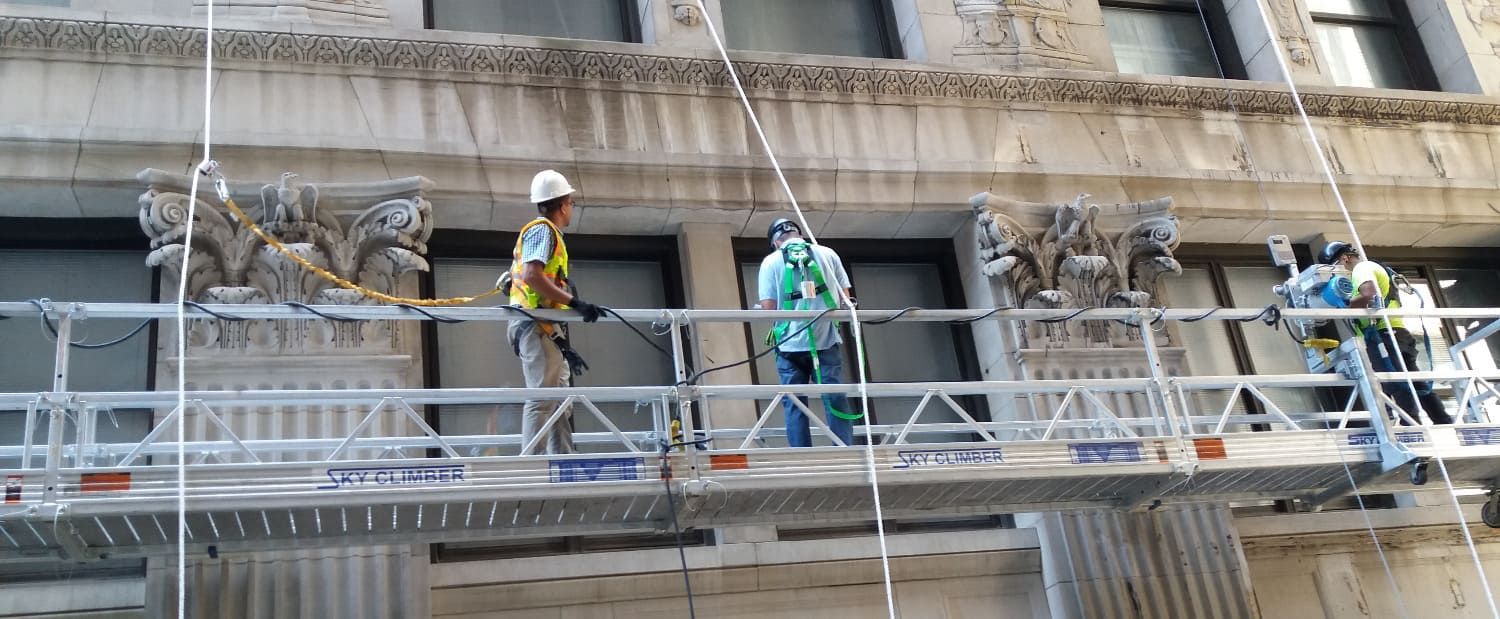
- Accessing the Core: RestoreWorks displayed its expertise by removing, repairing, and resetting terra cotta, precast and limestone.
- The Art of Restoration: Tuckpointing and caulking were performed with skill and attention to detail, reinstating the pier's original grandeur.
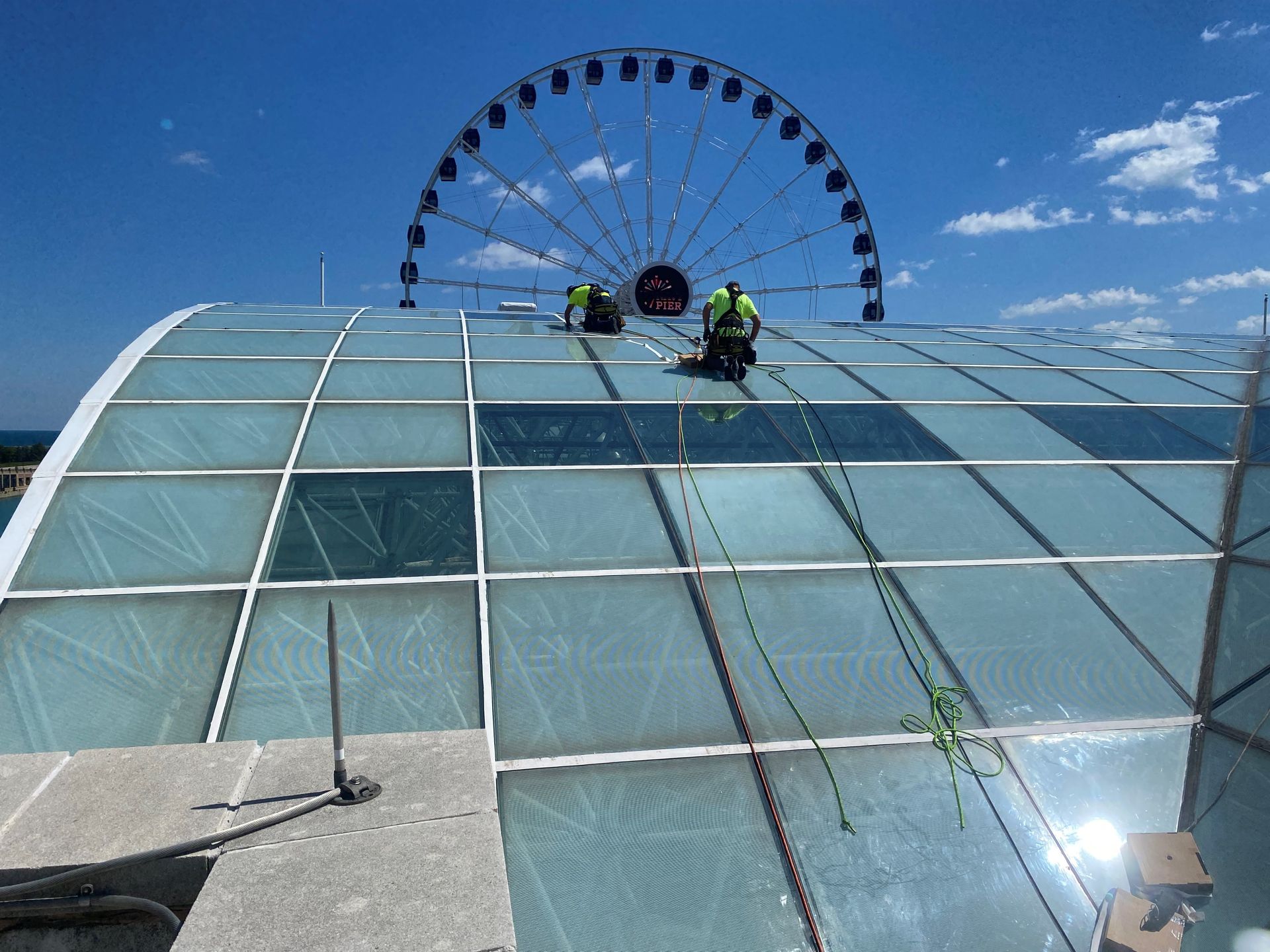
- Dazzling the Dome: To address multiple leaks at the Crystal Garden glass roof, the project included the installation of 12,000 feet of pre-formed silicone sealant, a feat that seamlessly combined functionality and aesthetics.
- Crowning Glory: The restoration included resetting terra cotta capstones, on through wall flashing, new mortar and stainless steel anchors.
Watch a video from Inside the Blueprint by clicking here to learn more about RestoreWorks and the work we did to protect and repair Navy Pier.
Looking for help to protect and preserve your property? Email us at info@restoreworks.com
Learn the warning signs of shelf angle failures, what causes them, and how early repairs help protect commercial masonry buildings from costly damage.

Learn how to budget for commercial masonry restoration in 2027, including inspections, repair planning, costs, and Chicago weather considerations.
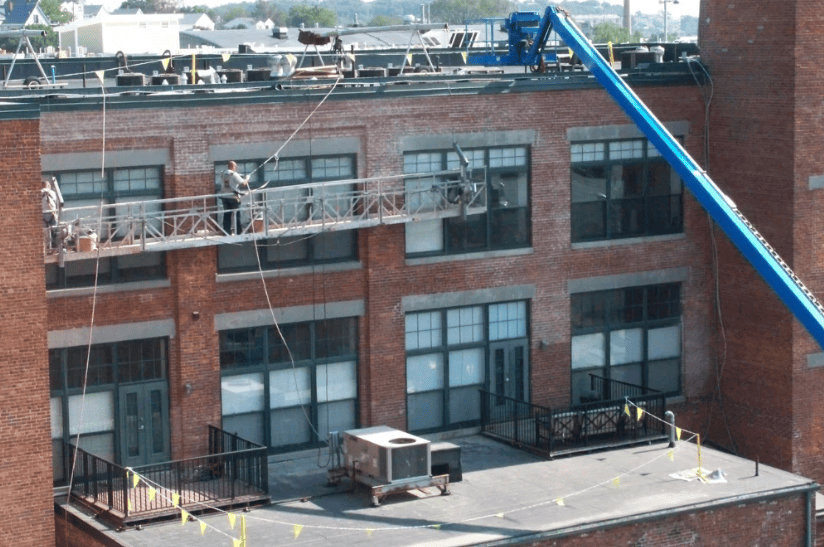
Learn what causes building envelope failure, warning signs to watch for, and how proactive maintenance helps protect commercial buildings.
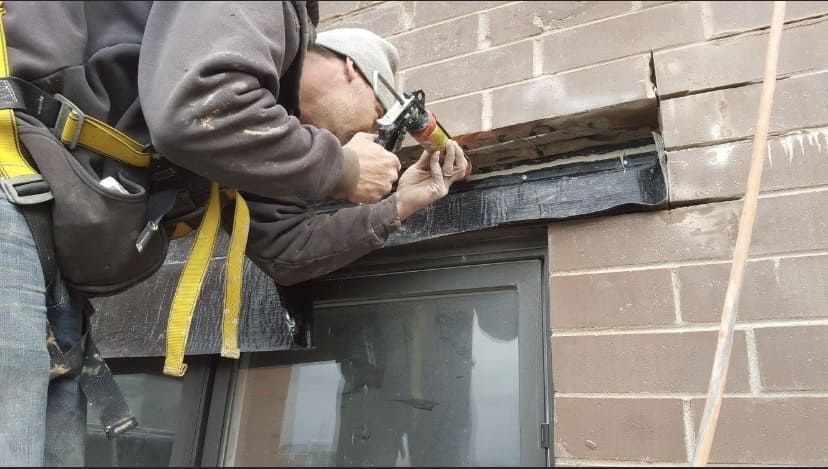
Learn when window lintel replacement is needed, common warning signs, repair options, and how to prevent costly commercial masonry damage.
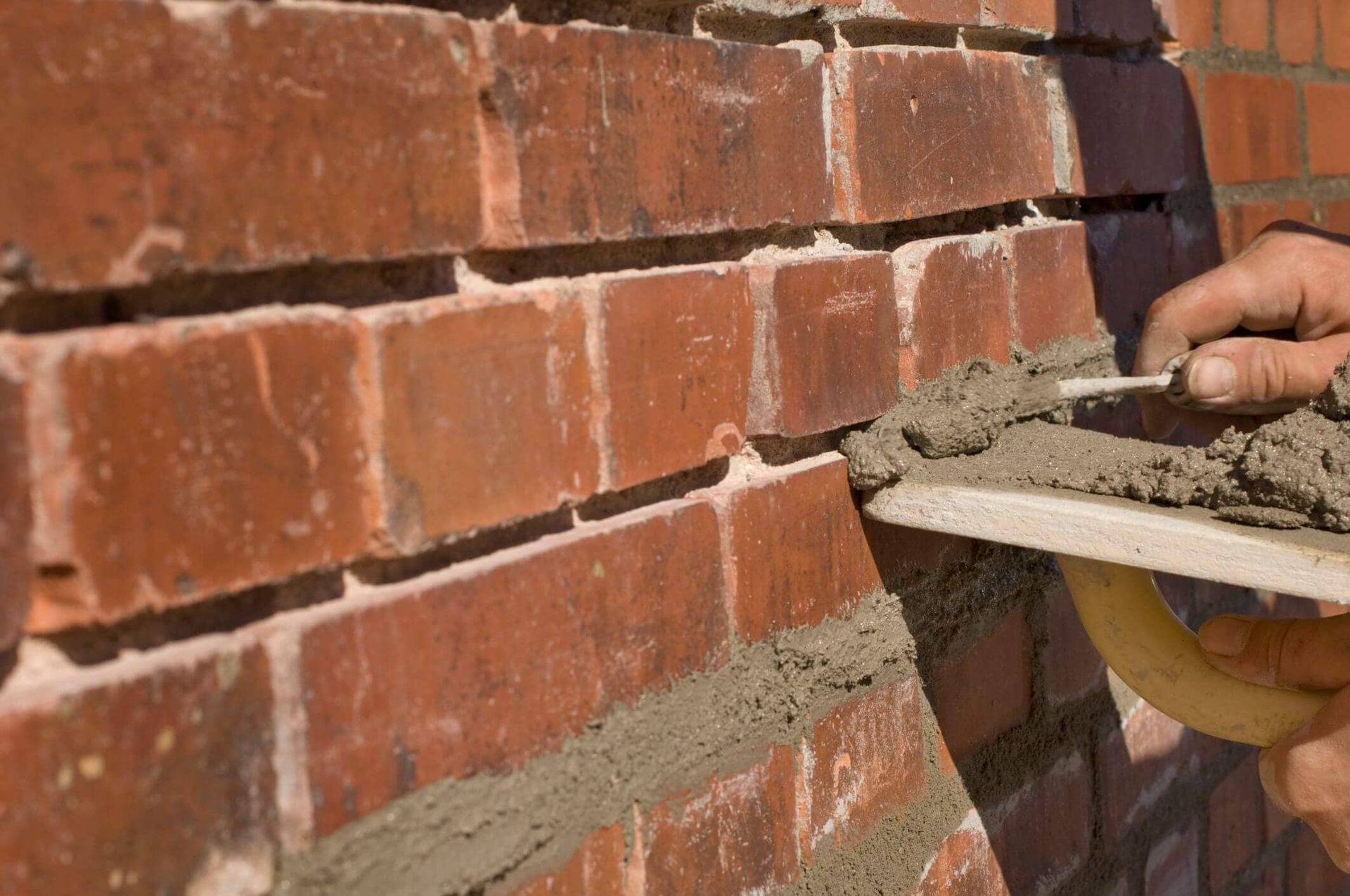
Use this commercial tuckpointing maintenance checklist to identify masonry issues early, extend wall life, and reduce expensive repairs.
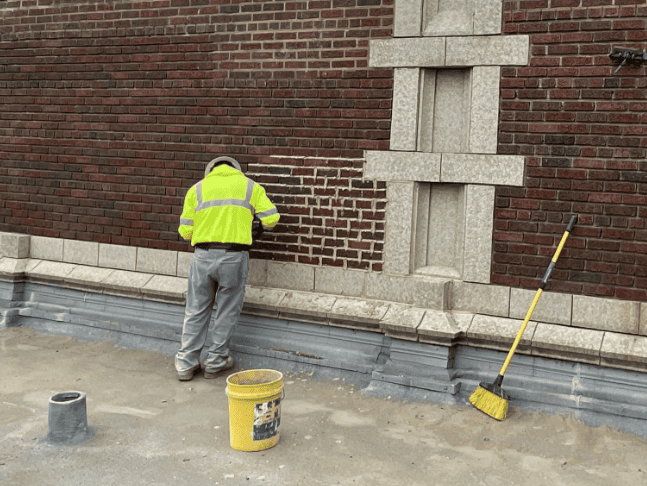
Learn why proper masonry cleaning before repointing or coatings improves adhesion, reveals hidden damage, and extends restoration performance.
Routine façade inspections help Chicago building owners identify deterioration early, reduce repair costs, and prevent unexpected emergencies.
Learn how to schedule fall masonry restoration projects in Chicago to avoid delays, protect your building, and complete repairs before winter.
Learn what Chicago property owners should know about concrete balcony safety checks, warning signs of deterioration, and repair planning.
Learn how heat affects masonry through thermal expansion, cracking, and spalling, and how to identify early signs of deterioration.