Safety Protocols for Cold Weather Masonry Restoration Work
Cold weather changes the way masonry restoration work gets done.
Crews may still be able to tuckpoint, repair masonry, replace sealants, or complete concrete repairs during colder months, but the job has to account for temperature, moisture, wind, access, and the requirements of the materials being installed.
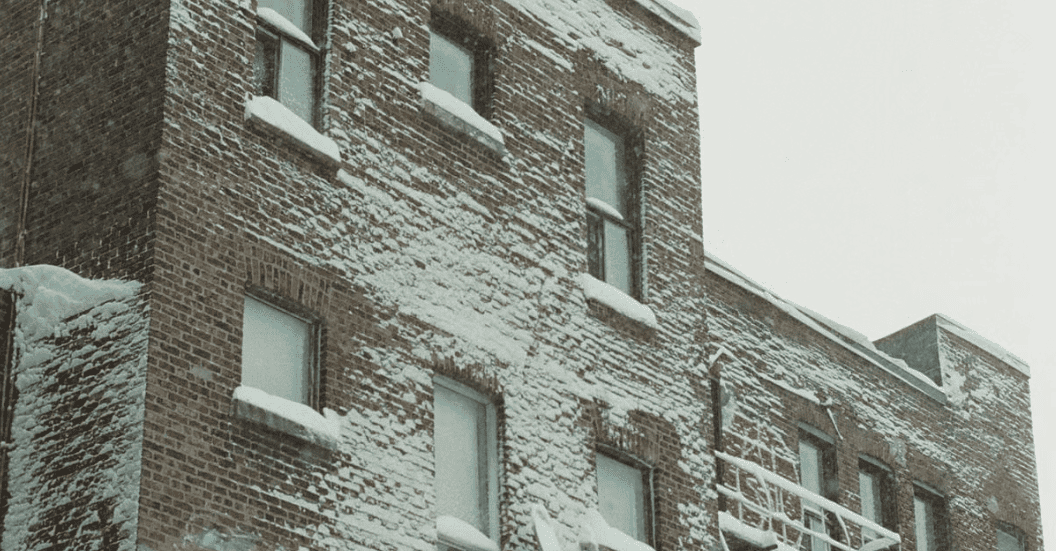
That matters in Chicago, where a project that starts under mild conditions can run into freezing temperatures before the work is finished. Fall façade work can stretch into December. Spring projects can have cold mornings even after daytime temperatures begin to climb.
For building owners and project teams, the practical question is whether the work area can be kept within acceptable conditions long enough to perform the repair correctly and protect it afterward.
What Changes When Restoration Work Moves Into Cold Weather?
Cold weather affects both the crew and the repair itself.
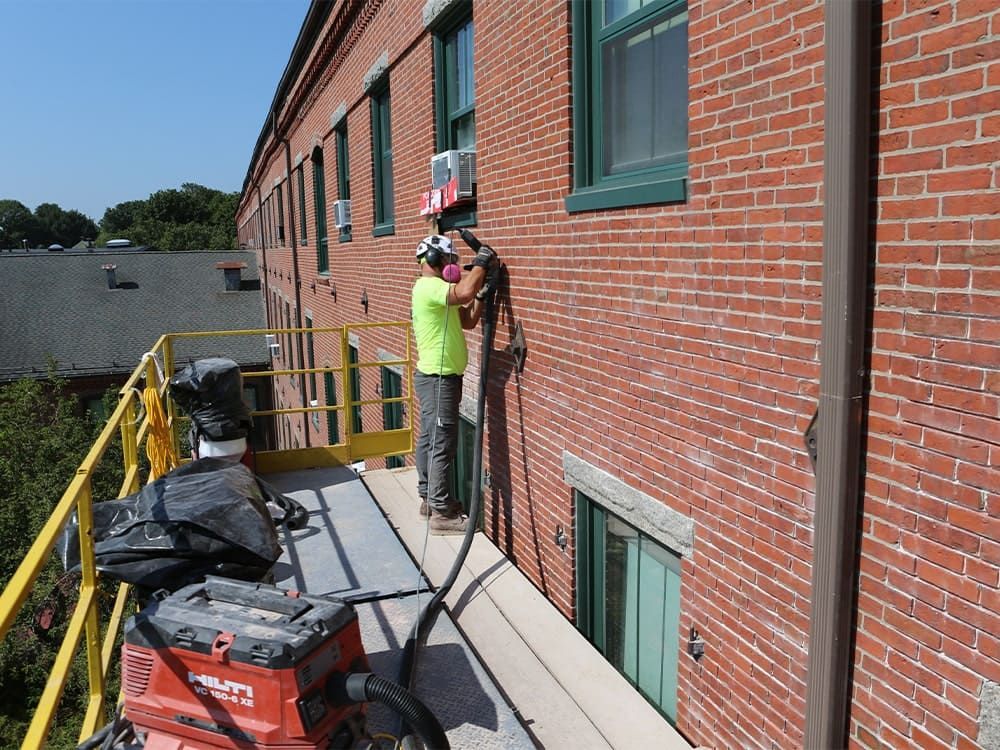
For workers, air temperature is only part of the picture. OSHA’s cold stress guidance notes that wind speed, wet or damp conditions, improper clothing, and exhaustion can all increase the risk of cold stress. OSHA also recommends monitoring workers’ physical condition and using wind chill to help judge exposure risk.
On a façade project, those conditions can change during the day. A crew may start work in relatively calm weather and see wind speeds increase by the afternoon, especially on upper elevations or exposed sides of a building.
Cold-weather planning may include warm and dry break areas, adjustments to work periods, appropriate clothing, worker monitoring, and scheduling certain tasks during the warmer part of the day.
Cold weather can also affect:
- Scaffold and lift access
- Mortar mixing and curing
- Concrete repair materials
- Sealant installation
- Surface preparation
- Material storage
- Drying and curing times
- Temporary building protection
- Production rates and sequencing
These issues can overlap.
A scaffold may be clear when the crew leaves for the day but have ice on the walking surface the next morning. A heated enclosure may keep the air warm enough for work while the masonry surface itself remains colder. Wind conditions that are manageable at ground level can also be very different several stories up.
Existing buildings add another concern. Restoration work often requires opening part of a wall before it can be rebuilt.
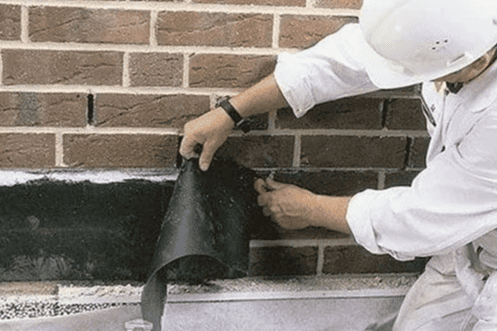
If brick is removed for a lintel repair, the crew may expose steel, flashing, backup construction, or an interior wall assembly. Weather conditions have to be considered while that area is open, especially if the next step in the repair cannot be completed the same day.
Cold-Weather Planning Should Happen Before the Crew Reaches the Wall
The field is a bad place to decide how a project will handle a sudden temperature drop.
The International Masonry Institute recommends developing a cold-weather plan before temperatures reach 40°F. For projects extending into fall or winter, that plan can be submitted to the architect or engineer so the required procedures are already established when colder conditions arrive.
Before work begins, the contractor and project team should know what conditions are acceptable for each repair material and what happens when temperatures fall outside that range.
A cold-weather plan may address:
- Expected temperatures during working and non-working hours
- Rain, snow, and wind
- Material storage
- Surface temperature
- Temporary heat and enclosures
- Protection of fresh repairs
- Scaffold and access conditions
- Temperature monitoring
- Conditions that will delay or stop work
For masonry work, the International Masonry Institute also identifies several measures that may be needed as temperatures fall. Materials should be kept dry and protected, mortar may require heated water or aggregates to maintain the proper mixing temperature, and completed masonry may need weather-resistant covers or insulating blankets for 24 to 48 hours.
When temperatures reach 25°F or below, heated enclosures may also be required to maintain suitable working and material conditions.
Admixtures should not be treated as a shortcut around cold-weather procedures. IMI notes that admixtures used to accelerate mortar or grout setting require approval from the design professional of record, and the required cold-weather protection still has to be followed.
The plan also needs to match the actual scope.
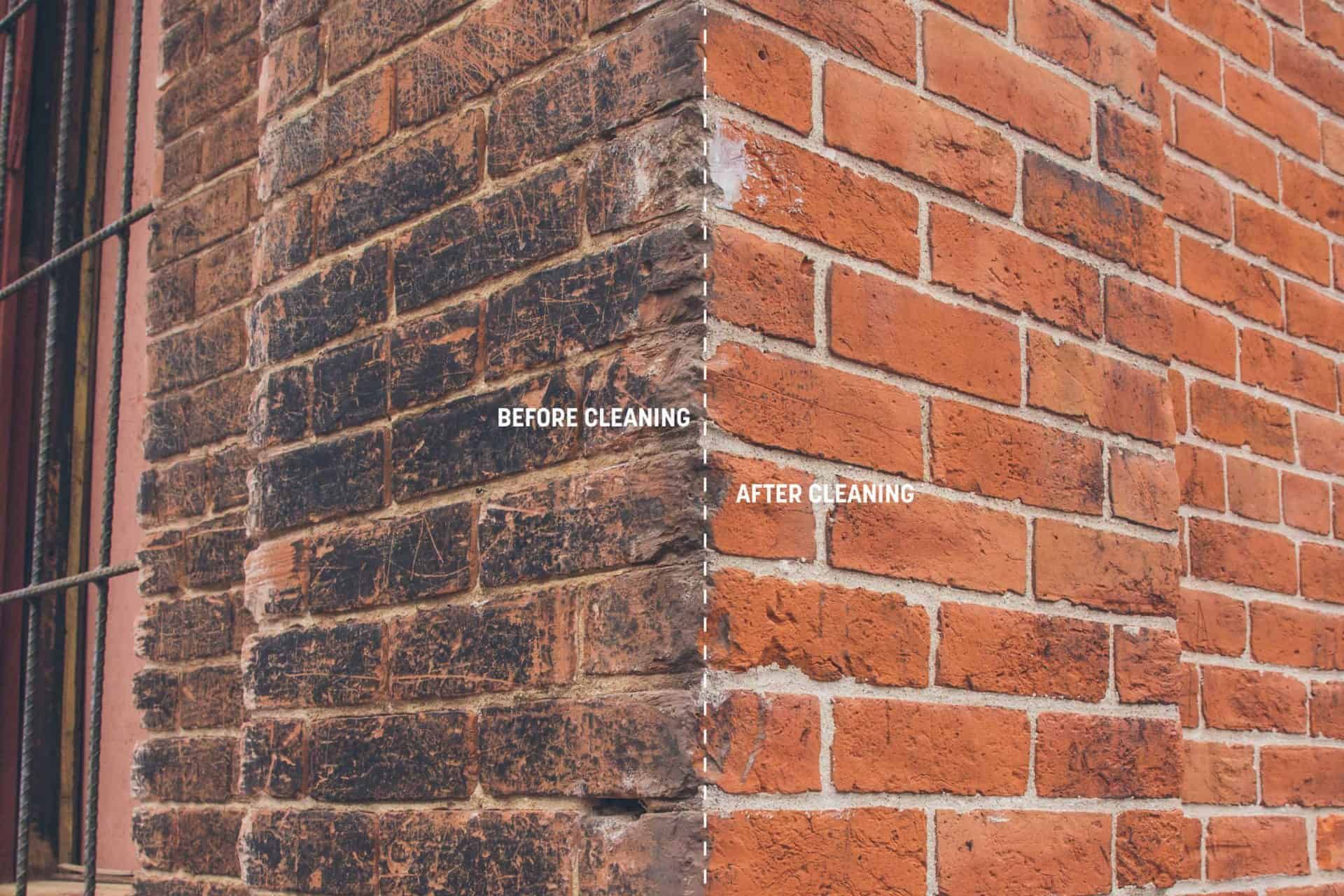
Tuckpointing has different concerns than sealant replacement. Concrete repair has different curing requirements than mortar. Restorative cleaning introduces water, which creates another concern when temperatures are close to freezing.
One cold-weather procedure will not cover every operation on a restoration project.
One cold-weather procedure will not cover every operation on a restoration project.
Know the Limits Before Work Starts
Each material has an acceptable range for installation and curing.
Those limits can come from the project specifications, repair-material manufacturer, approved submittals, or requirements established by the design team.
This is where a vague statement such as "we can work through the winter" can cause trouble.
The better answer is specific. Can the crew maintain the required temperature at the repair? For how long? What happens overnight? What happens if the enclosure loses heat?
Those questions should already have answers before the temperature drops.
Worker Safety Changes With the Weather
Cold weather can affect how long employees can safely remain exposed, how well they can handle tools, and how easily they can move around the jobsite.
Wet clothing makes the situation worse. So does wind.
Crews working outside should be able to recognize the early signs of cold stress and have a place to warm up when conditions require it. Clothing also has to match the work being performed. Heavy layers help with warmth, but they cannot interfere with fall protection, visibility, movement, or safe tool use.
Common cold-weather precautions include:
- Warm, dry break areas
- Layered clothing appropriate for the work
- Dry gloves and footwear
- Monitoring for signs of cold stress
- Adjusting work periods as conditions change
- Wind protection where practical
- Scheduling temperature-sensitive work during warmer parts of the day
Temperature alone does not describe the entire exposure.
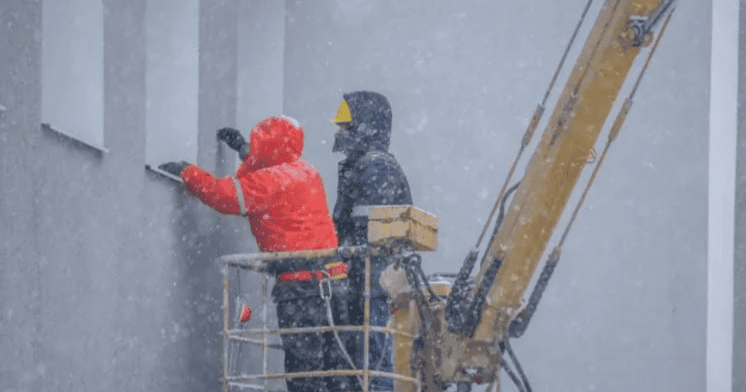
A sunny 30-degree afternoon and a windy 30-degree morning with wet snow are different working conditions. The crew has to respond to what is happening on the building that day.
Scaffolds and Elevated Work Need Extra Attention
Commercial façade restoration puts workers above grade every day. Winter weather makes those access points harder to manage.
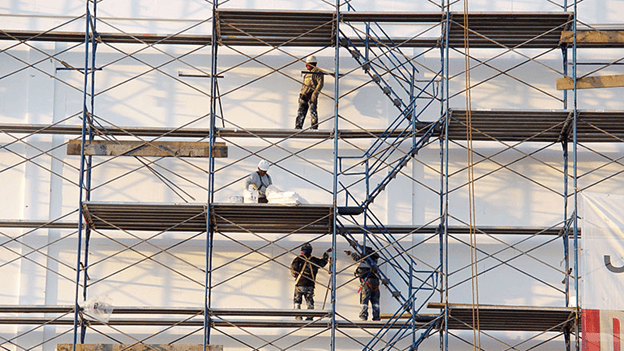
Snow and ice can accumulate on scaffold planks, ladders, stairs, platforms, rooftops, swing-stage access areas, and paths leading to the work.
Those areas need to be cleared before normal work resumes.
Wind is another concern, especially when a scaffold has temporary tarps or an enclosure attached to it. The enclosure helps control temperature around the repair, but it also changes how wind interacts with the scaffold.
Before crews return to an elevated work area after winter weather, the site should be checked for slipping hazards, damaged protection, loose enclosure materials, and other conditions that developed while the site was unattended.
Material handling can also change. Carrying brick, mortar, tools, or repair materials becomes more difficult when gloves are wet or surfaces are slick.
Mortar Needs More Attention as Temperatures Fall
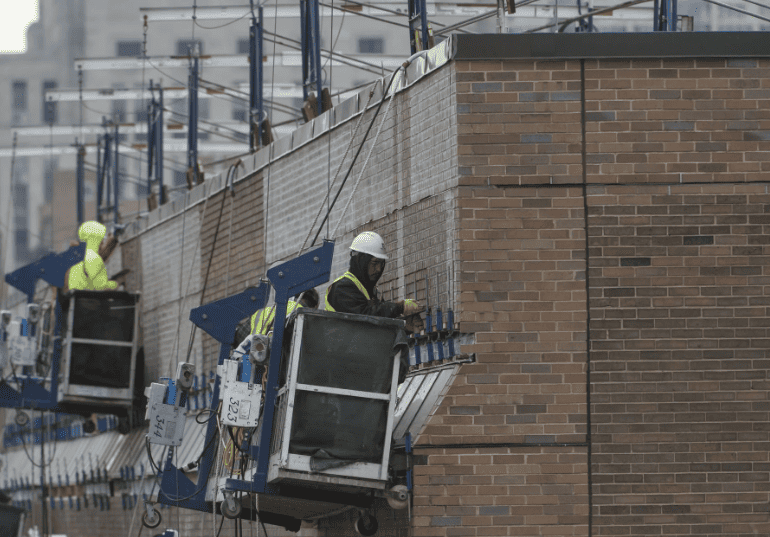
Tuckpointing and masonry rebuilding depend on conditions at the wall.
The temperature of the air matters, but it is only part of what needs to be checked. The masonry itself may still be cold after the surrounding air begins to warm.
Snow, ice, frost, and frozen moisture should not be trapped behind a repair.
Before mortar is placed, the joint and surrounding masonry need to be properly prepared. During colder conditions, that may require additional protection or heat before work begins.
Cold-weather masonry work may involve:
- Protecting sand and masonry units from snow or rain
- Warming materials when required
- Checking mortar temperature
- Enclosing the work area
- Using temporary heat
- Covering fresh work
- Maintaining protection after the crew leaves
A repair can look finished at 2 p.m. and still be vulnerable later that night.
That is why overnight conditions have to be part of the work plan. The crew may be gone, but the mortar is still curing.
Tuckpointing Can Be Especially Sensitive to Surface Conditions
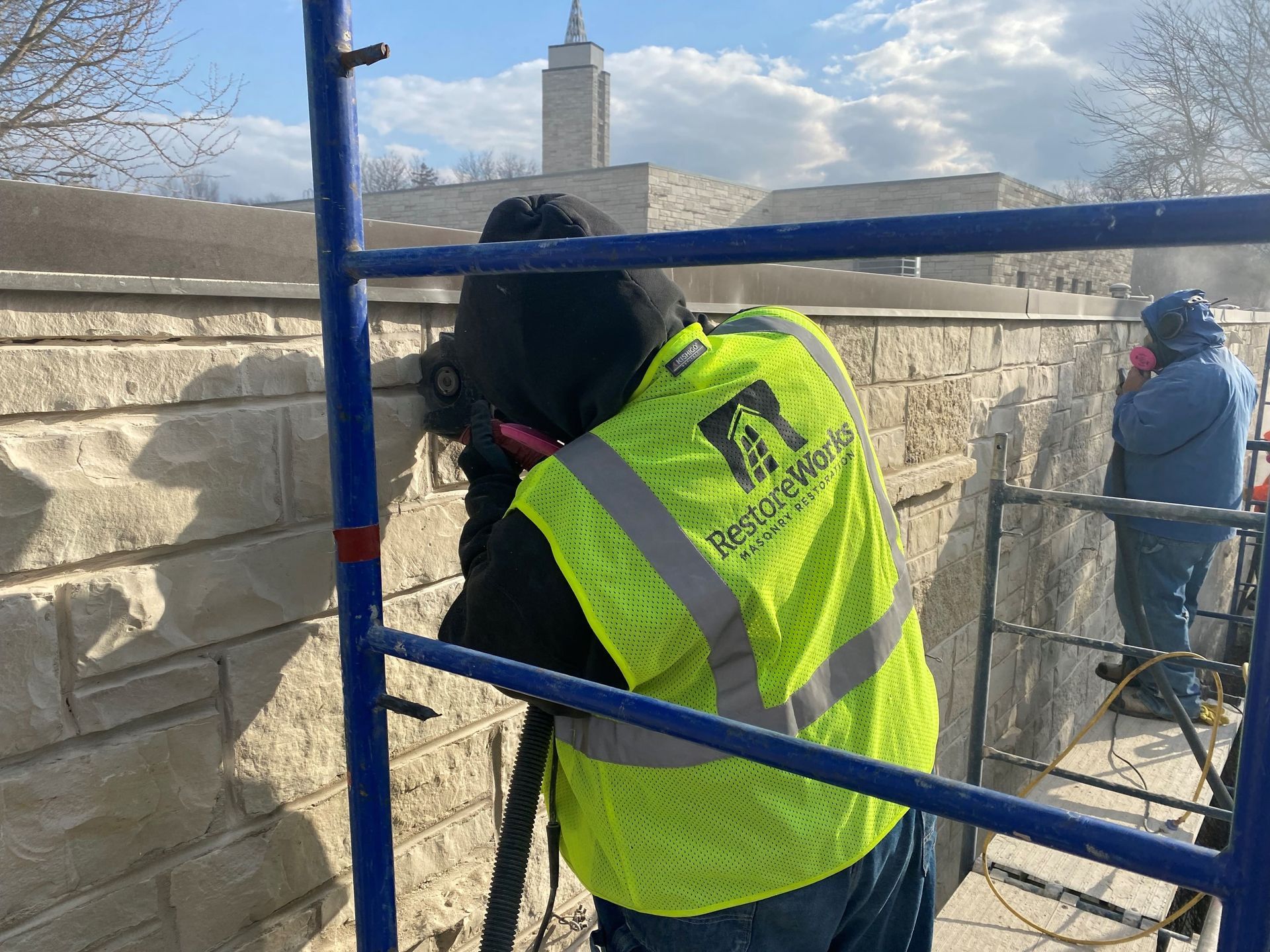
Tuckpointing involves installing new mortar into an existing masonry wall.
The joint has to be properly cut, cleaned, and prepared before new mortar goes in. Cold weather makes that preparation more difficult if moisture freezes inside the joint or frost develops on the masonry.
Heat can help, but the goal is to create acceptable conditions at the repair surface.
A heater sitting near the scaffold does not tell you what temperature the masonry is.
Concrete Repairs Follow Different Rules Than Masonry Mortar
Concrete façade and balcony repairs need their own cold-weather plan.
The American Concrete Institute's Guide to Cold Weather Concreting considers cold-weather conditions to exist when the air temperature falls, or is expected to fall, below 40°F during the period when the concrete needs protection. The guide focuses on preventing early-age freezing, maintaining conditions that allow strength to develop, and avoiding rapid temperature changes that can damage the concrete.
That can affect restoration work such as:
- Spall repairs
- Balcony edge repairs
- Concrete façade patching
- Structural concrete repairs
- Concrete repairs around lintels or shelf angles
Protection does not end when the surface of a repair feels hard.
Concrete continues developing strength after placement, and colder temperatures affect that process. Fresh work may need insulation, temporary heat, an enclosure, or continued temperature monitoring during the protection period. ACI also cautions against rapid cooling because large temperature differences can contribute to cracking before the concrete has developed enough strength.
The repair product selected for the project still matters. Packaged concrete repair mortars and other proprietary materials may have their own application temperatures, curing times, and protection requirements.
Those product-specific requirements should be considered alongside the cold-weather procedures established for the project.
Sealant Replacement Has Its Own Cold-Weather Limits
Caulking and sealant repairs are sometimes grouped into the same winter plan as masonry work even though the materials behave differently.
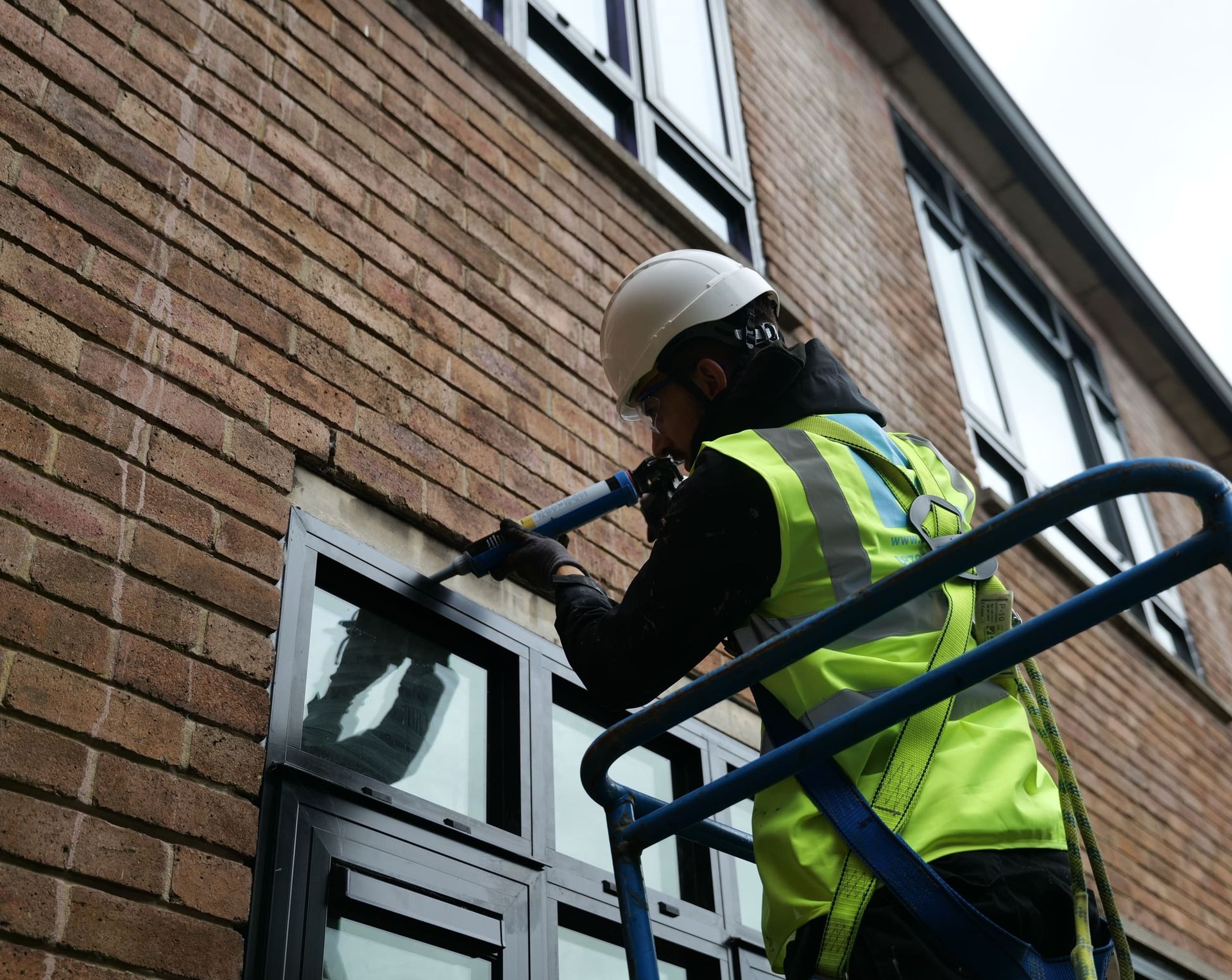
Sealants and primers have their own application requirements. Surface temperature and moisture are especially important.
Before installation, the crew needs to know:
- The permitted application temperature
- Whether the substrate can be damp
- Whether primer is required
- How cold temperatures affect cure time
- How long the joint needs protection
A joint may feel dry to the touch while still being too cold for the selected product.
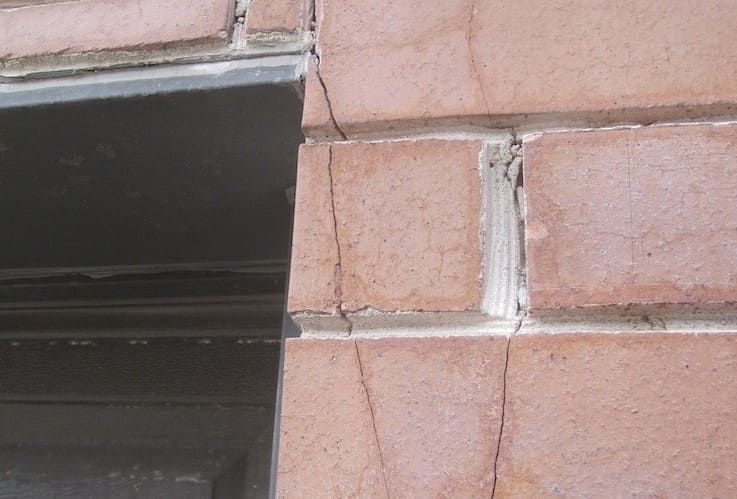
The same issue can come up at windows, expansion joints, control joints, masonry transitions, and other locations where sealants are part of the building envelope.
Temporary Enclosures Have to Control the Repair Area
An enclosure can make winter restoration possible, but it has to be set up around the work being performed.
Heating empty air does little good if the wall stays too cold.
On a masonry repair, crews may need to monitor the temperature at the substrate. Concrete repair materials may need protection for a defined period after placement. Sealant work can depend on both air and surface temperature.
Heaters also introduce jobsite considerations of their own.
The crew has to account for ventilation, fuel or power sources, equipment clearance, fire prevention, scaffold attachment, and the location of the heater in relation to workers and fresh materials.
The setup needs to hold up when the crew leaves for the day as well.
Winter Weather Can Change the Sequence of a Façade Repair
Restoration work can change once the wall is opened.
A repair may begin with masonry removal before crews can reach deteriorated steel, flashing, concrete, or other concealed components. Those repairs have to happen in the right order before the masonry can be rebuilt and the wall closed back up.
Weather can interrupt that sequence.
If a wall is opened and temperatures, precipitation, or wind prevent the next phase from moving forward, the exposed area still has to be protected. The same concern applies when a repair material needs additional time under controlled conditions before the crew can move to the next step.
For cold-weather restoration work, the schedule should account for those gaps before demolition begins.
Chicago Projects Can Run Into Cold-Weather Conditions Outside of Winter
Cold-weather procedures are easy to associate with January and February. For restoration projects in Chicago, colder conditions can affect the work much earlier.
The National Weather Service lists October 19 as the normal first autumn freeze at Chicago O'Hare, based on 1991–2020 climate data. The historical first freeze has occurred as early as September 22.
That puts fall restoration projects within reach of freezing temperatures well before winter officially begins.
A masonry restoration project that starts in September or October may run for several weeks or months. If the schedule slips, additional deterioration is uncovered, or the scope expands after the wall is opened, work that started under mild conditions can continue into temperatures that require cold-weather procedures.
Schedule decisions should account for:
- How much work can reasonably be completed before colder weather arrives
- Whether cold-weather protection was included in the original scope
- Which repair materials have temperature restrictions
- Whether temporary enclosures and heat can be used at the building
- How colder conditions could affect production and sequencing
The same issue can come up in early spring. Daytime temperatures may be workable while overnight temperatures still fall low enough to affect fresh repairs or require additional protection.
For longer commercial and multi-family restoration projects, cold-weather planning should be part of the schedule before the project reaches that point.
Cold Weather Can Affect the Project Budget
Winter restoration usually involves more labor and equipment than the same repair performed under favorable conditions.
A temporary enclosure takes time to install. Heat requires equipment and fuel or power. Materials may need protected storage. The crew may also lose productive hours to snow removal, temperature monitoring, shorter work windows, or weather delays.
That should be discussed before proposals are compared.
If one contractor includes cold-weather protection and another assumes the work will be performed entirely under favorable conditions, the numbers are not based on the same execution plan.
Owners should ask what is included.
A few useful questions are:
- What temperatures can the proposed repair materials be installed in?
- Will the work require temporary heat or an enclosure?
- Who is responsible for monitoring temperatures?
- How will fresh repairs be protected overnight?
- What happens when the forecast moves outside the permitted range?
- Are winter conditions included in the schedule and price?
- How will opened wall areas be protected if work has to stop?
Those answers give the owner a much better picture of how the contractor expects to perform the work.
When Does It Make Sense to Postpone Restoration Work?
There is no single answer for every project.
An active leak or unsafe façade condition may need to be addressed even when the weather is difficult. In that case, the cost of temporary protection may be justified.
A large planned tuckpointing project can be different. If there is no immediate building-envelope or safety concern, moving part of the work to warmer weather may reduce the amount of enclosure, heating, and protection required.
Building height matters. So does access.
Winter work from a swing stage on an exposed high-rise has a different risk profile than work from ground-supported scaffold on a protected courtyard elevation.
The decision should come from the actual repair and site conditions.
Frequently Asked Questions About Cold-Weather Restoration Work
Can masonry restoration work be done during winter?
Yes. Many types of masonry restoration work can continue during winter when the work area and materials can be kept within the required conditions. Depending on the scope, the contractor may need temporary enclosures, heat, protected material storage, temperature monitoring, or additional protection after the repair has been installed.
What temperature is too cold for masonry restoration work?
There is no single cutoff that applies to every masonry repair. The allowable temperature depends on the material, project specifications, surface conditions, and whether the work area can be protected or heated. Cold-weather procedures often begin before temperatures reach freezing because mortar behavior and curing conditions change as temperatures fall.
Can tuckpointing be done below 40 degrees?
It can be, depending on the mortar, wall temperature, project requirements, and cold-weather protection being used. The joint and surrounding masonry still have to be suitable for installation. Crews may need heat, enclosure, material protection, and overnight protection to keep the new mortar within the required conditions.
How does cold weather affect concrete façade repairs?
Cold temperatures slow the development of strength in concrete and cementitious repair materials. Fresh repairs may need heat, insulation, enclosure, or a longer protected curing period. The procedure should follow the requirements for the specific repair product instead of assuming the same winter procedure used for masonry mortar will apply.
Plan for Cold Weather Before It Shows Up in the Forecast
For a Chicago restoration project, weather should be discussed while the job is being planned, especially if the schedule reaches into late fall, winter, or early spring.
The project team should know which repair materials have temperature restrictions, where an enclosure may be needed, how completed work will be protected, and what conditions will cause the crew to stop.
RestoreWorks performs commercial masonry restoration, tuckpointing, caulking and sealant repair, lintel and shelf flashing repair, concrete façade repair, balcony restoration, restorative cleaning, and mock-up work throughout Chicago, Northwest Indiana, and surrounding markets.
Planning a façade repair that may extend into colder weather? Contact RestoreWorks to discuss the building, repair scope, and project schedule.